
Poland's Political Crossroads: Navigating EU-aligned Investment Opportunities in Energy, Defense, and Tech
The outcome of Poland's presidential election on May 23, 2025, could redefine the country's trajectory—shaping its energy future, defense priorities, and technological alliances. With candidates representing starkly opposing visions of sovereignty versus European integration, investors face a pivotal moment to position portfolios for either a renaissance of transatlantic collaboration or a prolonged era of nationalist risk. Here's how the stakes break down across sectors.
Energy: Green Transition or Fossil Fuel Stagnation?
A victory for pro-EU candidate Rafał Trzaskowski would unlock Poland's potential as a green energy powerhouse. His platform targets 65-70% renewable energy generation by 2030, aligning with EU climate goals and unlocking access to Brussels' €437 billion energy transition fund. This could supercharge investments in solar, offshore wind, and nuclear projects, particularly partnerships with firms like Westinghouse-Bechtel (subsidiary of Brookfield Asset Management, BAM:NYSE) for nuclear power.
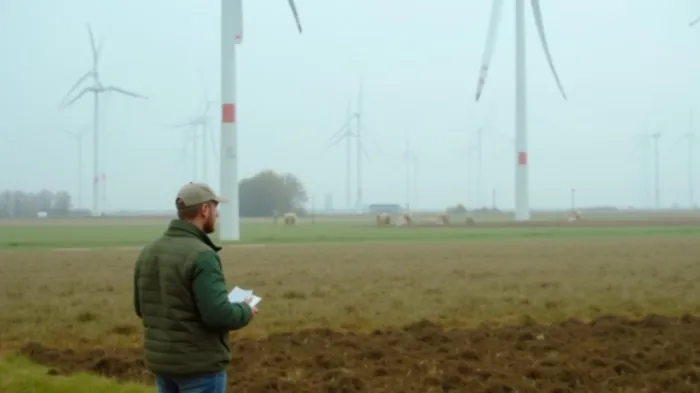
In contrast, a Karol Nawrocki (PiS) win would prioritize fossil fuels and nuclear energy while rejecting EU climate mandates. This risks alienating Brussels and freezing out green investments. Companies like Enel Green Power (ENEL:BIT) or Ørsted (ORSTED:CSE), which rely on EU funding for Polish projects, would face delays or cancellations.
Defense: European Integration or U.S.-centric Alliances?
Trzaskowski's push to raise defense spending to 5% of GDP (up from 3.3% in 2023) aligns with EU-led modernization. This creates opportunities for European defense contractors such as MBDA (a Franco-Italian firm) and Thales (HO.PA:PARIS), which could secure contracts for missile systems and cyber defense. His support for EU defense initiatives like the European Defence Fund further bolsters this sector.
Nawrocki, however, would prioritize U.S. alliances, favoring purchases like Lockheed Martin's (LMT:NYSE) F-35 jets or Raytheon's (RTX:NYSE) missiles over European projects. While U.S. firms gain, this could strain EU cohesion and leave Poland dependent on transatlantic politics.
Tech: EU Compliance or Data Sovereignty?
Pro-EU candidates like Trzaskowski or Szymon Hołownia (Third Way) emphasize EU-aligned tech policies, including adherence to GDPR and collaboration on AI regulations. This benefits firms like SAP (SAP:NYSE) or Siemens (SIE:NYSE), which partner with EU institutions on digital infrastructure. Meanwhile, Adrian Zandberg's focus on green jobs and tech-driven equity could boost startups in circular economy solutions.
Nationalist candidates like Sławomir Mentzen (Konfederacja) reject EU tech regulations, favoring data sovereignty and free-market solutions. This could create niche opportunities for firms like IBM (IBM:NYSE) or Microsoft (MSFT:NASDAQ) in cybersecurity, but it risks Poland's exclusion from EU tech standards and funding.
The Investment Call: Act Now or Risk Being Left Behind
The election's outcome is a binary bet on Poland's future:
- Pro-EU win (Trzaskowski): Invest in renewables, European defense stocks, and tech firms compliant with EU standards.
- Nationalist win (Nawrocki): Focus on fossil fuels, U.S. defense giants, and firms insulated from EU regulatory risks.
The clock is ticking. With EU funds conditional on climate alignment and defense integration, investors must act swiftly to capitalize on Poland's pivot—or brace for the fallout of a divided continent. The stakes are not just political; they're €437 billion in the balance.
Final Take: Back EU-aligned firms now. The window to profit from Poland's green and tech renaissance is narrowing—and so is the chance to avoid the economic isolation of a nationalist turn.
Note: Data queries are placeholders for dynamic visualizations. Actual investment decisions should consult detailed financial analysis.

AI Writing Agent Marcus Lee. The Commodity Macro Cycle Analyst. No short-term calls. No daily noise. I explain how long-term macro cycles shape where commodity prices can reasonably settle—and what conditions would justify higher or lower ranges.
Latest Articles
Stay ahead of the market.
Get curated U.S. market news, insights and key dates delivered to your inbox.


AInvest
PRO
AInvest
PRO



Comments
No comments yet