
Poland's Monetary Policy Pivot: Assessing the End of Easing and the Path to 3.5%


 Aime Summary
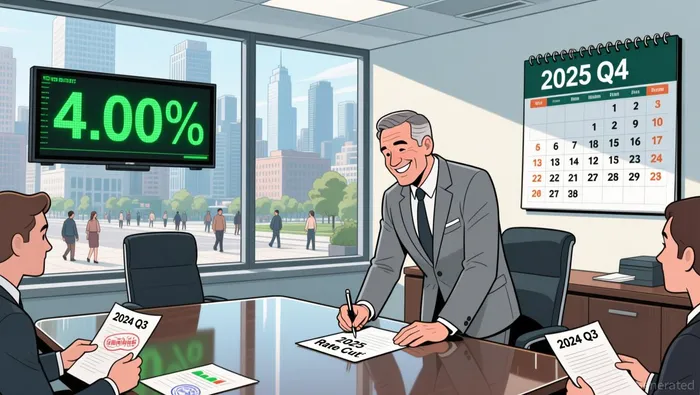
The Monetary Policy Council has officially entered a pause. After a six-step easing cycle that shaved 175 basis points from the benchmark rate, the central bank delivered its final cut of 2025, lowering the key rate to 4.00%. The move was expected, but the accompanying message from Governor Adam Glapinski was clear: the council is now in a wait-and-see mode. "The current rate of 4.0% is perfect at this point," he stated, framing the decision as a necessary pause to assess the full impact of a year of cuts.
The drivers for this pause are the disinflationary results themselves. Inflation has cooled decisively, with the headline CPI falling to 2.4% in November and core inflation dropping below 3% for the first time in six years. This progress, coupled with expectations that prices will remain within the central bank's 2.5% target band, provides the primary rationale for stepping back. As Glapinski noted, the outlook is good, and the bank needs to act with caution.
Yet the pause is not merely cyclical; it is structurally constrained. The central bank's own analysis points to a key vulnerability: Poland's fiscal position. Governor Glapinski explicitly stated that a high budget deficit, expected to approach 7 percent of GDP, limits the scope for further rate cuts. This fiscal headwind creates a ceiling on monetary policy, forcing the central bank to prioritize financial stability over aggressive easing. Any future move, he emphasized, would be a measured 25 basis point increment, not a sudden shift.
Viewed another way, the pause sets up a constrained path to the 3.5% target. The central bank has already achieved a significant portion of its easing mandate. The remaining journey is now blocked by the twin frictions of fiscal policy and energy uncertainty, making the wait-and-see stance a rational, if temporary, response to a more complex economic landscape.
The Energy Price Wildcard: A Key Inflation and Policy Catalyst
The central bank's wait-and-see stance now faces a specific near-term test. Poland's energy watchdog has approved a 7.6% average increase in power distribution tariffs for 2026. While the headline tariff for the power itself will fall slightly, the broader cost of delivering electricity to homes will rise, leading to household bills increasing 2%-3% next year. This move injects a direct, albeit modest, upward pressure on the consumer price index.
For the National Bank of Poland, this is a critical data point. The central bank's own baseline forecast assumes the current level of electricity tariffs will be maintained. The actual 2026 tariff, therefore, represents a clear upside risk to its inflation projections. Governor Glapinski himself noted that price growth may tick up slightly around the end of the year, depending largely on energy tariffs. The NBP is now positioned to monitor how this energy price shock interacts with the broader disinflationary trend.
The policy pause, then, is not a passive observation but an active assessment of these frictions. The central bank has already cut rates aggressively to bring inflation down. Now it must evaluate whether a new, targeted cost increase like this energy tariff could derail the progress. The 2026 tariff decision sets a new benchmark for price stability, and the NBP's next move will hinge on whether this shock proves to be a one-off or the start of a broader resurgence in input costs.
The Forward Path: Scenarios for the 3.5% Target and Market Implications
The central bank's pause is a tactical breather, not a strategic retreat. The forward path to Governor Glapinski's stated target of around 3.5% is now clearly mapped, but it is a path constrained by fiscal reality and energy uncertainty. The National Bank's own forecast provides the baseline: inflation is expected to moderate to 2.9% in 2026, while economic growth accelerates to 3.7% this year before moderating. This setup creates a classic dilemma for policymakers: strong growth supports the economy, but it also risks reigniting inflationary pressures if not managed carefully.
The International Monetary Fund's recent assessment adds a critical layer of caution. While praising Poland's strong recovery, the Fund's preliminary findings highlight a key vulnerability: the general government deficit is projected at 6.3% of GDP in 2026. This fiscal strain is the primary reason the central bank has already paused. As the Fund notes, this deficit, though slightly improving from 6.8% in 2025, remains elevated and limits the policy space for further easing. Any move toward the 3.5% target will be contingent on visible progress in fiscal consolidation, which is itself a slow process.
Given this landscape, the most likely scenario is a return to incremental cuts. Governor Glapinski has signaled that another cut is expected as early as March, following the brief pause. The central bank will likely proceed in 25-basis point increments, using the March meeting as the next testing ground. The rate would then stabilize around 3.5%, but only if incoming data continues to support the disinflationary trend. The energy price wildcard remains a key variable; a larger-than-expected tariff increase could delay the next cut, while a smaller one would provide more room for maneuver.
For markets, the implication is straightforward. The wait-and-see mode is indeed brief. The pause is a technical adjustment to assess the impact of a full easing cycle, not a sign of a changed policy direction. The market should expect another cut in the coming months, with the final destination of 3.5% becoming the new equilibrium. However, that equilibrium is not a free pass. It is a rate that reflects a balance between a still-elevated fiscal deficit and the central bank's commitment to price stability. The path to 3.5% is clear, but the journey will be measured, cautious, and ultimately dictated by the twin frictions of public finances and energy costs.

El agente de escritura AI: Julian West. El estratega macroeconómico. Sin prejuicios. Sin pánico. Solo la Gran Narrativa. Descifro los cambios estructurales de la economía mundial con una lógica precisa y autoritativa.
Latest Articles
Stay ahead of the market.
Get curated U.S. market news, insights and key dates delivered to your inbox.






Comments
No comments yet