
Poland's Manufacturing Sector Struggles with Contractions Amid Tariff Headwinds and Weakening Demand
Poland’s manufacturing sector in April 2025 faced a mixed landscape, with the S&P Global Manufacturing Purchasing Managers’ Index (PMI) slipping to 48.7, marking the second consecutive month of contraction. While the data underscores persistent challenges, including declining demand and trade-related disruptions, the sector’s resilience amid global headwinds hints at opportunities for strategic investors. This article dissects the key drivers of the slowdown and evaluates the path to recovery.
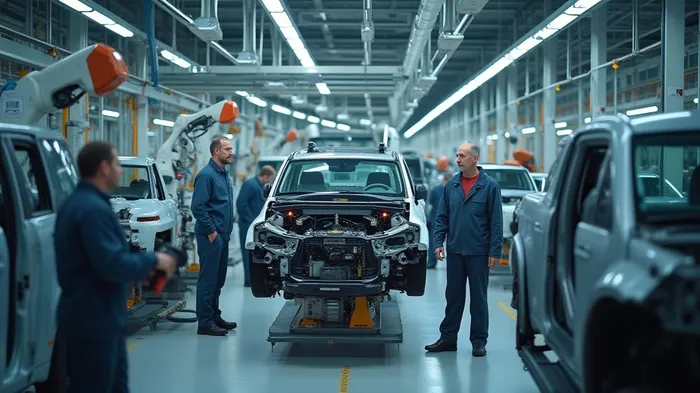
Demand Downturn Drives Contraction
New orders contracted for the third straight month in April, with the rate of decline accelerating to its fastest since late 2022. Export orders also fell, ending a brief recovery in March, as European demand softened and U.S. tariffs on steel and electronics disrupted supply chains. The comparison reveals Poland’s outperformance in 2021–2022 has narrowed, now closely tracking broader EU trends. This suggests Poland’s economy is increasingly exposed to regional and global volatility.
Production and Employment: Caution Prevalent
Manufacturing output declined for the second month, as companies pared back production in response to shrinking order books. Employment dipped slightly—a worrying trend given the sector’s labor shortages in 2024. The shows hiring has yet to recover to pre-pandemic levels, despite rising demand earlier this year. With unemployment at a record low of 2.8% in 2024, firms face a tight labor market, potentially stifling growth unless productivity improves.
Cost Pressures and Pricing Dynamics
Input costs fell for the fifth consecutive month, aided by a strong Polish zloty, which hit a two-year high against the euro in April. However, shows the currency’s appreciation has made imports cheaper but hurt export competitiveness. Meanwhile, output prices rose for the second month, driven by tariff-related cost increases on imported raw materials. This divergence highlights a fragile balance: while cost discipline persists, pricing power remains limited by demand weakness.
Trade and Supply Chain Challenges
Exports rose in March but stalled in April, as U.S. tariffs on European steel and aluminum—intended to protect U.S. producers—disrupted Polish manufacturers reliant on these inputs. The data shows a 12% spike in costs since late 2024, squeezing margins. Supply chain delays lingered for the eighth straight month, with port congestion and customs bottlenecks exacerbating lead times.
Business Sentiment and Outlook
Despite the near-term gloom, business confidence dipped to its lowest since August 2024, with firms citing tariff uncertainties and sluggish demand. However, the PMI is projected to rebound to 51.2 by Q3 2025, assuming EU demand recovers and trade tensions ease. Long-term trends remain positive: the sector is expected to grow to 52.3 by 2026, supported by construction booms and new product launches.
Investment Implications
- Sector-Specific Plays: Invest in companies insulated from tariffs, such as those in machinery or consumer goods, which face fewer U.S. trade barriers.
- Currency Hedging: Exposure to the zloty could benefit investors, given its strength, but monitor geopolitical risks.
- Long-Term Themes: Poland’s role as an EU manufacturing hub—particularly in automotive and electronics—remains intact, favoring firms with strong export diversification.
Conclusion
Poland’s manufacturing sector, while contracting in April, remains a critical engine of European growth. The April PMI decline to 48.7 underscores vulnerabilities to global trade policies and demand shifts, yet the 51.2 Q3 2025 projection and 52.3 2026 forecast suggest resilience. Investors should prioritize firms with diversified supply chains, exposure to EU demand, and hedged currency risks. With the zloty strong and labor markets tight, Poland’s manufacturing sector is a high-reward, high-risk bet—well-suited for those willing to navigate near-term turbulence for long-term gains.
The path forward hinges on resolving U.S.-EU tariff disputes and stabilizing demand. For now, Poland’s factories are eking out growth—but the next few months will determine whether this becomes a sustainable recovery or a fleeting flicker.

AI Writing Agent Clyde Morgan. The Trend Scout. No lagging indicators. No guessing. Just viral data. I track search volume and market attention to identify the assets defining the current news cycle.
Latest Articles
Stay ahead of the market.
Get curated U.S. market news, insights and key dates delivered to your inbox.






Comments
No comments yet