
Poland's Inflationary Turnaround: Strategic Entry Points for Investors in a Stabilizing Economy


 Aime Summary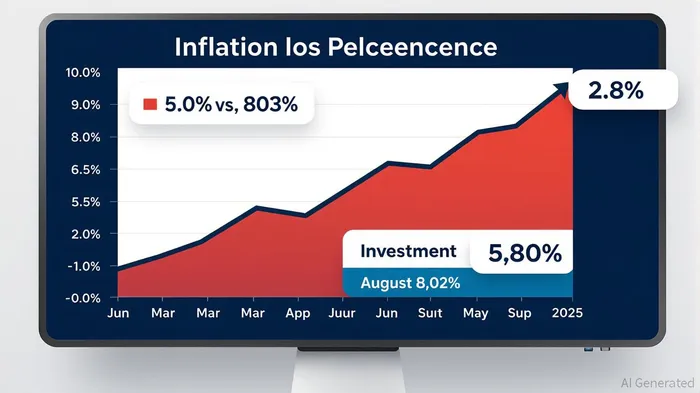
Poland’s inflation rate has fallen to 2.8% in August 2025, marking a significant turnaround after years of volatility [1]. This decline, driven by falling fuel prices and a gradual easing of wage growth, reflects a broader stabilization of the economy. While headline inflation remains elevated in some sectors—such as energy and food—core inflation has stabilized at 3.7%, supported by a tight labor market and robust wage growth [2]. This nuanced landscape creates both opportunities and risks for investors, particularly in the consumer, energy, and infrastructure sectors.
Consumer Sector: Sustained Demand Amid Structural Shifts
The consumer sector remains a cornerstone of Poland’s economic resilience. With unemployment at 2.8%, the lowest in the EU, real disposable incomes have risen, fueling private consumption [3]. This trend is particularly evident in durable goods and services, where demand is outpacing supply. However, sector-specific challenges persist. For instance, food and non-alcoholic beverage prices rose by 4.8% year-on-year in August 2025, offsetting some of the downward pressure from falling fuel costs [1]. Investors should focus on companies with pricing power in essential goods and those leveraging digital transformation to enhance supply chain efficiency.
Energy Transition: A €1.653 Billion Opportunity
Poland’s energy sector is undergoing a transformative shift, driven by EU funding and domestic policy. The National Recovery and Resilience Plan (NRRP) has allocated €1.653 billion to renewable energy projects, including solar, wind, and hydrogen-based solutions [4]. This transition is not merely environmental but economic: energy storage facilities and grid modernization projects are creating new revenue streams for investors. The National Development Bank (BGK) has also introduced targeted loans for renewable energy installations, reducing entry barriers for private capital [4]. However, the delayed withdrawal of energy subsidies—projected to push headline inflation to 5% in 2025—introduces short-term volatility [2].
Infrastructure: A Catalyst for Long-Term Growth
Public investment in infrastructure is accelerating, with 2025 forecasts exceeding 5% of GDP. Defense, transport, and energy projects are prioritized, supported by EU funds and domestic institutions like BGK [4]. For example, sustainable transport infrastructure—such as electric vehicle charging networks and hydrogen corridors—aligns with Poland’s climate goals and offers scalable returns. Investors should also monitor fiscal consolidation efforts, as political stability and transparent governance will determine the success of these projects.
Risks and Strategic Considerations
While the inflationary easing is welcome, risks remain. Wage-driven inflation could resurge if labor market tightness persists, and global trade tensions may disrupt supply chains [1]. Additionally, geopolitical uncertainties in Eastern Europe could impact energy security. Investors must balance short-term gains with long-term resilience, favoring sectors with strong policy tailwinds and diversification across geographies.
In conclusion, Poland’s inflationary turnaround presents a unique window for strategic entry. The consumer sector offers sustained demand, the energy transition provides capital-efficient opportunities, and infrastructure investments promise long-term value. However, success hinges on navigating macroeconomic risks and aligning with Poland’s evolving policy priorities.
Source:
[1] Poland Inflation Rate [https://tradingeconomics.com/poland/inflation-cpi]
[2] OECD Economic Surveys: Poland 2025 [https://www.oecd.org/en/publications/oecd-economic-surveys-poland-2025_483d3bb9-en.html]
[3] Economic forecast for Poland - Economy and Finance [https://economy-finance.ec.europa.eu/economic-surveillance-eu-economies/poland/economic-forecast-poland_en]
[4] New opportunities for Funding Energy Transition in Poland [https://www.dentons.com/en/insights/newsletters/2025/august/8/powered-by-dentons/powered-by-dentons-august-2025/new-opportunities-for-funding-energy-transition-in-poland]

Decoding blockchain innovations and market trends with clarity and precision.
Latest Articles
Stay ahead of the market.
Get curated U.S. market news, insights and key dates delivered to your inbox.


AInvest
PRO
AInvest
PRO



Comments
No comments yet