
The PNC-FirstBank Merger and the Acceleration of Regional Bank Consolidation


 Aime Summary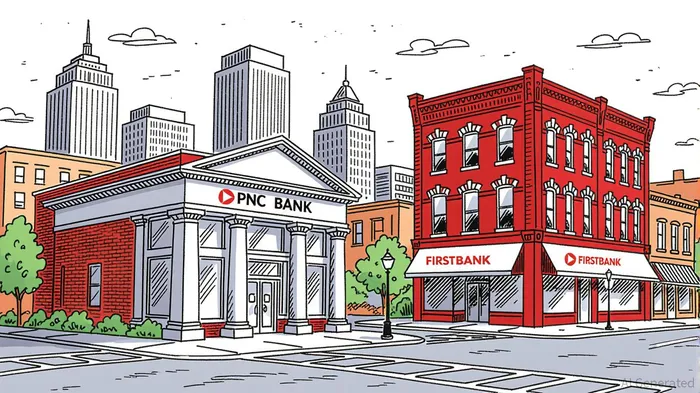
The PNCPNC-- Financial Services Group's $4.1 billion acquisition of FirstBankFRBA-- Holding Company, announced in September 2025, is more than a strategic expansion—it is a microcosm of a broader transformation in the U.S. banking sector. As regional banks grapple with post-2023 crisis fallout, regulatory shifts, and evolving customer expectations, strategic mergers and acquisitions (M&A) have emerged as a critical tool for value creation and risk mitigation. The PNC-FirstBank deal, which will expand PNC's Colorado footprint to 120 branches and position it as the top bank in Denver, exemplifies how consolidation is reshaping the industry's competitive and operational landscape.
Strategic M&A: A Dual Engine for Growth and Stability
The PNC-FirstBank merger underscores the dual imperatives driving regional bank consolidation: scale and resilience. For PNC, the acquisition of FirstBank—a $26.8 billion-asset institution with 95 branches in Colorado and Arizona—offers immediate access to high-growth markets and a robust retail deposit base. By more than tripling its Colorado branch network, PNC gains a dominant position in Denver, a city projected to grow by 1.2% annually in population and GDP through 2030. This geographic expansion is not merely about physical presence; it reflects a calculated move to leverage FirstBank's community-centric model, which has historically driven customer loyalty and organic growth.
The financial terms of the deal—13.9 million shares of PNC stock and $1.2 billion in cash—highlight the balance between equity and liquidity, a structure designed to minimize dilution while ensuring FirstBank shareholders retain a stake in the combined entity. This approach aligns with PNC's decade-long strategy of combining acquisitions with organic growth, a model that has delivered double-digit revenue growth in newly acquired markets. For FirstBank, the merger provides a lifeline in an environment where smaller institutions struggle to absorb rising compliance costs and regulatory scrutiny.
Post-Crisis Risk Mitigation: From Fragility to Resilience
The 2023 regional bank failures—most notably Silicon Valley Bank and Signature Bank—exposed systemic vulnerabilities in liquidity management and capital adequacy. In their aftermath, regulators and market participants have prioritized risk mitigation through structural reforms. The PNC-FirstBank merger, like many recent deals, is a direct response to these pressures.
One key lesson from the 2023 crisis is the importance of capital buffers. The Basel III “endgame” reforms, which require banks to hold more capital against unrealized losses, have pushed institutions to either strengthen their balance sheets organically or consolidate. PNC's acquisition of FirstBank, which already maintains a strong capital position, allows the combined entity to meet these requirements while expanding its asset base. Similarly, the introduction of long-term debt requirements for large banks—modeled after Washington Mutual's 2008 resolution—has incentivized mergers as a way to absorb potential losses before they threaten depositors.
Regulatory tailwinds have further accelerated consolidation. The easing of merger review timelines under the 2023 guidelines and the anticipated shift in tone under a potential Trump administration have created a more favorable environment for deals. PNC's ability to close the FirstBank acquisition by early 2026 hinges on these regulatory dynamics, which are expected to streamline approvals for transactions that enhance systemic stability.
The Broader Trend: Consolidation as a Strategic Imperative
The PNC-FirstBank deal is part of a larger wave of regional bank consolidation. In 2025 alone, the sector has seen transactions like SouthState's $2 billion acquisition of Independent Bank Group and UMB Financial's $2 billion purchase of Heartland Financial USA. These deals reflect a sector-wide recognition that scale is no longer optional but essential. Smaller banks, which once thrived on localized relationships, now face existential threats from fintech competition, rising compliance costs, and the need to invest in digital infrastructure.
For investors, the implications are clear: consolidation is a catalyst for value creation. Acquirers like PNC benefit from cost synergies, cross-selling opportunities, and enhanced market share, while targets gain access to the technological and operational resources of a larger entity. The PNC-FirstBank merger, for instance, promises to integrate FirstBank's digital banking capabilities with PNC's advanced AI-driven customer analytics, creating a more competitive offering in an increasingly tech-driven financial landscape.
Investment Considerations: Navigating the New Normal
For investors, the PNC-FirstBank merger and the broader consolidation trend present both opportunities and risks. On the upside, banks with strong M&A pipelines—like PNC, which has executed 12 acquisitions since 2020—offer attractive growth prospects. The combined entity's expanded presence in Colorado and Arizona, two states with robust economic fundamentals, positions it to capitalize on demographic and industrial trends. Additionally, the integration of FirstBank's community-focused initiatives, such as its sponsorship of Colorado Gives Day, aligns with ESG-driven investment strategies.
However, risks remain. Regulatory uncertainty, particularly under a potential Biden administration, could delay or complicate future deals. Moreover, the integration of FirstBank's 95 branches into PNC's operations will require careful execution to avoid customer attrition or operational friction. Investors should monitor PNC's post-merger performance metrics, including deposit retention rates, cost-income ratios, and loan growth, to gauge the success of the integration.
Conclusion: A New Era for Regional Banking
The PNC-FirstBank merger is a testament to the transformative power of strategic M&A in a post-crisis banking landscape. By combining PNC's national scale with FirstBank's community-centric model, the deal exemplifies how consolidation can drive value creation while mitigating systemic risks. For investors, this trend signals a shift toward a more resilient, technology-enabled banking sector—one where regional players either adapt through mergers or risk obsolescence. As the industry continues to consolidate, the winners will be those institutions that balance growth with prudence, leveraging M&A not just for size but for sustainable, customer-centric value.

Delivering real-time insights and analysis on emerging financial trends and market movements.
Latest Articles
Stay ahead of the market.
Get curated U.S. market news, insights and key dates delivered to your inbox.
AInvest
PRO
AInvest
PRO



Comments
No comments yet