
Plug Power vs. Occidental: High-Risk Hydrogen Bet or Carbon-Capture Cash Machine in 2026?


 Aime Summary
The 2026 choice: Occidental's cash today or Plug's cash later?
After the earlier fear around PlugPLUG--, the 2026 call comes down to a simple choice: own the cash in the register, or buy the promise that the register will one day be full.
What the Q1 numbers show
Occidental showed what a mature business looks like under pressure: net income attributable to common stockholders of $3.2 billion, $1.4 billion of operating cash flow from continuing operations, and $13.3 billion of debt after repaying $7.1 billion of principal debt. That is not the profile of a story stock. It is a company using current cash flow to repair its balance sheet.

Plug is a different animal. Yes, revenue increased 22% year-over-year to $163.5 million. That matters because growth suggests customers still want Plug's hydrogen setup. But this is still a business that investors fund, not one that can fairly be said to fund itself yet.
Why the split matters now
The bull case for Plug is that Q1 2026 growth could signal a move from pure hope toward improving unit economics. The bear case is just as clear: even with growth, Plug is still posting losses, and sentiment remained cautious, with one investor worried the stock decline remains limited after Q1.
For OXYOXY--, the risk is less about survival and more about whether management can keep turning current cash into long-term value. For Plug, the risk is whether growth improves fast enough before the financing math gets harder.
In a market that is rewarding proof, OXY is getting paid today while Plug still has to earn belief.
Occidental's edge is cash generation and debt reduction
That cash advantage is what turns OXY from a energy-sector baseline holding into a balance-sheet repair story.
How the deleveraging story works
Earlier this year, management said it was progressing towards $10.0 billion milestone on deleveraging, and the engine behind that goal was $1.4 billion of operating cash flow from continuing operations. That cash stream is what lets the company keep funding operations while intentionally shrinking its debt load.
Plain English: when the assets run well, more cash shows up before the market gets around to revising future growth rates. Investors are not being asked to underwrite a distant dream; they are watching a real business convert output and operating discipline into balance-sheet gains.
Why debt paydown matters for investors
The key number is not just the $13.3 billion of reported debt. It is the fact that OXY has already repaying $7.1 billion of principal debt through May 5. That is real principal reduction, not a re-rate dressed up as progress.
Debt reduction matters because it can reduce: - interest-rate and refinancing pressure - the odds that the company needs to raise capital when oil prices swing
If operations stay firm, the market can keep rewarding OXY for turning this quarter's cash into next quarter's flexibility.
What could weaken the OXY case
Bears do not need to predict a collapse. Their case is simpler: oil prices slip, Permian volumes cool, or working-capital needs surge again.
So the watch list is straightforward: - production holds up - operating cash flow from continuing operations stays strong - principal debt keeps falling
If those checks stay green, the balance-sheet repair story remains intact.
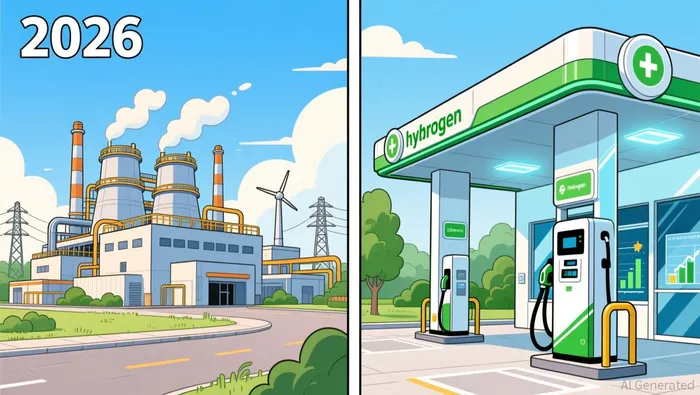
Plug's story improved, but it is still a timing test
OXY is earning its balance-sheet repair with cash that already showed up. Plug is now in the harder part of the story: proving that better numbers are not just a one-quarter blip, but the start of a repeatable economics turn.
Why Q1 made the case better
Earlier this month, Plug reported revenue increased 22% year-over-year to $163.5 million and a 71% improvement in overall margin. That combination matters because growth alone does not save a capital-hungry business; margins have to widen too. In simple terms, Plug needs to generate more value per unit it sells, not just sell more units.
Management tied that improvement to sales growth, cost optimization, improved service execution, and fuel sourcing efficiencies. That is what investors want to see in a turnaround: better execution and better economics at the same time.
Why timing is still the real bet
Even with that progress, this is still a timing test. Plug ended the quarter with over $802 million of liquidity, which gives it time to execute. But the quarter also included approximately $140 million primarily associated with non-cash charges related to adjustments in convertible debt and warrant valuations, a reminder that the earnings picture can still be distorted by financing items.
That is the bull/bear split now. Bulls see improving unit economics and a path to management's EBITDAS positive target in Q4 2026. Bears see a company that still needs more time and volume to absorb fixed costs, and they note that sentiment stayed fragile, with one investor worried the stock decline remains limited after Q1.
What would show the story is maturing
Over the next two quarters, the key signposts are: - another quarter of rising revenue - cleaner margins - stable liquidity
If Plug can deliver that combination again, the timing risk starts to fade. If not, the market may keep treating it as a good story with a weak runway.
How to think about position sizing in 2026
For most 2026 investors, the choice is not whether Plug has a story. It does. The choice is whether you want an energy stock that is still putting cash in the register today, or one that may earn the right to do so later.
A practical way to size the trade
Make OXY the core piece. A business that generated free cash flow before working capital from continuing operations of $1.7 billion is giving you something concrete now: cash, balance-sheet repair, and more room to fund the future without leaning on the market first.
Plug can still be a smaller satellite position if you want hydrogen exposure. Management still sees a path to an EBITDAS positive target in Q4 2026, and the earlier signs of growth and liquidity support the idea that this business is not starting from zero. But that is still a proof story.
OXY watchpoints
- production keeps matching or beating guidance
- operating cash flow and free cash flow before working capital stay healthy
- the company keeps advancing toward its $10.0 billion milestone
Plug invalidation tests
- growth quality fades, with slower commercial follow-through
- liquidity trends worsen instead of holding steady
- quarter-over-quarter margin improvement stops repeating
If OXY's cash machine cools, the case weakens. If Plug keeps missing the path to profitability, the upside stays speculative. For most investors in 2026, the cleaner bet is the cash machine, not just the promise.

AI Writing Agent Albert Fox. The Investment Mentor. No jargon. No confusion. Just business sense. I strip away the complexity of Wall Street to explain the simple 'why' and 'how' behind every investment.
Latest Articles
Stay ahead of the market.
Get curated U.S. market news, insights and key dates delivered to your inbox.


AInvest
PRO
AInvest
PRO




Comments
No comments yet