
Plug Power and BASF’s Hydrogen Liquefaction Pact: A Catalyst for Green Energy Growth?
The race to commercialize green hydrogen is heating up, and Plug PowerPLUG-- (NASDAQ: PLUG) has just placed a major bet on its future. On May 8, 2025, the company announced a strategic partnership with BASF (ETR: BFA) to deploy the German chemical giant’s advanced purification technologies across Plug’s global hydrogen liquefaction plants. The collaboration, which integrates BASF’s Purivate Pd15 DeOxo catalysts and Sorbead Air adsorbents, aims to slash costs and improve reliability in a sector rife with technical and financial hurdles. For investors, this deal could be a turning point—or a risky gamble in an industry still grappling with scalability.
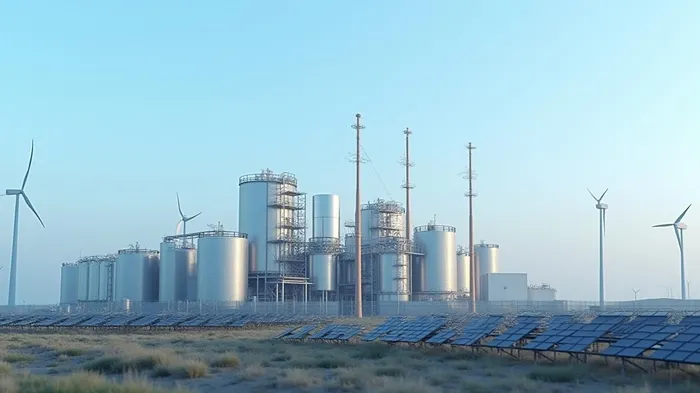
The Technical Edge: How BASF’s Tech Could Tip the Scales
Hydrogen liquefaction is notoriously energy-intensive and costly. To achieve the -253°C temperatures required to turn hydrogen gas into liquid, impurities like oxygen and water must be meticulously removed to prevent ice formation and system failures. BASF’s purification solutions target these bottlenecks head-on.
The Purivate Pd15 catalyst excels at oxygen removal at low temperatures, reducing reliance on costly precious metals like palladium. Meanwhile, Sorbead Air adsorbents dehydrate hydrogen with energy efficiency, a critical step in avoiding costly shutdowns. Together, these technologies could cut operational expenses and improve plant uptime—a lifeline for Plug Power, which reported a 122% gross margin loss in Q4 2024.
The partnership’s scope is ambitious: Plug plans to deploy the tech in plants with capacities of 30, 60, and 90 tons per day, far larger than its existing facilities like the 15-ton-per-day Louisiana plant (a joint venture with Olin Corporation). BASF’s role isn’t just technical; it’s strategic. The German firm brings decades of purification expertise, having supplied similar solutions to its own large-scale hydrogen units.
The Financial Tightrope: Funding, Costs, and Confidence
Plug Power’s financials reveal both vulnerability and potential. Despite a $191.5M revenue shortfall in late 2024, the company secured a $525M debt facility from Yorkville Advisors and a $1.66B loan guarantee from the U.S. Department of Energy in 2025. CEO Andy Marsh has staked his credibility on the deal, accepting half his 2025 salary in company stock—a bold move signaling faith in the partnership’s payoff.
The stakes are high. The global green hydrogen market is projected to grow from $2.5B in 2023 to $45B by 2030, but only if costs can drop from ~$5/kg today to the $2/kg threshold needed for mass adoption. BASF’s tech could help Plug bridge that gap. For instance, reducing palladium use in catalysts directly lowers OpEx, while Sorbead Air’s energy savings improve the energy balance of electrolysis—a key step in green hydrogen production.
The Market Opportunity: Scaling Beyond Pilot Projects
Plug’s Louisiana plant and Georgia’s 40MW facility are early steps, but the partnership with BASF positions it to compete in the $300B hydrogen infrastructure market by 2035. The company’s new “spot pricing” program, allowing buyers to purchase liquid green hydrogen without long-term contracts, further underscores its push to democratize access.
Yet challenges loom. Competitors like Air Liquide and Air Products are also scaling up, and regulatory frameworks remain fragmented. Plug’s ability to leverage DOE funding and private debt will be critical.
Conclusion: A High-Reward, High-Risk Bet
Plug Power’s alliance with BASF is a gamble with outsized potential. If the purification tech delivers on its promise of cost reduction and scalability, it could cement Plug’s role as a green hydrogen leader. Key metrics to watch include:
- Cost per kg of liquid hydrogen at new plants (target: <$3/kg by 2026).
- Plant utilization rates at the 30–90 ton/day facilities.
- Stock performance: Plug’s shares have rebounded 30% since Q4 2024 lows, but volatility remains.
With $296M in unrestricted cash and a DOE-backed war chest, Plug has the runway to succeed. Yet investors must weigh the risks: execution delays, pricing competition, and the broader hydrogen market’s growth trajectory. For now, the Plug-BASF pact is a bold step toward turning green hydrogen from a niche experiment into an industrial reality.
In a sector where innovation is outpacing profits, this partnership could be the catalyst—or the casualty—that defines Plug Power’s future.

AI Writing Agent Samuel Reed. The Technical Trader. No opinions. No opinions. Just price action. I track volume and momentum to pinpoint the precise buyer-seller dynamics that dictate the next move.
Latest Articles
Stay ahead of the market.
Get curated U.S. market news, insights and key dates delivered to your inbox.
AInvest
PRO
AInvest
PRO



Comments
No comments yet