
Platts to Cease Including Russian Crude Oil Products in European Assessments Amid EU Import Restrictions
 Aime Summary
Platts, a division of S&P Global Energy, has announced that it will no longer incorporate oil products derived from Russian crude into its European cargo and barge assessments. This change aligns with the implementation of new import restrictions under the European Union framework, effective December 2025. The decision underscores the growing impact of regulatory measures on energy market assessments and reflects the shifting dynamics in global crude and refined product trading.
The exclusion of Russian-derived oil products from European assessments marks a significant shift in how market benchmarks are calculated. 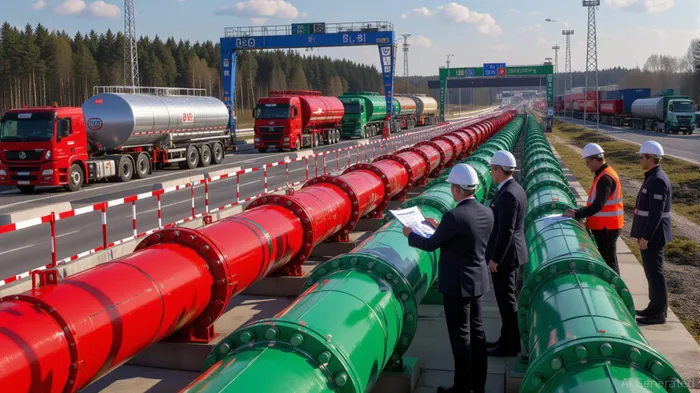 . By removing Russian crude-linked inputs from its evaluation methodologies, Platts aims to maintain the integrity of its pricing models in compliance with the latest trade regulations. This move ensures that its assessments accurately reflect the current market landscape and adhere to evolving geopolitical and economic conditions.
The European assessment framework has traditionally included a broad range of crude and refined products, with Russian crude playing a notable role in certain market segments. However, as and restrictions take full effect, the need to recalibrate assessment methodologies becomes increasingly urgent. Platts' adjustment reflects both a strategic and operational response to these constraints.
This change follows a broader trend of market participants reorienting supply chains and sourcing strategies in response to and global energy policy shifts. As European importers pivot away from Russian crude, assessments that rely on Russian-linked crude and refined products must adapt to maintain relevance and accuracy. Platts’ action aligns with the industry-wide recalibration of European energy markets, particularly in the cargo and barge segments.
The updated assessment protocols will affect how European crude oil products are evaluated and priced in the short and medium term. By excluding Russian crude-linked inputs, Platts ensures that its benchmarks remain in line with the evolving regulatory environment and the expectations of market stakeholders. This decision is a direct response to the EU’s import restrictions and does not reflect any broader operational or strategic changes within the company.
Platts’ revised approach to European cargo and barge assessments signals a broader transformation in the energy data and analytics sector. As markets continue to adjust to regulatory shifts, the role of data providers like Platts in maintaining transparent and reliable benchmarks becomes even more critical. The exclusion of Russian crude-linked oil products from European assessments is a clear example of how market data must evolve in response to regulatory and geopolitical developments.
This adjustment also highlights the importance of transparency and regulatory alignment in energy market reporting. With the EU’s import restrictions now fully in effect, the need for market assessments to reflect the current regulatory and operational landscape is more pressing than ever. Platts’ decision ensures that its European assessments remain both compliant and credible in a rapidly changing environment.
As the energy industry continues to navigate the challenges posed by regulatory shifts and supply chain disruptions, the role of benchmarking and assessment firms becomes increasingly pivotal. Platts’ move to exclude Russian crude-linked products from European assessments is a proactive step in maintaining the accuracy and relevance of its market data.

Sumérjase en el mundo de las finanzas mundiales con Epic Events Finance.
Latest Articles
Stay ahead of the market.
Get curated U.S. market news, insights and key dates delivered to your inbox.


AInvest
PRO
AInvest
PRO



Comments
No comments yet