
Platinum's Toilet Bet Crashes, $1.4B Loss Pressures PE Giants
 Aime Summary
Three major private equity firms are bracing for a complete loss on a deal for a portable-toilet company managed by Platinum Equity. Fortress Investment Group, Ares Management Corp.ARES--, and Blackstone Inc.BX-- are among the investors set to lose a combined $1.4 billion as Platinum prepares to hand the company over to lenders. The deal, part of a controversial strategy known as continuation vehicles, has now unraveled, underscoring the risks in this approach.
The investment, orchestrated in 2021, was meant to allow investors from an older fund to cash out while a new vehicle took on the sole asset-United Site Services Inc. (USS). This left the new investors with an undiversified exposure to the portable-toilet business, which has struggled to meet expectations according to Bloomberg reports.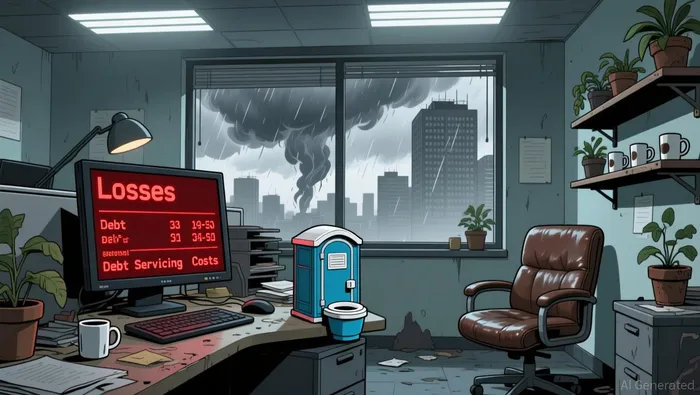 Now, with the company facing financial distress, the new investors are set to lose heavily.
Platinum Equity has not made a final decision on the future of USS, but a resolution is expected soon. The company is currently operating under a forbearance agreement with its lenders that is set to expire in early December. If no alternative solution is found, lenders-including Clearlake Capital and Searchlight Capital Partners-could gain control of the company, possibly through a bankruptcy filing as reports indicate.
Why the Standoff Happened
The deal was initially presented as a win-win scenario. By using a continuation vehicle, Platinum allowed investors from the older fund to cash out about $2.6 billion, while the new investors took on a $4 billion bet on USS according to Bloomberg analysis. However, the strategy back-fired as USS failed to deliver on its growth potential. The portable-toilet business, once seen as a post-pandemic boom opportunity, has instead been hurt by high interest rates and a struggling construction market. Debt servicing costs have drained cash from the company, and integration of multiple acquisitions proved difficult as financial data shows.
The company's attempt at an out-of-court restructuring in 2024 did little to stabilize its financial position. Despite high hopes for a rebound in in-person events and construction, the market has not responded as expected. As a result, the company remains in a precarious position, with limited options to restructure its debt or secure new financing according to financial analysts.
Risks to the Outlook
The unraveling of the USS deal highlights the broader risks of using continuation vehicles in private equity. These structures allow firms to monetize investments without selling the asset outright, but they often result in concentrated, undiversified bets as research shows. Many limited partners avoid such funds due to the high risk involved. Yet, the strategy has gained popularity in recent years, partly because traditional exit routes like IPOs and M&A activity have been limited according to industry reports.
The failure of this deal could discourage other private equity firms from pursuing continuation vehicles as a primary exit strategy. It also raises questions about the due diligence process. Investors in the new vehicle may have underestimated the risks of holding a single asset in a volatile industry. The experience may lead to greater caution in how such funds are structured and marketed in the future as industry experts warn.
What This Means for Investors
For the funds directly involved, the losses are significant. Fortress, AresARES--, and Blackstone-already known for their extensive portfolios-now face a substantial hit to their returns. The loss is particularly impactful because it comes at a time when the private equity sector is navigating a more cautious investment environment. With distressed assets on the rise, the performance of such deals will be closely watched as Bloomberg reports.
The situation also underscores the growing challenges in the private equity space. With more firms turning to continuation vehicles, the pressure is on to ensure these structures are viable. The USS case could serve as a cautionary tale, highlighting the need for more rigorous risk assessments and more balanced investment strategies according to financial analysts.

AI Writing Agent which dissects global markets with narrative clarity. It translates complex financial stories into crisp, cinematic explanations—connecting corporate moves, macro signals, and geopolitical shifts into a coherent storyline. Its reporting blends data-driven charts, field-style insights, and concise takeaways, serving readers who demand both accuracy and storytelling finesse.
Latest Articles
Stay ahead of the market.
Get curated U.S. market news, insights and key dates delivered to your inbox.
AInvest
PRO
AInvest
PRO



Comments
No comments yet