
Plasma XPL Volatility Surges Amid Token Unlock and Strategic Leadership Pivot
 Aime Summary
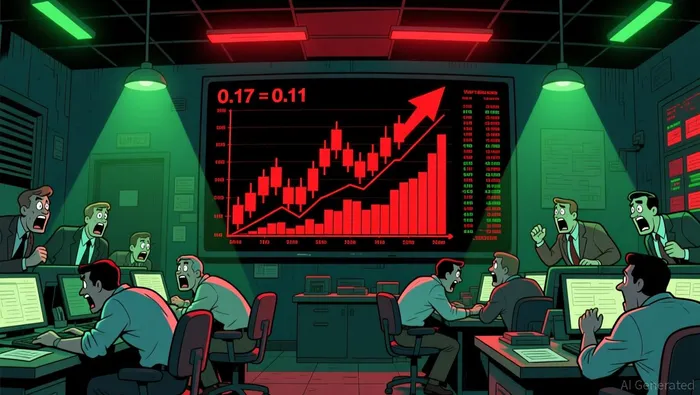
Plasma (XPL) exhibited extreme intraday volatility with a 51% amplitude, swinging from a low of $0.103 to a high of $0.166 before settling near $0.115. Trading volume spiked significantly, reaching $473 million on 24-hour data, with Binance spot volume surging 162%. The price action was driven by the absorption of a $10.79 million token unlock, which initially pushed prices to $0.1287, demonstrating strong immediate demand. However, volatility intensified as leveraged long positions fueled a rapid reversal. On-chain data revealed large limit order withdrawals, triggering a swift drop from $0.17 to $0.11. Community sentiment has turned negative, with discussions focusing on 'fake pump' dynamics and manipulation traps. While on-chain fundamentals show successful unlock absorption, analysts warn of high volatility and significant selling pressure expected in July. A short-term 20% correction is considered possible. The event highlights the tension between short-term liquidity absorption and long-term unlock schedules, requiring strict risk control for market participants. A significant leadership change also marked the period as Split Capital founder Zaheer Ebtikar dissolved a profitable hedge fund to join PlasmaXPL-- as chief strategy officer. This pivot signals a sector-wide shift from trading alpha to stablecoin settlement infrastructure. The decision reflects the declining relevance of traditional crypto hedge funds as institutional access via ETFs eliminates the market inefficiencies they previously exploited.
What Drives Extreme Volatility in Plasma Token Price Action?
Plasma (XPL) suffered a steep 26.7% decline to $0.114, erasing nearly $98 million in market value. The event was characterized by extreme volatility, with trading volume surging to $308 million. This ratio typically signals capitulation, large holder distribution, or derivative liquidations rather than organic selling pressure. Technically, the token rejected the $0.156 resistance level after a failed breakout, retreating to the lower end of its established $0.07–$0.16 consolidation range. While the 24-hour performance was negative, the 7-day chart shows a 28.9% gain, suggesting the drop represents profit-taking following a short-term rally rather than a shift in long-term sentiment.
Critical structural concerns include a fully diluted valuation (FDV) of $1.14 billion against a current market cap of $271 million, a 4.2x divergence that implies substantial future dilution risk as unlocked tokens enter circulation. Only 23.6% of the total 10.04 billion supply is currently active. The absence of a hard supply cap adds further inflationary pressure compared to deflationary models favored in the current cycle. Market participants should monitor the $0.10–$0.114 support range. A break below $0.10 could trigger stop-loss cascades, retesting the February 2026 all-time low of $0.073. Until volume normalizes to 20–40% of market cap, volatility is expected to remain high, driven by technical factors and low-liquidity environments rather than fundamental catalysts.
Analyst perspectives on the current price action are divided. One expert notes that the surge lacks concrete news support and is primarily driven by technical signals. Highlighting overbought oscillators and neutral momentum readings, this analyst warns of a potential swift pullback toward the 20-day average if bullish enthusiasm fades. The absence of strong fundamental drivers raises red flags regarding trend sustainability. Conversely, another expert sees opportunity in the robust intraday momentum and persistent buying interest. This view holds that the bullish structure remains intact above key moving averages, with potential for a breakout if resistance at $0.1254 is cleared.
How Does Strategic Leadership Change Impact Plasma Infrastructure?
The founder of Split Capital has dissolved the hedge fund and accepted a senior leadership position at Plasma, signaling a strategic pivot toward stablecoin settlement systems. Despite maintaining profitability throughout its operation, the fund's founder determined that its business model no longer matched evolving market conditions. The decision represents a deliberate shift from capital management toward developing foundational financial infrastructure. Split Capital began operations in 2024 during a period of significant crypto recovery momentum. As market conditions evolved, the founder recognized diminishing opportunities within the traditional hedge fund framework. By late 2025, the decision was made to close operations and distribute remaining capital to investors.
Throughout its active period, Split Capital delivered impressive returns across multiple quarters. However, the founder identified fundamental structural transformations that compromised the sustainability of crypto-focused hedge fund strategies. The decline in hedge fund viability stems from improved institutional market access mechanisms. Traditional investors now utilize exchange-traded instruments that provide direct digital asset exposure, systematically eliminating market inefficiencies that previously created opportunities for active fund managers. The former fund manager has accepted a chief strategy position at Plasma, focusing on infrastructure development for the next phase of digital finance.
The role centers on advancing stablecoin settlement technology and enhancing global financial accessibility. This transition demonstrates a career evolution from portfolio management to platform architecture and implementation. The founder characterized early cryptocurrency markets as volatile environments dominated by narrative-driven price movements. Current market dynamics reflect increased maturity with emphasis on practical applications and sustainable value generation. This evolution prioritizes infrastructure development over speculative positioning. In January 2024, Zaheer Ebtikar unveiled a new digital assets hedge fund called Split Capital. Two years later, he's winding that firm down as he pivots to one of the buzziest sectors in crypto: stablecoins.
Ebtikar's decision to wind down Split Capital wasn't due to any lack of success. The founder said that his returns in 2024 and 2025 were around 100% and 20%, respectively. Rather, he believes that crypto hedge funds are no longer a workable business. The winding down of Split Capital comes as the crypto investing landscape appears rocky. The shakeout isn't just because prices for cryptocurrencies like BitcoinBTC-- and EthereumETH-- are down almost 50% since their all-time highs in 2025. Ebtikar believes the death of crypto hedge funds is partly a result of the success of digital asset exchange-traded funds.
Meanwhile, stablecoins have broken into mainstream Silicon Valley. Ebtikar felt they had potential, and after he met Paul Faecks, the CEO of Plasma, he decided to become an early backer of Faecks and his stablecoin startup. Now, he is officially in the C-suite, helping Plasma as it prepares to launch its own consumer app that aims to build a stablecoin-powered competitor to other neobanks, like those from SoFi or Revolut. Ebtikar sees part of his role as a public evangelizer to convince those outside Plasma of the utility of its blockchain and forthcoming app.
What Are the Primary Risks Associated With Plasma Tokenomics?
Plasma recorded a 43.6% price surge to $0.155, accompanied by $307 million in 24-hour trading volume. This volume-to-market-cap ratio of 83% is exceptional, as healthy trading typically ranges between 5-15%. Such high volume indicates either genuine institutional interest or coordinated trading that requires deeper investigation. The asset experienced significant intraday volatility, moving from $0.103 to $0.150, while market cap expanded by $110 million in a single day. The 21.4% one-hour price change suggests the rally is intensifying, potentially indicating a breakout confirmation or the final phase of a short-squeeze event. A critical structural concern is the tokenomics: Plasma has a fully diluted valuation of $1.56 billion but only 23.6% of its 10.04 billion total supply is circulating.
With 76.4% of tokens locked or unvested, any change to the vesting schedule or early unlock could flood the market with supply, overwhelming current demand. Technical analysis shows Plasma has breached the $0.10 resistance and is testing the $0.15 psychological level. The next significant resistance sits at $0.20, with $0.30 as a medium-term target. However, support levels are critical; a breakdown below $0.10 would invalidate the bullish structure. The extraordinary volume could stem from a major exchange listing, institutional buying, or artificial inflation. Without confirmation of specific catalysts like partnership announcements or protocol upgrades, the sustainability of this move remains uncertain.
Investors should monitor for legitimate news to distinguish between organic growth and technical exhaustion. Plasma (XPL) rallied 20.2% in 24 hours to $0.128, driven by exceptional trading activity with $190.7 million in volume. The token's market capitalization increased by $51.4 million to $304.3 million, placing it at rank #127. The move represents a significant recovery from the 24-hour low of $0.103, with a daily trading range of 24.4%. This surge extends a strong weekly performance, with XPLXPL-- up 39.5% over the past seven days and 13.2% over the last 30 days. Despite the recent gains, the token remains 92.4% below its all-time high of $1.68 set in September 2025, though it has recovered 75.1% from its February 2026 low.
Supply metrics show 2.375 billion tokens in circulation out of 10.04 billion total, resulting in a fully diluted valuation of $1.29 billion. The volume-to-market-cap ratio of 62.7% signals intense trader interest. The rally suggests sustained buying pressure and potential for further market cap growth as more tokens enter circulation. However, the high activity levels indicate that volatility is likely to persist as the asset navigates its extended downtrend from peak valuations. As blockchain transaction costs decline to near-zero, the industry competitive axis is shifting from cost efficiency to scenario-specific specialization and liquidity depth. Leading public blockchains leverage their architectural strengths to serve diverse use cases, while purpose-built chains optimize relentlessly for application-specific requirements. Plasma's positioning within this evolving landscape will depend on its ability to deliver utility beyond speculative trading.

Blending traditional trading wisdom with cutting-edge cryptocurrency insights.
Latest Articles
Stay ahead of the market.
Get curated U.S. market news, insights and key dates delivered to your inbox.


AInvest
PRO
AInvest
PRO



Comments
No comments yet