
Planet Green Soars 31.28% as Supreme Court Spares Amazon from Greenwashing Liability
 Aime Summary
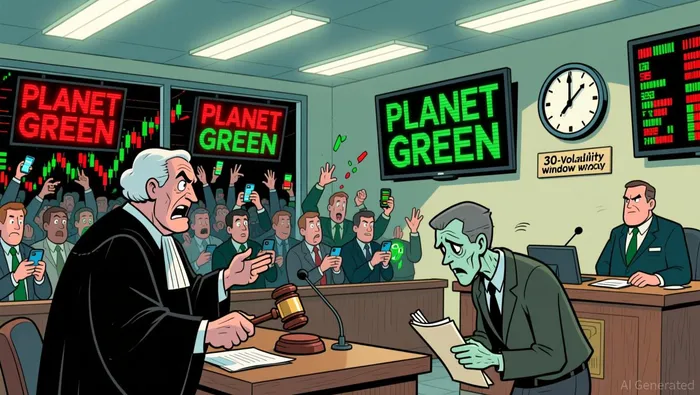
Planet Green surged 31.2775% in pre-market trading on November 21, 2025, signaling a sharp reversal amid a landmark legal development involving AmazonAMZN--. The stock’s rally followed the U.S. Supreme Court’s decision to decline a petition seeking to hold the e-commerce giant accountable for allegedly facilitating greenwashed product listings on its platform.

At the heart of the case was a $500 million liability claim by Planet Green Cartridges, a re-manufacturer of printer cartridges, which accused Amazon of enabling third-party sellers to profit from misleading sustainability claims. The lawsuit alleged that Amazon’s algorithm amplified sales of falsely labeled “remanufactured” or “recycled” cartridges, generating $3 billion in revenue while undermining fair competition. Amazon defended itself by invoking Section 230 of the 1996 Communications Decency Act, which shields online platforms from liability for user-generated content.
The 9th Circuit Court’s March dismissal of the case reinforced Amazon’s legal standing, ruling it could not be held responsible for third-party seller claims. The Supreme Court’s refusal to intervene left unresolved questions about whether Section 230 protections extend to platforms that actively profit from product promotion. The ruling has broader implications for environmental accountability in e-commerce, as greenwashing controversies gain regulatory scrutiny.
Backtest assumptions suggest a potential strategy could focus on legal and regulatory catalysts for Planet Green, leveraging volatility tied to high-profile court decisions. A hypothetical 30-day window post-ruling might test directional bets on market sentiment shifts, though risks remain tied to the unpredictable nature of judicial outcomes and broader market conditions.

Get the scoop on pre-market movers and shakers in the US stock market.
Latest Articles
Stay ahead of the market.
Get curated U.S. market news, insights and key dates delivered to your inbox.
AInvest
PRO
AInvest
PRO



Comments
No comments yet