
Picard Medical (PMI): Physics Over Biology—Solving the Organ Shortage with Engineering
 Aime Summary
In the history of human civilization, few problems have been as intractable as organ failure. For decades, the only cure for end-stage heart failure was a "biological miracle": waiting for another human to die and donate their heart.
The math, however, is tragic.
- In the U.S.: Over 7,500 patients are stuck on the waiting list annually, with 4,000+ new patients added each year.
- In China: There are over 1.3 million severe heart failure patients, yet only ~1,000 transplants occur each year.
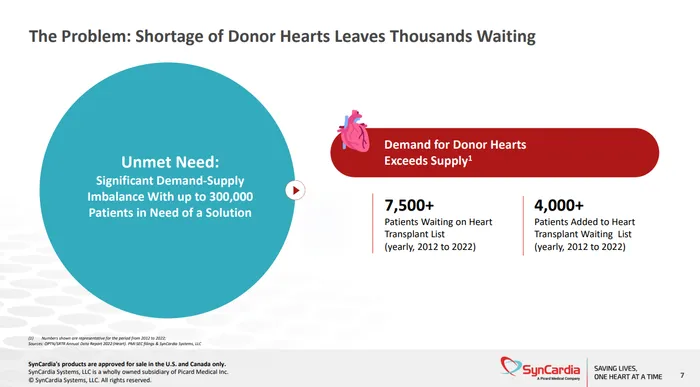
This is a supply chain failure. Relying on biological donors is like trying to run an airline where you can only build a new plane when an old one crashes intact. It is unscalable.
Picard Medical (SynCardia) operates on a different philosophy, one that mirrors Elon Musk's approach to aerospace: Physics allows it, so engineering can achieve it. They are moving the solution from the realm of "biology" (scarcity) to "manufacturing" (abundance).
The Solution: The "Fourth Milestone" of Civilization
Kendall Haven's authoritative list of "250 Inventions That Changed the World" places the Artificial Heart alongside Paper, Penicillin, and the Internet.
- Paper scaled memory.
- Penicillin scaled survival against bacteria.
- The Internet scaled information.
- The Artificial Heart scales time. It is the first time humanity has successfully engineered a replacement for a vital organ's core function.
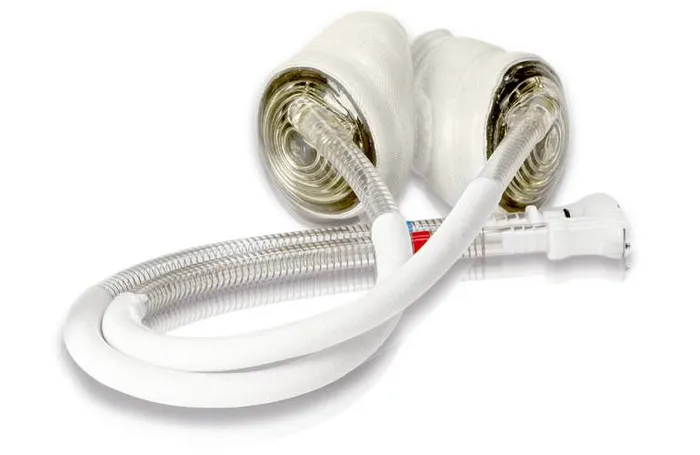
SynCardia's Total Artificial Heart (TAH) is not a subtle "assist device" (like an LVAD). It is a brute-force engineering triumph that removes the failing ventricles and four valves entirely, replacing them with a pneumatically driven titanium and polymer pump. It doesn't "help" the heart; it becomes the heart.
Engineering in the Wild: From Bedridden to Marathon Runner
The most compelling argument for this engineering approach is not found in a lab, but on a running track.
Consider Randy Shepherd. His heart was failing so badly that he couldn't hold his son without needing oxygen. Doctors gave him hours to live. After receiving a SynCardia TAH, he didn't just survive; he thrived.
- The Feature: The device has no sensors. It relies on physics. When Randy runs, his muscles pump more blood back to the heart, filling the ventricles faster. The machine automatically ejects more blood (up to 10L/min) to match the return flow.
- The Result: Randy completed a 4.2-mile run (Pat's Run) carrying his Freedom® Portable Driver in a backpack. He is the first human to run a "marathon" distance without a biological heart.
Or consider Johnny Lemucchi, a football referee who was playing golf just two months after his implant. Or Lev'Veon, a 10-year-old boy whose heart stopped at a birthday party. The TAH served as his "Iron Man heart," keeping him alive for 24 days until a donor was found.
These aren't medical anecdotes; they are engineering stress tests. They prove that a machine can replicate the complex hemodynamics of life.
The Endgame: "Destination Therapy"
Currently, SynCardia is FDA-approved as a "Bridge to Transplant". It buys time. But the ultimate engineering goal is "Destination Therapy" (DT)—where the machine is the permanent cure.
The roadmap is clear:
- Now: The Freedom® Portable Driver allows patients to discharge home, turning a hospital stay into a manageable outpatient life.
- Future (2028+): The Fully Implantable TAH. This next-generation device aims to eliminate external drivelines (wires through the skin), reducing infection risk and improving quality of life.
When this technology matures, the "waiting list" for a heart transplant will become obsolete. Patients won't wait for a donor; they will schedule a manufacturing slot.
Investment Conclusion
Picard Medical represents a bet on Deep Tech. It is the only company in the world that has commercialized a total replacement for the human heart. While the stock market frets over quarterly volatility, the underlying engineering reality is steady: SynCardia has turned the "art" of saving lives into a repeatable, scalable "science." For investors who believe in first principles—that technology inevitably replaces scarcity with abundance—PMI is a unique asset in the healthcare sector.

Tianhao Xu is currently a financial content editor, focusing on fintech and market analysis. Previously, he worked as a full-time forex trader for several years, specializing in global currency trading and risk management. He holds a master’s degree in Financial Analysis.
Latest Articles
Stay ahead of the market.
Get curated U.S. market news, insights and key dates delivered to your inbox.




Comments
No comments yet