
Pi Network Targets Open Mainnet 2026 With Enhanced Security and Real-World Utility
 Aime Summary
Pi Network is transitioning to a fully functional Mainnet by 2026 to support real transactions and decentralized applications according to reports. Migration includes KYC enhancements, palm print verification, and AI-assisted validation to address compliance and scalability challenges as detailed. The network's goal is to build organic demand for PiCoin before it is exposed to external markets, reducing volatility risks and encouraging broader adoption according to analysis.
Pi Network is accelerating its migration to Open Mainnet in 2026, aiming to enable real-world transactions and broader ecosystem utility according to the roadmap. The network has unblocked 2.5 million users for Mainnet migration through enhanced KYC and security upgrades, streamlining the process and addressing previous bottlenecks as reported. The project emphasizes decentralization, security, and real-world utility for PiCoin, positioning itself as a functional digital asset rather than a speculative one according to sources.
The Open Mainnet represents a shift from simulated activity to actual transactions. This change will allow PiCoin to be used for peer-to-peer transactions, decentralized applications, and even Pi-based marketplaces as stated. The goal is to build organic demand for PiCoin before it is exposed to external markets, reducing volatility risks and encouraging broader adoption according to analysis. The migration process has been streamlined through the introduction of palm print verification, batch processing, and AI-assisted KYC validation as detailed.
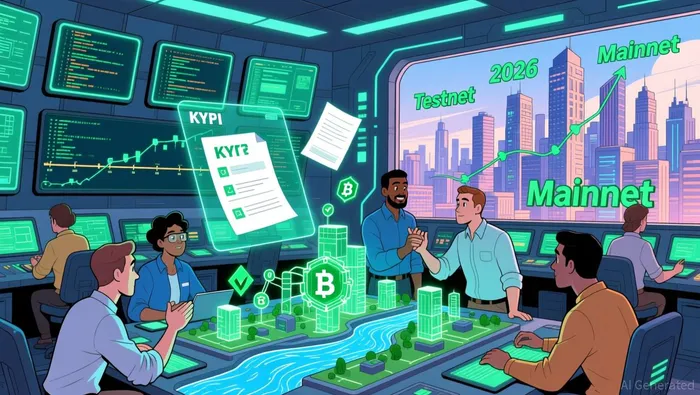
The Stellar Consensus Protocol (SCP) is central to this transition, allowing users to mine Pi coins from smartphones with low resource consumption according to documentation. The project is also exploring broader financial use cases through initiatives like the Pi Network Hackathon 2025 and the launch of Gargoura Digital BankBANK-- on Testnet as reported. These efforts aim to strengthen the Pi ecosystem and support real-world financial integration according to sources.
What is Pi Network's 2026 roadmap for Open Mainnet?
Pi Network's 2026 roadmap includes a transition to a fully functional Mainnet that supports real transactions and decentralized applications according to the roadmap. The network is implementing advanced compliance measures, including Know Your Customer (KYC) systems, transaction monitoring, and operational transparency, to ensure regulatory alignment according to reports. The Open Mainnet period, which began on February 20, 2025, enables real-world usage of Pi tokens through peer-to-peer transactions and decentralized apps as detailed.
The Stellar Consensus Protocol (SCP) is central to this transition, as it allows users to mine Pi coins with low resource consumption according to documentation. The migration process is being handled in batches to ensure security and compliance while scaling verification efforts according to the roadmap. Palm print verification has been introduced to the KYC process as an added security measure without requiring face scans as reported.
The Merchant Engine, which allows merchants to accept PiCoin via smartphones, is another step toward real-world utility according to analysis. The project's emphasis on real-world utility and compliance positions it as a leader in building an inclusive and sustainable digital ecosystem according to sources.
What challenges does Pi Network face during its migration to Open Mainnet?
Pi Network is rolling out Mainnet migrations with a clear roadmap centered around accuracy, fairness, and long-term scalability according to the roadmap. Unlike many crypto projects that conduct simple airdrops, Pi's migration process involves verifying complex mining data accumulated over the past six years as detailed. With over 12 million users already migrated through a native KYC process at no cost, the project is now completing first migrations—including base mining rewards, Security Circle bonuses, lockup incentives, and Node rewards according to reports.
The next phase will focus on second migrations like referral bonuses, followed by regular, ongoing migrations according to the roadmap. While users may notice differences between the displayed transferable balance and their actual migrated balance, that's by design; final balances are based on deep computations across years of mining activity as explained. Pi's tokenomics follows a declining issuance model, with monthly mining rewards decreasing over time and influenced by individual contributions, such as security participation and utility app engagement according to analysis.
The latest updates in 2025 include the second Mainnet migration, which finalizes migration of referral bonuses and pending rewards, using mass migration queues and gradual unlocks to avoid sudden sell pressure according to reports. The KYC improvements include resolving over 1 million blocked or tentative applications and allowing eligible new users to activate Mainnet wallets earlier, boosting ecosystem participation as detailed. Pi Network also held a Hackathon between August and October 2025 to drive real-world utility and launched Gargoura Digital Bank on Testnet, a Pi-native digital banking interface for custody, payments, and on-chain services according to sources.
These initiatives aim to support real financial use cases rather than just social mining or speculation according to analysis. A 1B Pi liquidity pool wallet has been created to support smoother transactions, reduce volatility, and provide a reliable base for dApps according to reports. Combined with migrations and lockups, this strategy focuses on long-term stability rather than short-term hype according to the roadmap.
How is Pi Network addressing short-term price volatility and uncertainty?
Pi Coin's price remains in a tight range due to short-term trading and long-term uncertainty according to market data. Recent updates have unblocked millions of users for KYC and mainnet migration, which could impact supply dynamics and price volatility as reported. As of February 4, 2026, Pi Coin is trading around $0.16, down 9% for the week. The price has been range-bound, influenced by both technical factors and network updates according to analysis.
Recent developments include the unblocking of 2.5 million users for KYC and mainnet migration, with ongoing supply pressure from token unlocks as detailed. While price could temporarily rise to $0.20, significant movementMOVE-- is likely contingent on real ecosystem growth rather than short-term technical momentum according to market analysis. If $0.15 breaks, the price could fall to $0.145–$0.14, reinforcing bearish sentiment as reported. Overall, Pi Coin is expected to remain between $0.14 and $0.18 until fundamental improvements in the ecosystem are evident according to analysis.
The Pi Core Team has officially announced a mandatory upgrade roadmap for Pi Mainnet blockchain nodes, progressing sequentially from v19 to v23 according to official announcements. All Mainnet nodes are currently required to upgrade to v19.6 by February 12, 2026. The mandatory upgrade path is v19.1 → v19.6 → v19.9 → v20.2 → v21.1 → v22.1 → v23.0, and skipping steps is not permitted as detailed. The Core Team emphasized that this roadmap represents core blockchain infrastructure upgrades only and does not signal the activation of DEX or open trading according to official statements.
The current phase is Infrastructure First, ensuring network stability, node consistency, and long-term scalability according to the roadmap. Any future discussion about DEX or open trading can only happen after the core network is fully prepared and officially announced by the Core Team according to official statements. The upgrade process is mandatory and must follow the official activation schedule according to the roadmap. Skipping steps may require full node resynchronization as reported. The Core Team is prioritizing the strengthening of the network's foundational infrastructure before enabling any market-related functions according to official statements. This is part of a broader effort to ensure long-term scalability and security for the Pi Network ecosystem according to analysis.

Blending traditional trading wisdom with cutting-edge cryptocurrency insights.
Latest Articles
Stay ahead of the market.
Get curated U.S. market news, insights and key dates delivered to your inbox.


AInvest
PRO
AInvest
PRO



Comments
No comments yet