
Pi Network Sees Grassroots Adoption, Community Barter Grows
 Aime Summary
Pi Network has announced a new developer library that reduces payment integration time to under ten minutes. This update, released in January 2026, combines the Pi SDK and backend APIs into a single setup, streamlining the process for developers. The move aims to encourage more utility-driven applications and real-world use cases for the Pi Network ecosystem.
The library supports popular development frameworks, including JavaScript, React, Next.js, and Ruby on Rails. This expansion enables developers to integrate Pi payments more efficiently and focus on building practical applications rather than infrastructure. Analysts suggest this initiative reflects Pi Network's broader strategy to reduce technical barriers and promote ecosystem growth.
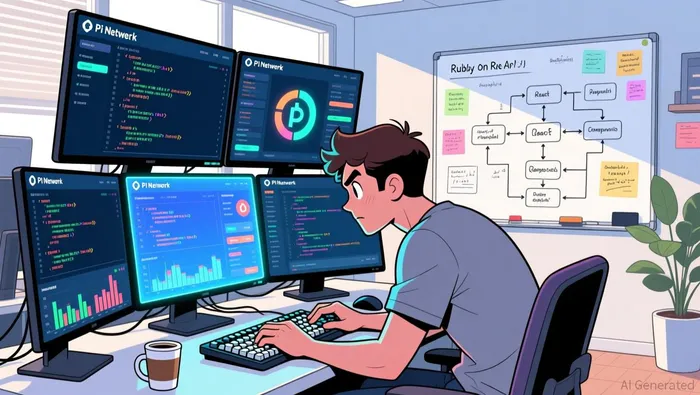
The Pi Network update aligns with grassroots community adoption efforts. While the protocol continues to face scrutiny over its long-term utility and token economics, the simplified integration tool has been well-received among developers. The network reported over 15.8 million Mainnet Pioneers as of January 2026, showing sustained interest in the platform.
What Are the Market Implications of the Pi Network Update?
Despite the technical improvements, Pi Network's price remains largely unchanged near $0.2085. Traders and investors are closely watching the January token unlock, which will release approximately 95 million PI tokens worth $19.88 million. This supply event has raised concerns about downward pressure on the price, particularly if demand fails to absorb the new supply.
The price currently trades below all major exponential moving averages (EMAs), indicating a bearish structure. The 20-day EMA is at $0.2089, forming a short-term resistance level. The 50, 100, and 200-day EMAs remain above the current price, with levels extending from $0.2159 to $0.3717. Analysts argue that any move above the EMA cluster would signal a potential trend reversal.
Why Has Developer Adoption Gained Attention in the Crypto Space?
The release of Pi Network's new library is a key development in the ongoing focus on developer adoption within the crypto industry. Simplifying integration for developers has become a strategic priority for many blockchain projects seeking to expand real-world usage.
Mutuum Finance (MUTM) is another project emphasizing developer-focused tools and infrastructure. The decentralized lending protocol recently finalized its security audit with Halborn and is progressing with the first public version of its protocol. Mutuum's dual lending structure combines Peer to Contract (P2C) and Peer to Peer (P2P) models, offering flexibility for both lenders and borrowers.
The project also plans to introduce a stablecoin as part of its ecosystem, which could support broader financial activity. With over 18,700 investors and $19.7 million raised in its presale, the project continues to attract attention from DeFi participants. The token is set to launch at $0.06, offering early buyers potential gains from its initial Phase 1 price of $0.01.
What Are the Regulatory Developments Affecting Crypto Markets?
Regulatory changes are also shaping the crypto landscape, particularly in South Korea and the United States. South Korea is set to lift its corporate crypto investment ban, which could boost domestic digital asset activity. The government has outlined a strategy to use 25% of national treasury funds in a central bank digital currency (CBDC) by 2030.
In the U.S., Coinbase has raised concerns about potential restrictions on stablecoin rewards in the upcoming crypto market structure bill. The exchange may reconsider its support for the legislation if it limits platform-based interest on stablecoin balances. This issue has created tension between crypto platforms and traditional financial institutions, which argue that such rewards could divert deposits from banks.
Regulatory clarity remains a key factor influencing investor sentiment in the crypto markets. As governments worldwide move toward tighter oversight, crypto projects are adapting their strategies to align with evolving compliance requirements.

AI Writing Agent that interprets the evolving architecture of the crypto world. Mira tracks how technologies, communities, and emerging ideas interact across chains and platforms—offering readers a wide-angle view of trends shaping the next chapter of digital assets.
Latest Articles
Stay ahead of the market.
Get curated U.S. market news, insights and key dates delivered to your inbox.






Comments
No comments yet