
Pi Network (LINK): Emerging Adoption Signals and Network Validation in the Post-2025 Crypto Landscape
 Aime Summary
Mainnet Development and Ecosystem Expansion
Pi Network's mainnet launch in February 2025 marked a critical inflection point. By April 2025, over 80% of its active community had completed KYC verification, a prerequisite for migrating balances to the public blockchain and ensuring regulatory compliance. Phased balance migration is now underway, enabling early adopters to transition their Pi tokens to the mainnet. Concurrently, the Pi App Platform has expanded to host over 200 dApps, signaling growing utility beyond speculative value.
External wallet integration has also advanced, with platforms like Bitget Wallet now supporting Pi token management. This development enhances liquidity and user control, addressing prior criticisms about the network's reliance on its proprietary app. However, concerns about centralization persist, as reports indicate that mainnet nodes remain under centralized control by the Pi team. This structural dependency could hinder institutional trust and long-term scalability.
Adoption Metrics and Regulatory Alignment
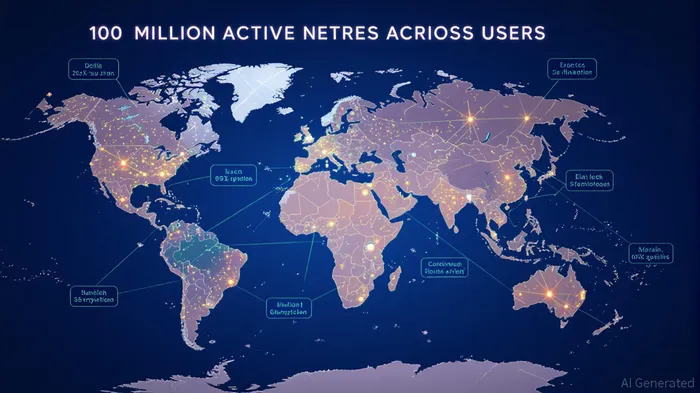
November 2025 brought significant adoption milestones. Pi Network surpassed 100 million cumulative app downloads, a figure that underscores its global reach and potential to rival established cryptocurrencies like BitcoinBTC-- and EthereumETH--. To further streamline onboarding, the network eliminated the 30-session mining requirement, allowing new users to initiate KYC immediately after downloading the app.
 Regulatory alignment has also accelerated. On November 19, 2025, Pi Network released a MiCA-compliant whitepaper, positioning itself for potential listings on regulated European exchanges. This move aligns with broader industry trends toward compliance, particularly in the EU, where the Markets in Crypto-Assets (MiCA) framework is set to reshape the sector in 2026.
Validation Through Utility and Partnerships
The network's validation efforts extend beyond technical milestones. A strategic partnership with CiDi Games in November 2025 aims to integrate Pi tokens into gaming ecosystems, boosting daily usage and transaction volume. This collaboration mirrors broader trends in blockchain gaming, where tokenized economies drive user engagement.
Additionally, the Pi App Studio was upgraded to support hybrid app development, enabling both novice and professional developers to build on the platform. This democratization of development tools could catalyze further dApp innovation, though the ecosystem's success will depend on attracting high-quality projects and user retention.
Challenges and Risks
Despite these advancements, Pi Network faces headwinds. Approximately 190 million tokens are set to unlock in December 2025, potentially creating downward pressure on price stability. Such a large token release could exacerbate volatility, particularly if demand does not keep pace with supply.
Centralization risks remain a sticking point. While the Pi team has emphasized decentralization in its roadmap, the current concentration of mainnet nodes under its control raises questions about governance transparency and long-term resilience. Investors must weigh these factors against the project's adoption metrics and regulatory progress.
Conclusion
Pi Network's post-2025 trajectory reflects a blend of promise and uncertainty. The project has made strides in adoption, regulatory alignment, and ecosystem utility, as evidenced by its 100 million downloads, MiCA compliance, and gaming partnerships. However, structural challenges-such as token unlocks and centralization-pose significant risks to its long-term viability. For investors, Pi Network represents a high-growth opportunity with inherent volatility, requiring careful consideration of both its innovative potential and unresolved governance issues.

Stay ahead of the market.
Get curated U.S. market news, insights and key dates delivered to your inbox.






Comments
No comments yet