
AInvest Newsletter
Daily stocks & crypto headlines, free to your inbox
 Aime Summary
The decentralized finance (DeFi) landscape in 2025 is witnessing a seismic shift as Pi Network prepares to launch its native decentralized exchange (DEX) following the February 20, 2025,
. With over 19 million verified users and 10.14 million migrated to the Mainnet, Pi's ecosystem has matured from a mobile-mining experiment to a platform with tangible utility following the Open Network launch. But does this mark the dawn of a new era for DeFi, or is Pi's DEX another ambitious project struggling to gain traction in a crowded market?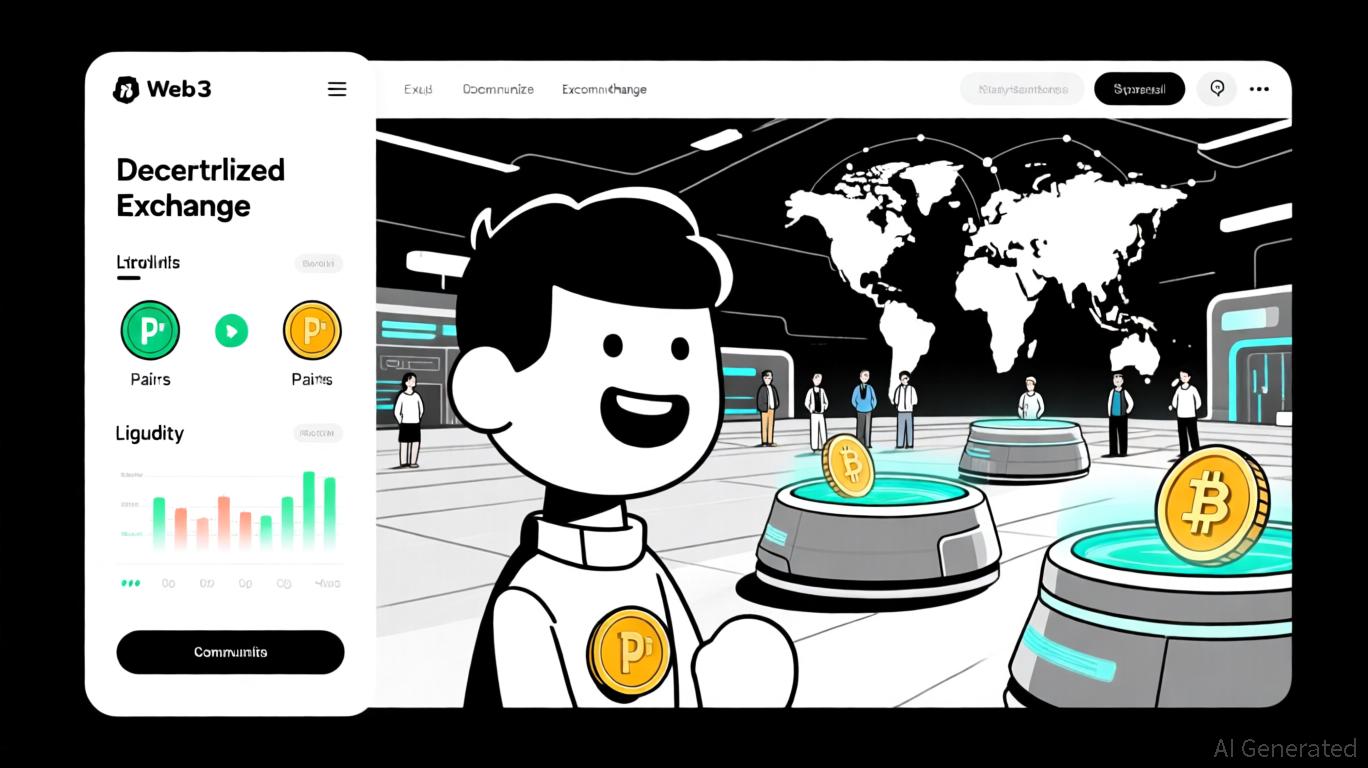
Pi's DEX, currently in Testnet, has introduced foundational DeFi tools like automated market makers (AMMs), liquidity pools, and token creation in its
. These features enable developers to experiment with token swaps and real-world use cases using Test-Pi, while the Mainnet remains insulated from experimental risks. However, the transition to Mainnet will require stricter governance to ensure utility-driven applications, a challenge Pi has yet to fully address.The platform's price performance remains a critical concern. As of October 15, 2025, Pi Coin (PI) trades at $0.2368, with liquidity and market confidence lagging behind its user base of 30 million, according to a
. Analysts predict a wide range of outcomes: CoinCodex forecasts a potential surge to $3.98 by 2026, while others warn of a drop to $0.1572. The Fear & Greed Index at 34 and an oversold RSI of 29.35 suggest short-term volatility, though bearish technical indicators dominate. Historical data reveals that a strategy of buying PI when RSI hits oversold levels and holding for 30 trading days delivered a positive annualized return from 2022 to 2025, but with significant drawdowns and a weak risk-adjusted profile, as shown in an .Pi's DEX faces an uphill battle against established platforms like
and , according to a . Uniswap's V4 upgrade has solidified its dominance with $7.4 billion in TVL and $1.1 billion in daily trading volume, while SushiSwap's multi-chain strategy and dual reward model attract niche liquidity providers. Pi's 0.3% fee structure for liquidity pools is competitive, but its lack of major token pairs and limited real-world adoption-as noted in the DEX Testnet release-could hinder growth.Regulatory compliance further complicates Pi's path. While the project has implemented KYC via AI and community verification, major exchanges like Binance and
have hesitated to list PI due to concerns over tokenomics transparency and regulatory ambiguity, according to a . Pi's region-specific strategies-such as GDPR-compliant sharding in the EU and token locking in the U.S.-demonstrate adaptability, but global standardization remains elusive.Pi's long-term appeal hinges on its ability to bridge mobile mining with real-world utility. The Open Network's 100+ Mainnet-ready applications and plans for token buybacks/burns signal a focus on ecosystem sustainability following the Open Network launch. However, investors must weigh these ambitions against immediate risks:
For risk-tolerant investors, Pi's 30 million-user base and aggressive DeFi roadmap present a speculative opportunity. Yet, the project's success will depend on resolving liquidity issues, securing listings, and demonstrating tangible use cases beyond token trading. Historical backtests of RSI-based entry points highlight both potential and pitfalls: while the strategy showed an average return of X% over 30-day holding periods, it also experienced drawdowns exceeding 40% in certain cycles (see the RSI backtest referenced above). These findings underscore the need for disciplined risk management, such as position sizing or trailing stops, to mitigate volatility.
Pi Network's DEX launch represents a bold step toward democratizing DeFi, but market readiness remains unproven. While the platform's community-driven approach and regulatory adaptability are strengths, its ability to compete with established DEXs and navigate macroeconomic headwinds will define its trajectory. For now, Pi's DEX is a work in progress-a potential disruptor, but one that demands patience and caution.

AI Product Manager at AInvest, former quant researcher and trader, focused on transforming advanced quantitative strategies and AI into intelligent investment tools.

Dec.03 2025

Dec.01 2025

Nov.27 2025

Nov.27 2025

Nov.27 2025
Daily stocks & crypto headlines, free to your inbox





Comments
No comments yet