
Pi Network Completes First KYC Validator Rewards Distribution, Addresses Mainnet Migration Concerns
 Aime Summary
Pi Network completed its first KYC validator reward distribution, verifying 18 million identities via 526 million validation tasks according to reports. - The reward pool was funded by 16.5 million Mainnet migrants and 10 million Pi from the Pi Foundation, yielding a per-task reward of approximately 0.0504 Pi as data shows. - Mainnet migration delays and uncertainty about price growth are causing disengagement among users, with many questioning the project's long-term value according to user reports.
Pi Network's first KYC validator reward distribution marks a significant milestone in its decentralized verification model. The network incentivized 1 million validators to complete over 526 million tasks across 18 million identities, achieving a hybrid AI-human verification system that prioritizes accuracy as detailed in reports. The reward pool, funded by both Mainnet migrants and the Pi Foundation, ensured that validators received a fair share for their contributions. This initiative highlights the project's ability to incentivize community participation at scale, while also addressing challenges in human-in-the-loop AI systems according to analysis.
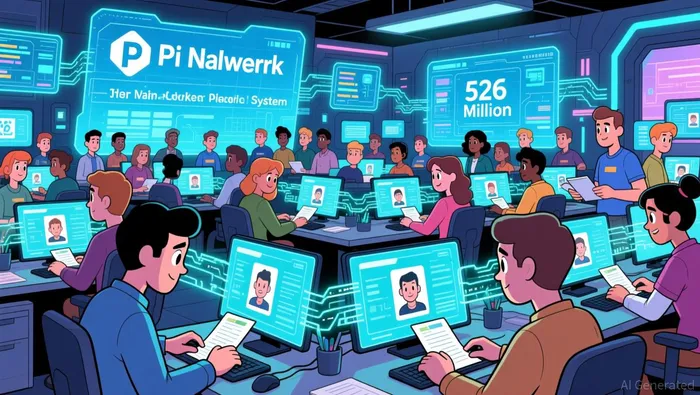
Despite these achievements, user concerns about mainnet migration delays persist. Many users, even after completing KYC, have yet to receive their full Pi balance on the mainnet. This has led to a drop in active mining participation, with some users reporting less than 5% of their invited network remains engaged according to community data. The delays raise questions about the project's ability to maintain user confidence and retain momentum in its growth.
The migration process is a strategic, step-by-step approach that emphasizes security, real-world utility, and long-term sustainability over rapid expansion according to project documentation. This includes mandatory identity verification, secure wallet setup, and the development of real-world use cases. By focusing on these elements before full mainnet launch, Pi Network aims to avoid the pitfalls common in many early-stage crypto projects, such as network congestion and speculative volatility as reported.
Why Is Mainnet Migration Delaying for Many Users?
Mainnet migration is a critical step in Pi Network's journey, but users are experiencing delays despite completing KYC and other requirements according to community reports. According to community reports, only a small portion of mined Pi is available on the mainnet, with the rest seemingly stuck in a pending state. This delay is causing frustration and concern among long-time users who invested time and effort in mining. The slow migration has also led to a drop in user engagement, with fewer active miners contributing to the network according to user feedback.
Dr. Pi, a prominent community voice, has noted that many users are losing interest due to the lack of clarity on when their full Pi balance will be accessible according to community analysis. This uncertainty is compounded by the absence of significant price growth, which many users hoped would come with time. Without clear communication and faster progress, the network risks further disengagement and a decline in its overall ecosystem according to reports.
How Does Pi Network Justify the Slow Migration Strategy?
Pi Network's approach to migration is deliberate and strategic. The project is taking a step-by-step process to ensure that every user meets specific criteria before transitioning to the open mainnet according to official documentation. This includes identity verification, wallet setup, and understanding of the network's security measures. The goal is to build a strong foundation before scaling, which aligns with the broader philosophy of Web3, where trust and utility are key as explained.
Unlike many crypto projects that prioritize rapid expansion and immediate liquidity, Pi Network is emphasizing infrastructure and user readiness according to project analysis. This approach is designed to reduce the risk of fraud, network instability, and speculative volatility. By gradually onboarding users and ensuring all prerequisites are met, Pi Network aims to create a more resilient network capable of long-term growth according to reports.
The migration strategy also includes verified identities as a core pillar of trust within the decentralized ecosystem. Each account corresponds to a real individual, reducing the likelihood of duplicate accounts, bot activity, and manipulation. This model represents a hybrid between decentralization and accountability, ensuring a stable and trustworthy network according to analysis.
What Are the Risks of Continued Delays and Low Engagement?
Continued delays in mainnet migration and low user engagement pose significant risks to Pi Network's long-term success. If users continue to disengage, the network may struggle with reduced mining activity, lower overall participation, and a weakened ecosystem according to user reports. This could affect the network's ability to attract new users and investors, further delaying the path to real-world adoption.
The lack of price growth is also a concern. Many users joined Pi Network with the expectation that the coin would increase in value over time, similar to early cryptocurrencies like BitcoinBTC-- and EthereumETH--. Without a clear path to value appreciation, the incentive for participation diminishes, potentially leading to a decline in the network's user base according to community feedback.
To address these challenges, Pi Network must improve communication with its users and provide clear timelines for mainnet migration according to user reports. Building confidence around the project's long-term value is essential for maintaining trust and ensuring sustained community engagement. If these issues are not resolved, the network may struggle to maintain its current momentum and future growth potential.

Blending traditional trading wisdom with cutting-edge cryptocurrency insights.
Latest Articles
Stay ahead of the market.
Get curated U.S. market news, insights and key dates delivered to your inbox.


AInvest
PRO
AInvest
PRO



Comments
No comments yet