
PI Network Completes First KYC Validator Rewards and Announces Protocol Upgrades in April 2026
 Aime Summary
Pi Network has completed its first KYC validator reward distribution, rewarding over 1 million validators for 526 million completed verification tasks according to reports. The network is preparing mandatory protocol upgrades (V21–V23) between April and May 2026 to enhance performance, stability, and support for smart contracts as detailed. An RPC server has been introduced in the Pi Network Testnet, enabling developers to simulate smart contracts and testTST-- decentralized applications according to MEXC.
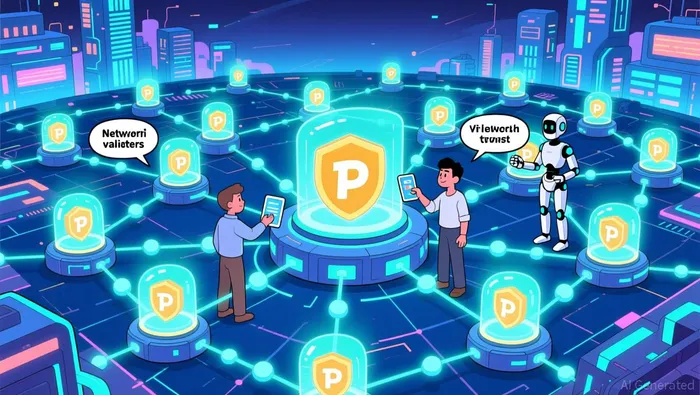
Pi Network’s first KYC validator reward distribution marks a significant step in its evolution as a decentralized platform. The reward distribution, which involved 1,094,680 validators and 526 million successful validations, highlights the scalability and security of Pi’s human-AI collaborative identity verification model as reported. The network’s approach emphasizes community participation and ensures a decentralized, secure system for identity checks. Each successful validation earned validators approximately 0.0504 Pi, underscoring the network’s commitment to rewarding active participants according to data.
The success of this first reward round serves as a learning phase for Pi Network. Future rounds are expected to see higher rewards per validation as AI handles more routine checks, reducing the manual workload for validators as explained. This shift reflects Pi’s broader strategy to balance human oversight with AI efficiency, ensuring both accuracy and accessibility for global users. The decentralized nature of the verification process, involving over one million validators, also reinforces Pi’s commitment to community-driven development as detailed.
In addition to identity verification, Pi Network is preparing a series of protocol upgrades that will enhance its technical capabilities. The first of these, Protocol v21.2, is mandatory and has a hard deadline of April 6, 2026. This update is critical for ensuring network security and compatibility, and all Mainnet node operators must complete it to remain synchronized. Failure to do so could result in disconnection and exclusion from consensus participation according to Coinpedia.
Following v21.2, Pi Network will continue with Protocol v22.1 on April 22 and Protocol v23.0 on May 18. These upgrades are designed to improve transaction processing, introduce smart contract support, and enhance overall performance as stated. The upgrades are part of a broader strategy to transition Pi Network into a fully functional Web3 ecosystem. The network aims to introduce a Token Design Framework under v22, which will require developers to demonstrate real-world applications before launching tokens according to AInvest. This initiative is intended to reduce speculative activity and promote utility-driven development.
What Is the Significance of Pi Network’s Protocol Upgrades in 2026?
The protocol upgrades scheduled for 2026 are a critical step in Pi Network’s transition from a mobile-first cryptocurrency to a fully functional Web3 ecosystem. The upgrades will not only improve performance and stability but also introduce smart contract support, a fundamental feature for decentralized applications as noted. These improvements are necessary for Pi Network to support real-world use cases and attract developers to the platform.
The introduction of Protocol v21.2 and subsequent updates will also enhance network security and compatibility, ensuring that the platform can support higher transaction volumes and more complex functionalities according to analysis. These upgrades are essential for preparing the network for future DeFi and Web3 tools, which will enable users to interact with decentralized applications in a seamless and secure manner.
How Does the RPC Server in Pi Network Testnet Support Developer Innovation?
The introduction of an RPC server in the Pi Network Testnet is a major development for the network’s ecosystem. This feature allows developers to connect directly to the Pi blockchain, simulate smart contracts, and test decentralized applications in a controlled environment as reported. The RPC server provides a sandbox for developers to experiment, identify bugs, and evaluate performance without affecting the main network according to MEXC. This capability is crucial for ensuring that applications are scalable, secure, and ready for real-world deployment.
The RPC server also supports smart contract simulation, which is one of the most exciting features for developers. By testing contract logic and transaction flows before live deployment, developers can reduce risks and improve the reliability of their applications as stated. This testing environment is essential for building practical, community-driven solutions that align with Pi Network’s vision of a decentralized digital economy.
Furthermore, the RPC server enables the network to attract a broader range of developers and encourage collaboration within the Pi Network community according to MEXC. As more developers join and contribute, the ecosystem becomes more diverse and innovative. This milestone demonstrates Pi Network’s commitment to fostering a robust development environment and positioning itself as a serious contender in the Web3 space.
What Are the Implications of Pi Network’s KYC Validator Model for Security and Community Trust?
Pi Network’s KYC validator model represents a novel approach to identity verification in the blockchain space. By combining human validation with AI scrutiny, the network ensures a high level of accuracy and security while maintaining accessibility for a global user base as detailed. This model not only enhances trust in the platform but also reinforces the principles of decentralization and community participation.
The decentralized nature of the verification process also contributes to the network’s resilience. By distributing the validation workload across over one million participants, Pi Network reduces the risk of centralization and ensures that no single entity has control over the verification process according to analysis. This approach aligns with the network’s broader philosophy of collective evolution and shared responsibility.
Moreover, the KYC validator model serves as a mechanism for rewarding active community members, incentivizing them to contribute to the network’s growth and development as reported. This model not only strengthens the network’s security but also fosters a sense of ownership and engagement among users, which is essential for the long-term success of any decentralized platform.

Blending traditional trading wisdom with cutting-edge cryptocurrency insights.
Latest Articles
Stay ahead of the market.
Get curated U.S. market news, insights and key dates delivered to your inbox.


AInvest
PRO
AInvest
PRO



Comments
No comments yet