
Pi Network Advances Open Mainnet and Real-World Integration in 2026
 Aime Summary
Pi Network has shifted focus from mining to real-world applications, including merchant payments and decentralized services, positioning Picoin as a functional currency.
The network launched its Open Mainnet in February 2025, enabling integration with external platforms and expanding real-world use cases for Picoin.
Community engagement remains vital, with millions of verified users participating in mining, transaction validation, and ecosystem development.
Pi Network is evolving from a mobile mining project into a global, community-driven digital ecosystem. The network is preparing for full Open Mainnet adoption, which will allow Pioneers to interact with decentralized applications (dApps), perform verified transactions, and participate in governance mechanisms. This milestone also signals the network is ready for broader adoption and real-world integration, supporting a decentralized economy where Picoin serves as more than just a mined token.
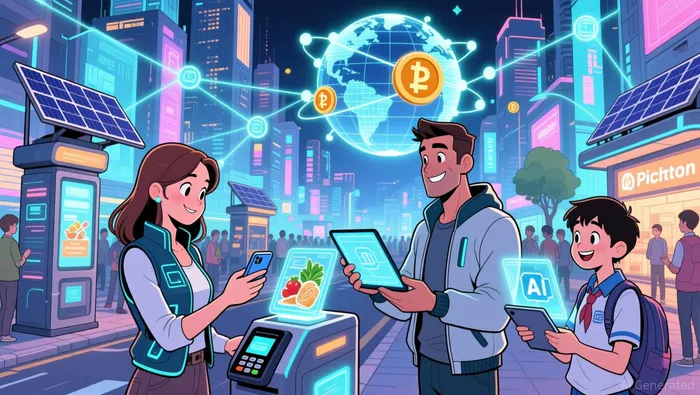
The Open Mainnet represents a pivotal shift in Pi Network's journey, transitioning from a closed development model to one that interacts with the broader blockchain ecosystem. This change allows external platforms to integrate with Pi Network and expand the development of applications and services that use Picoin.
Security is a core focus as the network grows. Implementing features like a Transfer PIN enhances wallet security, adding an additional layer of protection against unauthorized transactions. This measure supports the overall trust and integrity of the Pi Network ecosystem.
How Is Pi Network Building Real-World Utility for Picoin?
Pi Network is integrating Picoin into applications that provide tangible value, such as AI-powered tools, merchant payment solutions, and decentralized services. By anchoring Picoin in practical use cases, the network aims to increase adoption and foster long-term trust among users.
Merchant payments represent a key area for Pi's growth, allowing businesses to use Picoin in point-of-sale systems and transforming it into a functional currency. Decentralized applications further strengthen the ecosystem by enabling peer-to-peer financial services and collaborative platforms.
Community engagement remains central to Pi's strategy. Users are encouraged to participate in using Picoin across applications and services. Governance features allow users to influence decisions regarding ecosystem development and service integration.
What Challenges and Opportunities Lie Ahead for Pi Network?
Despite progress, Pi Network still faces challenges, including interoperability with other major blockchains and DeFi protocols, which limit the token's broader utility. Additionally, the network has faced criticism over the clarity of KYC requirements and the sharing of user data.
Future plans include adding palm-print verification to the KYC system and releasing new badges and incentives for active users. These initiatives aim to strengthen trust and encourage broader adoption of Pi's ecosystem.
The network is also preparing for protocol upgrades, with v19.9 already completed and v20.2 planned for completion by Pi Day 2026. These updates are critical for maintaining network stability and ensuring smooth operation.
Pi Network remains committed to building a decentralized and inclusive environment. The network's large community of verified users and active nodes contributes to the strength and resilience of the platform.
What Is the Role of Verified Identities in Pi Network's Ecosystem?
Verified identities are a cornerstone of the migration process, enhancing trust and accountability within the network. By confirming the authenticity of users, Pi Network reduces the risk of fraud, enables fair participation in governance, and supports the integration of real-world applications.
Verified identities also serve as proof of genuine contribution and participation, ensuring that engagement within the network is recognized and rewarded. This approach aligns with Web3 principles, where transparency and accountability are crucial for a decentralized ecosystem.
Secure wallets are another critical component of the migration plan. As digital assets like Picoin gain real-world utility, ensuring the safety of funds becomes paramount. Pi Network's secure wallet infrastructure safeguards user assets against theft, hacking, or mismanagement.
The emphasis on secure wallets signals that the network is preparing for serious economic activity, moving beyond basic coin mining. By implementing industry-standard encryption and multi-layered security protocols, Pi Network reinforces user confidence and strengthens the foundation for future decentralized applications and financial services.
The migration plan also prioritizes real apps and use cases. Pi Network is actively fostering applications that provide tangible utility for users, such as decentralized marketplaces, financial tools, AI-powered services, and collaborative platforms. Each app contributes to the ecosystem by demonstrating how Picoin can function as a medium of exchange and a utility token.
A stronger Open Mainnet is the ultimate goal of the strategic migration. By consolidating verified identities, secure wallets, and real applications, Pi Network builds a network that is scalable, reliable, and prepared for long-term growth. The Open Mainnet is designed to handle complex transactions, support decentralized finance (DeFi) tools, and accommodate a growing global user base.
Community participation is integral to the migration's success. Pioneers are encouraged to engage in the process, ensuring that each step of the migration reflects real-world needs and expectations. The migration is structured to progress pioneer by pioneer, guaranteeing that no participant is left behind.
The strategic migration also emphasizes long-term value over short-term hype. Many cryptocurrency projects rely heavily on marketing and speculative trading to generate interest, often sacrificing security and utility. Pi Network, by contrast, focuses on building sustainable infrastructure that rewards genuine engagement and utility.
Education and guidance are central to supporting pioneers during the migration. Pi Network provides resources and tools to help users understand each step of the process, from wallet setup to participation in decentralized applications. By prioritizing digital literacy, the network ensures that users are equipped to navigate the migration safely, confidently, and effectively.
The societal impact of Pi Network's strategic migration is also significant. By ensuring verified identities and secure digital assets, the network fosters trust and inclusion within a global user base. Applications developed during the migration phase support real-world economic activities, enabling individuals in regions with limited access to traditional financial systems to participate in the digital economy.
Challenges remain, including regulatory oversight, market volatility, and technical scalability. However, Pi Network's careful, stepwise approach mitigates many of these risks. By emphasizing security, verified participation, and utility-driven applications, the network builds resilience into its architecture, ensuring that the Open Mainnet can support future growth and adoption.
In conclusion, Pi Network's strategic migration plan is a deliberate and thoughtful approach to building a secure, functional, and utility-driven blockchain ecosystem. Verified identities, secure wallets, real applications, and a strengthened Open Mainnet ensure that Pi Network is prepared for long-term success.
Pioneers who actively participate in the migration process are positioned to benefit from enhanced Picoin utility, reliable infrastructure, and meaningful engagement in the Web3 economy.

Blending traditional trading wisdom with cutting-edge cryptocurrency insights.
Latest Articles
Stay ahead of the market.
Get curated U.S. market news, insights and key dates delivered to your inbox.


AInvest
PRO
AInvest
PRO



Comments
No comments yet