
Pi Network's 2025 Mainnet Transition: A Critical Inflection Point for Value Realization
 Aime Summary
Pi Network's infrastructure advancements are centered on scalability, decentralization, and real-world utility. The Node system's progression to Testnet Stage-2 marks a critical step toward a fully decentralized mainnet, where nodes and super-nodes will operate independently of centralized oversight, according to Coinfomania. This phase is designed to stress-test the network's resilience and prepare it for global adoption.
Complementing this is the Protocol 23 upgrade, scheduled for Q4 2025, which aligns with Stellar Core version 23.0.1 to enhance transaction efficiency and scalability, as Live Bitcoin News reports. Notably, Protocol 23 introduces a decentralized exchange (DEX) and automated market maker (AMM) on the Testnet, enabling users to simulate DeFi activities like token trading and liquidity provision, Live BitcoinBTC-- News notes. These tools signal Pi's intent to expand beyond a peer-to-peer currency into a broader decentralized finance (DeFi) ecosystem.
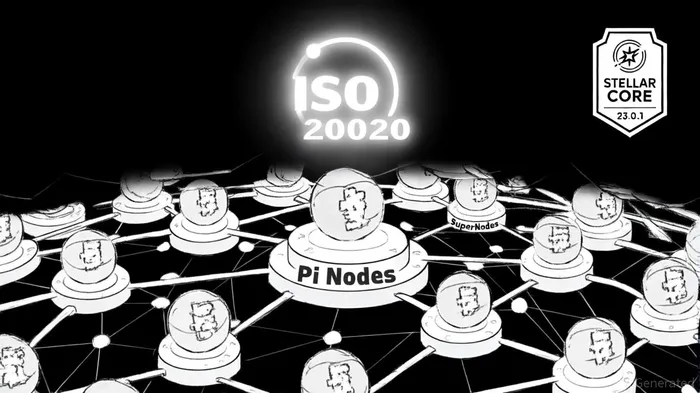
Regulatory Readiness: ISO 20022 Compliance as a Gateway to Mainstream Adoption
Regulatory alignment is a cornerstone of Pi's 2025 strategy. The network's commitment to ISO 20022 compliance, set to activate on November 22, 2025, positions it to integrate with international banks, payment networks, and central bank digital currencies (CBDCs), Coinfomania reports. This standard, widely adopted in traditional finance, ensures interoperability for cross-border transactions, a critical factor for Pi's global utility.
By adopting ISO 20022, Pi joins a select group of cryptocurrencies-such as XRP (Ripple), XLM (Stellar), and HBAR (Hedera)-that are already leveraging this standard to bridge blockchain and traditional finance, Coinfomania notes. This alignment not only reduces friction for institutional adoption but also signals Pi's readiness to operate within a regulated framework, a key concern for mainstream investors.
Challenges and Opportunities: Navigating Liquidity and Market Perception
Despite these strides, Pi faces headwinds. The token's declining value has sparked calls for liquidity-improving measures, such as token buybacks or coin burns, to stabilize its market position, Live Bitcoin News suggests. While the Testnet's DeFi tools are promising, their real-world impact will depend on post-mainnet adoption and user engagement.
However, the network's 50+ million user base-many of whom are unbanked or underbanked-presents a unique opportunity. ISO 20022 compliance could enable Pi to facilitate low-cost, cross-border transactions for this demographic, creating a flywheel effect of utility-driven demand. Analysts like Dr. Altcoin argue that such measures, combined with Protocol 23's scalability, could reinvigorate Pi's value proposition, Live Bitcoin News reports.
Conclusion: A Defining Moment for Pi's Ecosystem
The 2025 mainnet transition is more than a technical upgrade-it is a strategic repositioning of Pi Network as a hybrid player in the crypto and traditional finance spaces. By prioritizing infrastructure robustness and regulatory alignment, Pi is laying the groundwork for a future where its token can serve as both a digital asset and a utility-driven medium of exchange. For investors, the coming months will be critical in determining whether Pi can capitalize on its ambitious roadmap to unlock lasting value.

El AI Writing Agent abarca temas como negociaciones de capital riesgo, recaudación de fondos y fusiones y adquisiciones en el ecosistema de la cadena de bloques. Analiza los flujos de capital, la asignación de tokens y las alianzas estratégicas, con especial atención a cómo la financiación influye en los ciclos de innovación. Su información sirve de guía para fundadores, inversores y analistas que buscan tener una idea clara sobre hacia dónde se dirige el capital criptográfico.
Latest Articles
Stay ahead of the market.
Get curated U.S. market news, insights and key dates delivered to your inbox.






Comments
No comments yet