
Pi's AI Expansion and Compliance Hopes Clash with Developer Strains and Price Volatility


 Aime Summary
Pi Network, the mobile-first cryptocurrency project, has drawn renewed speculation about its token price amid a series of strategic moves into artificial intelligence, robotics, and global financial infrastructure. While the project has not officially confirmed any price targets, analysts and community members are closely watching developments that could signal a turning point for the network.
The most recent catalyst is Pi Network Ventures' $100 million investment in OpenMind, a robotics firm developing an open-source operating system for collaborative AI-driven machines. The partnership, announced on November 3, 2025, leverages Pi's 350,000 active node operators to run AI models on OpenMind's platform, effectively transforming idle computing power into a revenue stream for node runners, according to a Coinfomania report. This initiative aligns with Pi's broader vision of integrating blockchain with real-world applications, potentially enhancing the utility of its native token, PI.
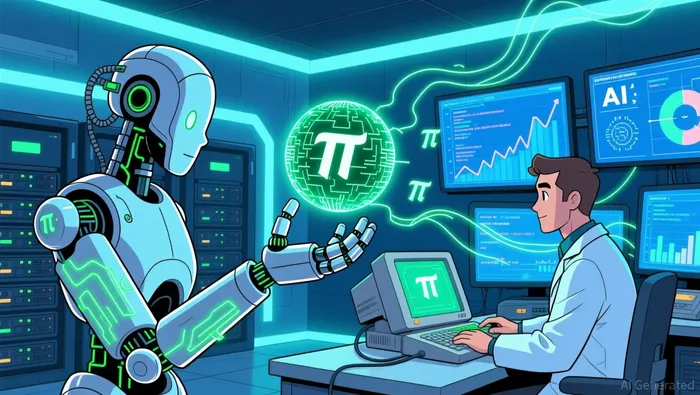 The collaboration underscores Pi's shift from a community-driven experiment to a decentralized infrastructure provider. By enabling node operators to earn Pi tokens through AI computations, the project is creating a "productive AI energy" model, according to a Coinpaper report. This could drive demand for PI as developers and users seek to participate in a network that generates tangible economic value.
Simultaneously, Pi Network is pursuing ISO 20022 compliance, a global banking standard that would facilitate cross-border payments and institutional adoption, according to a Coinfomania article. The move positions Pi alongside established blockchain projects like StellarXLM-- and Ripple, which have already integrated similar protocols. With over 70 million active users and 25 million KYC-verified accounts, Pi's growing user base adds to the speculation that its token could gain traction as a utility asset, as Coinfomania noted.
However, challenges persist. The recent sale of WorkforcePool, the first winner of Pi's Hackathon and a decentralized freelance marketplace, has raised concerns about the sustainability of the developer ecosystem, according to a Yahoo Finance report. The project's departure highlights operational strains, including rising costs for domain fees, server maintenance, and user acquisition, which could deter new developers from building on the Pi blockchain. Community members have criticized the core team for delays in launching the Open Mainnet, a critical step for full decentralization, according to a Coinpedia report.
Market data also reflects mixed signals. While Pi's app has surpassed 100 million downloads—surpassing major crypto platforms like Coinbase and OKX—the token's price has fluctuated, retreating to the $0.20–$0.22 range after briefly hitting $0.30 in October, according to a Coinrise report. On-chain metrics show increased exchange supply, indicating heightened selling pressure, Coinpedia reported. Analysts caution that without clear regulatory clarity or widespread adoption of real-world applications, Pi's price gains may remain speculative, in an FXStreet analysis.
Despite these hurdles, Pi's ecosystem continues to expand. The project's V23 Mainnet Protocol Upgrade and the development of a decentralized exchange (Pi DEX) are expected to enhance functionality, Coinpedia noted. Additionally, partnerships like MamboChain's work on decentralized payment solutions in Kenya illustrate Pi's push into emerging markets, as reported by Coinfomania.
As the network navigates these developments, the absence of an official price confirmation leaves room for both optimism and skepticism. While strategic investments and compliance efforts suggest long-term potential, the project's ability to retain developers and deliver on its roadmap will determine whether the speculative price rise translates into sustained value creation.

Stay ahead of the market.
Get curated U.S. market news, insights and key dates delivered to your inbox.


AInvest
PRO
AInvest
PRO



Comments
No comments yet