
Phreesia (PHR.N) Surges 5%: What’s Behind the Unusual Intraday Move?
 Aime Summary
Technical Signal Analysis: Oversold RSI as a Key Trigger
Despite a lack of major fundamental news, Phreesia’s (PHR.N) stock experienced a sharp intraday increase of 5.04%. Technical analysis reveals that the only active signal today was the RSI oversold condition. This means the stock had been trading near its 14-day RSI low, typically below 30, indicating that it may have been undervalued by short-term traders. While other popular reversal patterns like head-and-shoulders, double bottoms, and KDJ crossovers did not trigger, the RSI oversold condition is a common catalyst for a short-covering or buying-the-dip rally.
However, it's notable that the RSI alone did not fully justify a 5% move. The absence of supporting volume spikes or bullish divergence suggests that other factors, such as order-flow or sector dynamics, may have played a role.
Order-Flow Breakdown: No Major Block Trades or Flow Clusters
There was no available data on real-time order flow or block trading activity for Phreesia today. This means we cannot identify specific institutional or large-capacity trades that might have driven the surge. Without visible bid clusters or a net inflow of funds, it appears the move was not fueled by large-scale institutional buying or short-covering.
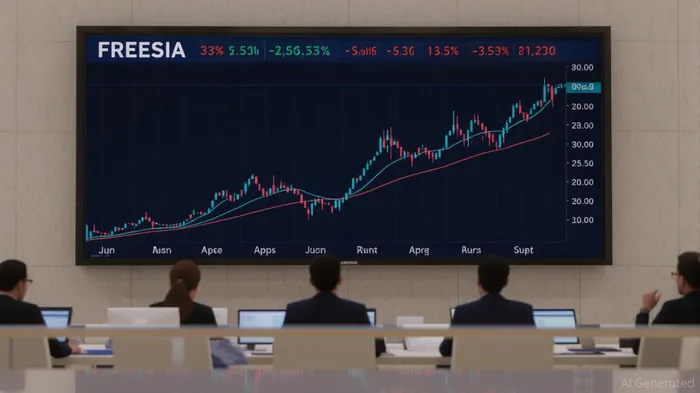 However, the relatively high trading volume of 2,121,302 shares does point to increased retail or algorithmic activity, possibly as a reaction to the RSI oversold signal. This volume was enough to generate a meaningful price response, especially in a stock with a market cap of around $96.9 million, where even moderate flows can cause volatility.
Peer Comparison: Mixed Sector Performance
Phreesia operates in the healthcare services and technology space. A look at key theme stocks shows mixed sector performance, with some outperforming and others underperforming:
- AAP (Apple) and ALSN (Allscripts) saw gains of nearly 1–2%, indicating some broad tech and health IT tailwinds.
- AH (Bank Holding Company) and its preferred share BH.A posted small declines, showing that financials or high beta plays were not the main driver.
- Smaller-cap peers like BEEM and AACG showed significant intraday volatility but in the negative direction, highlighting the lack of broad-based sector momentum.
The mixed performance of peers suggests that Phreesia’s move was likely stock-specific rather than a result of sector rotation. This points toward the RSI-driven rally being amplified by retail or algorithmic momentum traders.
Hypothesis Formation: A Short-Term RSI-Driven Rally with Retail Participation
PHR.N The most plausible explanation for Phreesia’s sharp intraday move is a short-term technical rebound driven by the RSI oversold signal. This condition typically attracts algorithmic traders and retail investors who look to "buy the dip" on oversold readings. The lack of block trading data and the relatively modest volume suggest that this was not a large-scale institutional move, but rather a coordinated retail or automated buying effort.
Supporting this theory is the fact that Phreesia’s RSI signal acted as a trigger for momentum traders, especially in a thinly traded stock like PHR.N. The absence of any major news or earnings releases further confirms that the move was not fundamentally driven.

Stay ahead of the market.
Get curated U.S. market news, insights and key dates delivered to your inbox.




Comments
No comments yet