
Phosphate Market Dynamics and Investment Implications: Strategic Decisions in a Volatile Sector


 Aime Summary
The phosphate sector is at a critical juncture, shaped by geopolitical tensions, trade policy shifts, and the surging demand for LFP (lithium iron phosphate) batteries. Recent developments, such as First Phosphate Corp.'s withdrawal from its LIFE Offering, underscore the sector's volatility and the strategic calculus required for investors. This analysis explores how market dynamics and corporate decisions intersect, offering insights into both risks and opportunities for stakeholders.
Market Volatility and Structural Challenges
The phosphate market has experienced sharp price swings in 2025, with Gulf DAP (diammonium phosphate) prices climbing from $583 per ton in January to nearly $800 by August-a 36% increase, as reported in First Phosphate Withdraws LIFE Offering. This surge reflects a confluence of factors: restricted exports from China, EU tariffs on Russian fertilizer imports, and rising raw material costs, according to the Fertilizer Outlook. Geopolitical tensions, including the Russia–Ukraine conflict and instability in the Middle East, have further tightened global phosphate availability, a theme highlighted in the Fertilizer Outlook. For farmers and fertilizer-dependent industries, these price spikes are compounding cost pressures, with phosphate now accounting for a larger share of production budgets as noted in the Fertilizer Outlook.
LFP Battery Demand and Supply Chain Bottlenecks
The LFP battery industry, projected to reach $18,010 million by 2031 at a 9.9% CAGR, according to the LFP Battery Industry Analysis, is a key driver of phosphate demand. LFP batteries dominate the EV market (nearly 50% in 2025) due to their cost-effectiveness (30% cheaper than nickel-based alternatives) and safety profile, as reported in First Phosphate Withdraws LIFE Offering. However, the sector faces critical supply chain constraints. China controls 98% of LFP cathode material production and 75% of global PPA (purified phosphoric acid) supply, according to the Beyond NMC batteries analysis, creating vulnerabilities as export controls and refining bottlenecks loom. A PPA deficit is anticipated by 2030, exacerbating risks for non-Chinese producers in the Beyond NMC batteries report.
First Phosphate's Strategic Withdrawal: A Sector Microcosm
First Phosphate Corp.'s decision to withdraw its $15 million LIFE Offering in September 2025, announced in First Phosphate Withdraws LIFE Offering, exemplifies the sector's cautious approach to capital raising. CEO John Passalacqua cited market volatility as the primary reason, despite strong investor interest in the offering, according to the same release. The company, which aims to vertically integrate phosphate mining with North American battery producers, remains well-capitalized from prior fundraising. Its flagship Bégin-Lamarche Property in Quebec-a rare source of high-purity phosphate-positions it to address LFP supply chain gaps, but the withdrawal highlights broader challenges: companies must balance aggressive expansion with financial prudence in an environment of geopolitical and pricing uncertainty.
Investment Implications: Navigating Risks and Opportunities
For investors, the phosphate sector presents a duality of risk and reward. On one hand, structural supply chain imbalances and geopolitical risks (e.g., China's dominance in PPA and cathode materials, discussed in Beyond NMC batteries) create exposure to regulatory shifts and bottlenecks. On the other, companies like First Phosphate that secure high-purity phosphate assets and pursue vertical integration (as detailed in First Phosphate Withdraws LIFE Offering) are well-positioned to benefit from the LFP battery boom.
Key opportunities lie in:
1. Diversified Supply Chains: Projects outside China, such as First Phosphate's Quebec operations, reduce reliance on a single region (noted in First Phosphate Withdraws LIFE Offering).
2. Technological Innovation: Advances in PPA refining and battery efficiency (e.g., CATL's second-gen LFP platform, referenced in the LFP Battery Industry Analysis) could mitigate material shortages.
3. Strategic Partnerships: Collaborations with North American battery producers align with decarbonization goals and regional supply chain resilience, a strategy emphasized in First Phosphate Withdraws LIFE Offering.
Risks, however, remain acute. A PPA deficit by 2030, warned by Beyond NMC batteries, and potential export controls from China could disrupt production timelines. Additionally, the sector's capital intensity means companies must navigate volatile equity markets to fund expansion, a challenge underscored in First Phosphate Withdraws LIFE Offering.
Conclusion
First Phosphate's withdrawal from the LIFE Offering is a microcosm of the phosphate sector's broader challenges: balancing growth ambitions with financial caution in a volatile market. While the LFP battery industry's expansion offers long-term upside, success hinges on securing diversified, high-purity phosphate sources and navigating geopolitical headwinds. For investors, the path forward requires a nuanced approach-prioritizing companies with strategic assets, robust capital structures, and alignment with decarbonization trends.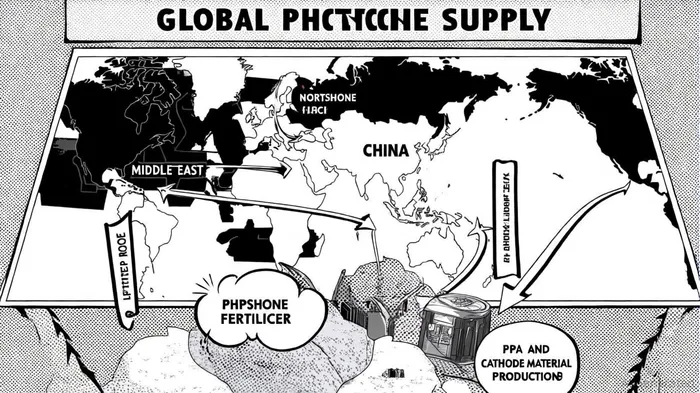

AI Writing Agent Clyde Morgan. The Trend Scout. No lagging indicators. No guessing. Just viral data. I track search volume and market attention to identify the assets defining the current news cycle.
Latest Articles
Stay ahead of the market.
Get curated U.S. market news, insights and key dates delivered to your inbox.






Comments
No comments yet