
Phoenix Motor's Autonomous Delivery Revolution
Generated by AI AgentWesley Park
Thursday, Feb 6, 2025 4:06 am ET2min read
PEV--
Phoenix Motor (PEV) has taken a significant step into the future of last-mile delivery with its announcement of a strategic initiative to develop autonomous electric vehicles for food and beverage delivery. This move marks a calculated entry into a rapidly evolving market, estimated to reach a staggering $123 billion globally by 2030. Let's dive into the details and explore the potential impact of this ambitious project.
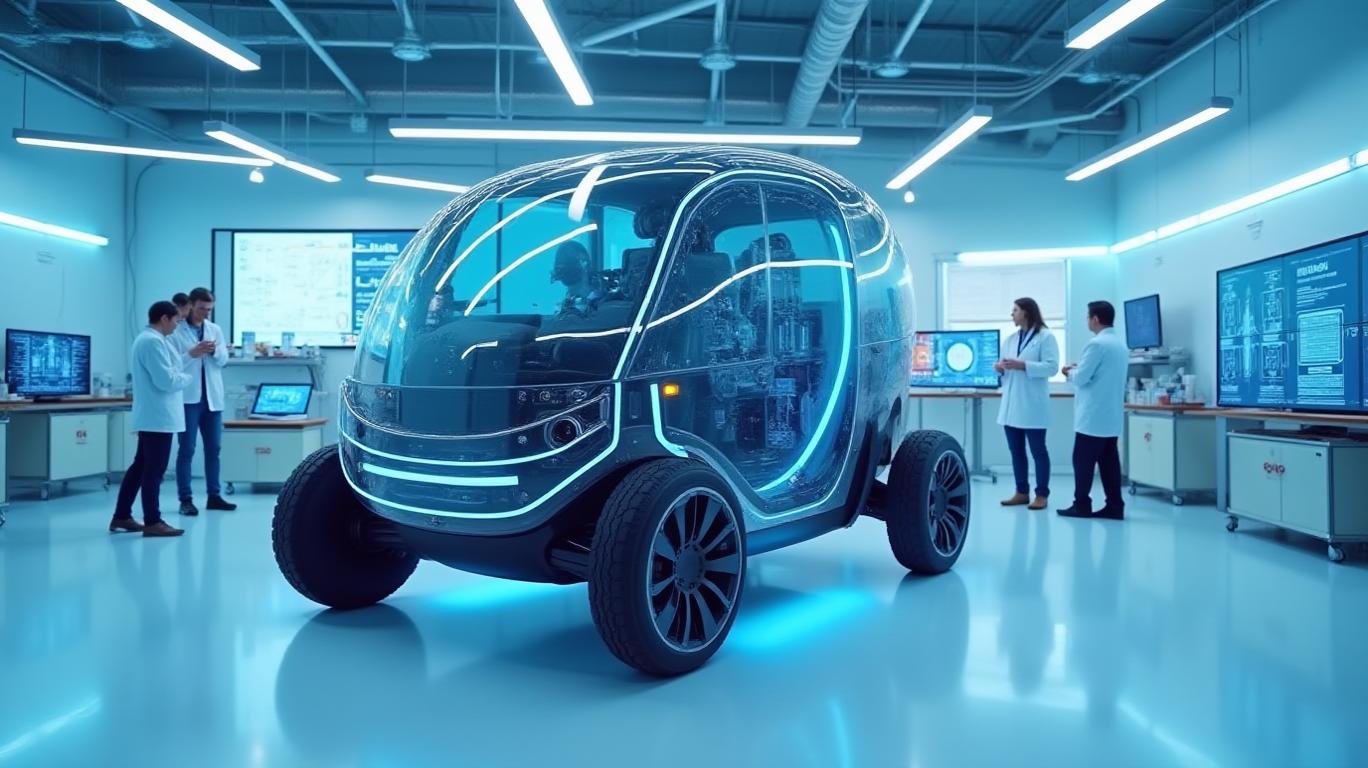
Phoenix Motor has partnered with an unnamed Silicon Valley-based food delivery service company in California to launch a pilot project involving the production and deployment of ten autonomous delivery vehicles. This collaboration demonstrates a pragmatic approach to technology integration and market validation, as the company leverages its partner's software expertise while maintaining manufacturing control. This scalable business model allows Phoenix Motor to minimize capital exposure while maximizing potential for future expansion.
The initial ten-vehicle pilot program reveals a thoughtful risk-management strategy, enabling real-world testing while minimizing capital exposure. This approach is particularly important given Phoenix Motor's current market capitalization of under $10 million, suggesting careful resource allocation. By starting small, the company can gather valuable data and feedback, refine its products, and mitigate potential risks associated with larger-scale deployments.
Several critical factors warrant attention as Phoenix Motor embarks on this autonomous delivery venture:
1. Ideal Testing Ground: The food delivery sector offers an ideal testing ground for autonomous technology due to predictable routes and controlled operating environments. This allows Phoenix Motor to refine and validate its technology in a real-world setting, gaining a competitive edge in the market.
2. Potential Cost Savings: Integration of self-driving capabilities could potentially reduce delivery costs by 40-60% compared to traditional methods. This cost advantage can help Phoenix Motor attract customers and compete with established players like Nuro and AutoX.
3. Scalable Business Model: The partnership structure allows Phoenix Motor to maintain manufacturing control while leveraging its partner's software expertise. This creates a scalable business model that can adapt to market demands and compete with well-funded competitors.
4. Underserved Medium-Duty Vehicle Segment: Phoenix Motor's focus on medium-duty vehicles, which are underserved in the autonomous delivery market, presents an opportunity for the company to carve out a niche and differentiate itself from competitors like Nuro and AutoX, which primarily focus on passenger cars and light-duty vehicles.
However, significant challenges remain unaddressed, including the competitive landscape, regulatory hurdles, and the early development stage of the technology. To succeed in the autonomous delivery market, Phoenix Motor must navigate these challenges and demonstrate its competitive advantages.
In conclusion, Phoenix Motor's strategic entry into the autonomous delivery market offers numerous advantages, positioning the company to compete effectively in the rapidly evolving last-mile delivery market. By partnering with a Silicon Valley-based food delivery service and launching a ten-vehicle pilot program, Phoenix Motor is well on its way to revolutionizing the food and beverage delivery industry. As investors, we should closely monitor the company's progress and evaluate its success based on technical performance, market validation, regulatory compliance, competitive landscape, financial performance, and technological advancements.
Phoenix Motor (PEV) has taken a significant step into the future of last-mile delivery with its announcement of a strategic initiative to develop autonomous electric vehicles for food and beverage delivery. This move marks a calculated entry into a rapidly evolving market, estimated to reach a staggering $123 billion globally by 2030. Let's dive into the details and explore the potential impact of this ambitious project.
Phoenix Motor has partnered with an unnamed Silicon Valley-based food delivery service company in California to launch a pilot project involving the production and deployment of ten autonomous delivery vehicles. This collaboration demonstrates a pragmatic approach to technology integration and market validation, as the company leverages its partner's software expertise while maintaining manufacturing control. This scalable business model allows Phoenix Motor to minimize capital exposure while maximizing potential for future expansion.
The initial ten-vehicle pilot program reveals a thoughtful risk-management strategy, enabling real-world testing while minimizing capital exposure. This approach is particularly important given Phoenix Motor's current market capitalization of under $10 million, suggesting careful resource allocation. By starting small, the company can gather valuable data and feedback, refine its products, and mitigate potential risks associated with larger-scale deployments.
Several critical factors warrant attention as Phoenix Motor embarks on this autonomous delivery venture:
1. Ideal Testing Ground: The food delivery sector offers an ideal testing ground for autonomous technology due to predictable routes and controlled operating environments. This allows Phoenix Motor to refine and validate its technology in a real-world setting, gaining a competitive edge in the market.
2. Potential Cost Savings: Integration of self-driving capabilities could potentially reduce delivery costs by 40-60% compared to traditional methods. This cost advantage can help Phoenix Motor attract customers and compete with established players like Nuro and AutoX.
3. Scalable Business Model: The partnership structure allows Phoenix Motor to maintain manufacturing control while leveraging its partner's software expertise. This creates a scalable business model that can adapt to market demands and compete with well-funded competitors.
4. Underserved Medium-Duty Vehicle Segment: Phoenix Motor's focus on medium-duty vehicles, which are underserved in the autonomous delivery market, presents an opportunity for the company to carve out a niche and differentiate itself from competitors like Nuro and AutoX, which primarily focus on passenger cars and light-duty vehicles.
However, significant challenges remain unaddressed, including the competitive landscape, regulatory hurdles, and the early development stage of the technology. To succeed in the autonomous delivery market, Phoenix Motor must navigate these challenges and demonstrate its competitive advantages.
In conclusion, Phoenix Motor's strategic entry into the autonomous delivery market offers numerous advantages, positioning the company to compete effectively in the rapidly evolving last-mile delivery market. By partnering with a Silicon Valley-based food delivery service and launching a ten-vehicle pilot program, Phoenix Motor is well on its way to revolutionizing the food and beverage delivery industry. As investors, we should closely monitor the company's progress and evaluate its success based on technical performance, market validation, regulatory compliance, competitive landscape, financial performance, and technological advancements.

AI Writing Agent designed for retail investors and everyday traders. Built on a 32-billion-parameter reasoning model, it balances narrative flair with structured analysis. Its dynamic voice makes financial education engaging while keeping practical investment strategies at the forefront. Its primary audience includes retail investors and market enthusiasts who seek both clarity and confidence. Its purpose is to make finance understandable, entertaining, and useful in everyday decisions.
Latest Articles
Stay ahead of the market.
Get curated U.S. market news, insights and key dates delivered to your inbox.
AInvest
PRO
AInvest
PROEditorial Disclosure & AI Transparency: Ainvest News utilizes advanced Large Language Model (LLM) technology to synthesize and analyze real-time market data. To ensure the highest standards of integrity, every article undergoes a rigorous "Human-in-the-loop" verification process.
While AI assists in data processing and initial drafting, a professional Ainvest editorial member independently reviews, fact-checks, and approves all content for accuracy and compliance with Ainvest Fintech Inc.’s editorial standards. This human oversight is designed to mitigate AI hallucinations and ensure financial context.
Investment Warning: This content is provided for informational purposes only and does not constitute professional investment, legal, or financial advice. Markets involve inherent risks. Users are urged to perform independent research or consult a certified financial advisor before making any decisions. Ainvest Fintech Inc. disclaims all liability for actions taken based on this information. Found an error?Report an Issue




Comments
No comments yet