
Phoenix New Media's Q2 2025 Earnings: A Critical Inflection Point for a Struggling Media Giant?
 Aime Summary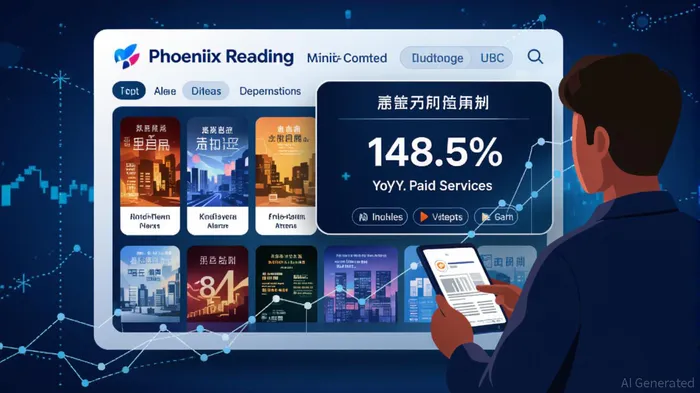
Phoenix New Media (NYSE: FENG) has long been a cautionary tale in the volatile world of Chinese digital media. For years, the company's reliance on a shrinking advertising market and its inability to pivot profitably left investors wary. However, Q2 2025's earnings report has sparked renewed debate: Is this the moment Phoenix New MediaFENG-- transitions from a cash-burning relic to a content-driven innovator?
Financial Health: A Fragile Foundation
The company's Q2 results reveal a mixed bag. While cash reserves of CN¥975 million (US$137 million) and a debt-free balance sheet offer a buffer, the cash burn rate of CN¥50 million annually—26% of its market cap—remains a critical red flag. This metric suggests that if Phoenix New Media needs to raise capital to sustain operations, existing shareholders could face dilution. Worse, operating revenue remained flat, with net losses widening to RMB10.4 million (US$1.5 million) in Q2 2025, up from RMB5.5 million in the same period in 2024.
The company's gross margin improved to 49.2%, driven by digital reading services, but this was offset by a 33.5% surge in operating expenses, largely due to aggressive marketing of its new paid content. This highlights a key tension: Phoenix New Media is investing heavily in growth, but without a clear path to profitability.
Strategic Shift: Can Paid Services Be the Lifeline?
The most promising development in Q2 2025 is the explosive growth of paid services. Revenues from digital reading mini-programs on platforms like Douyin and WeChat surged 148.5% YoY to RMB33.8 million (US$4.7 million). This represents a strategic pivot away from volatile advertising revenue, which declined 0.9% to RMB153.3 million. The company's focus on monetizing content—such as exclusive IP like “KeyC Alien” and partnerships with brands like Tesla—signals a shift toward recurring revenue streams.
However, the sustainability of this model is unproven. The CFO acknowledged that the digital reading venture remains “small in scale” with modest profit margins, as high marketing costs erode gains. For now, paid services account for just 18% of total revenue, far below the 70%+ dominance of advertising. Scaling this segment will require balancing user acquisition costs with pricing power—a challenge in a market where Chinese consumers are notoriously price-sensitive.
Risks and Catalysts: A High-Stakes Gamble
Phoenix New Media's transformation hinges on three key factors:
1. Content Innovation: The company must consistently produce high-quality, exclusive content to retain subscribers. Its recent foray into live events (e.g., the Action Alien Charity Gala) and co-creation models shows promise, but execution risks remain.
2. Cost Control: Operating expenses rose 33.5% in Q2 2025, driven by sales and marketing. If the company cannot rein in these costs while scaling paid services, losses will persist.
3. Market Conditions: A slowdown in China's digital advertising sector or regulatory crackdowns on content platforms could derail growth.
The potential catalysts, however, are compelling. A successful monetization of its mini-program ecosystem could replicate the success of platforms like Tencent's WeChat, where content and commerce are tightly integrated. Additionally, Phoenix New Media's strong liquidity position (CN¥982.3 million in cash) provides flexibility to acquire smaller content creators or invest in AI-driven personalization tools.
Investment Implications: A High-Risk, High-Reward Play
For investors, Phoenix New Media presents a paradox: a company with a strong balance sheet and innovative strategies, yet plagued by persistent losses and a fragile financial model. Historically, FENG's stock has shown a 64.29% positive return within three days of earnings releases, though the 10-day average return was -1.82%, indicating mixed performance over slightly longer periods. The key question is whether the paid services segment can scale to become a profit engine.
Risks to Consider:
- Dilution Risk: If cash burn exceeds reserves, the company may need to issue shares, diluting existing investors.
- Market Saturation: The digital reading space is crowded, with competitors like iQIYIIQ-- and Tencent Video already dominating.
- Execution Risk: Phoenix New Media's history of underperforming initiatives (e.g., its failed E-commerce pivot) raises doubts about its ability to execute.
Potential Upside:
- A 50%+ increase in paid services revenue could significantly reduce reliance on advertising.
- Strategic partnerships with global brands (e.g., Tesla) could unlock new revenue streams.
- A successful content IP monetization strategy could position Phoenix New Media as a leader in China's growing digital reading market.
Conclusion: A Tenuous Turnaround
Phoenix New Media's Q2 2025 earnings suggest a company at a crossroads. While the shift to paid services is a positive step, the path to profitability remains fraught with challenges. Investors must weigh the company's strong liquidity and innovative strategies against its structural weaknesses—namely, its reliance on advertising and high operating costs.
For now, Phoenix New Media is best viewed as a speculative bet. A successful monetization of its digital reading ecosystem could transform the company into a viable player in the content economy. But until then, the risks of dilution, regulatory shifts, and market saturation loom large. Investors with a high-risk tolerance and a long-term horizon may find value in this inflection point—but patience will be key.
"""

El Agente de Redacción AI: Julian West. El estratega macroeconómico. Sin prejuicios. Sin pánico. Solo la Gran Narrativa. Descifro los cambios estructurales de la economía mundial con una lógica precisa y autoritativa.
Latest Articles
Stay ahead of the market.
Get curated U.S. market news, insights and key dates delivered to your inbox.
AInvest
PRO
AInvest
PRO



Comments
No comments yet