
U.S. Philly Fed Manufacturing Index Surprises to the Upside, Signal Sector Rotation Opportunities in Manufacturing-Led Rebound
 Aime Summary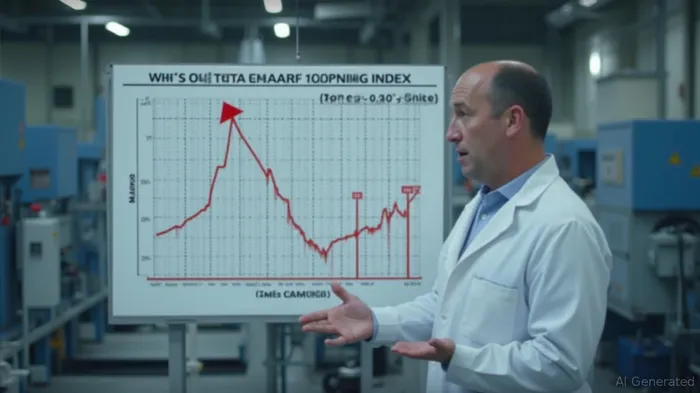
The U.S. Philadelphia Fed Manufacturing Index, a critical barometer of regional industrial activity, has delivered a mixed signal in June 2025. At -4.0, the reading fell short of expectations but remained unchanged from the prior month, offering a glimmer of stability in a sector grappling with weak demand and labor market contraction. While the index's stagnation suggests persistent challenges—such as a declining new orders index and a newly negative employment component—its deviation from the long-term non-recession average hints at a potential inflection point. Analysts project a rebound to 1.00 by the end of the quarter, with long-term growth expected to reach 8.00 in 2026 and 9.00 in 2027. This trajectory raises a critical question: How can investors position portfolios to capitalize on a manufacturing-led economic rebound?
The Historical Blueprint: Sector Rotation in Past Recoveries
History provides a playbook for navigating such scenarios. During the 2009 Great Recession and the 2020 pandemic-induced downturn, cyclical sectors like industrials, materials, and consumer discretionary emerged as early recovery leaders. For instance, the 2020 recovery saw a near-V-shaped rebound in the auto industry, with motor vehicle production rebounding to pre-pandemic levels by July 2020. Similarly, during the post-2009 recovery, the industrials sector regained its footing by 2014, driven by infrastructure spending and rising global demand.
The key to replicating these gains lies in sector rotation—the strategic shifting of capital into sectors poised to benefit from the economic cycle. As manufacturing activity stabilizes, industrials and materials are likely to lead the charge. The industrials sector, which includes aerospace, machinery, and transportation, thrives on increased capital expenditures and infrastructure spending. Meanwhile, the materials sector—encompassing metals, chemicals, and construction materials—benefits from rising demand for raw inputs as production ramps up.
A Modern Twist: Digital Transformation and Supply Chain Resilience
The current economic environment, however, demands a nuanced approach. Unlike the post-2009 recovery, which relied heavily on traditional stimulus, the post-2020 rebound has been shaped by digital transformation and supply chain reengineering. Manufacturers are now prioritizing automation, localized production, and workforce upskilling to mitigate future disruptions. This shift has created new investment themes, such as industrial software, robotics, and supply chain analytics.

Investors should also consider the role of policy tailwinds. The U.S. government's focus on reshoring critical industries—exemplified by initiatives like the CHIPS Act and infrastructure bills—has injected long-term optimism into manufacturing. These policies are likely to boost demand for industrial equipment, construction materials, and energy infrastructure, all of which are core to the sector's growth.
Tactical Strategies: ETFs, ETF Rotation, and Risk Management
To capitalize on these dynamics, investors can adopt a tactical rotation strategy. For example, the Materials Select Sector SPDR Fund (XLB) and the Industrial Select Sector SPDR Fund (XLI) offer broad exposure to the sectors most likely to benefit from a manufacturing rebound. Additionally, sector-specific ETFs like the iShares U.S. Automation & Robotics ETF (IRBT) can capture the digital transformation tailwind.
A disciplined approach to risk management is equally crucial. The VantageVNTG-- 3.0 model, a tactical rotation framework, leverages moving averages to adjust sector allocations dynamically. For instance, if the industrials sector shows signs of weakness (e.g., declining input prices or employment metrics), the model would reduce exposure while maintaining positions in sectors like utilities or consumer staples, which historically perform well during uncertainty.
The Road Ahead: Monitoring Leading Indicators
While the Philly Fed Index provides a snapshot of current conditions, investors should also track leading indicators to time their rotations effectively. The yield curve's steepening, rising building permits, and improving business confidence surveys are all signals of an early-cycle recovery. Conversely, a flattening yield curve or a surge in manufacturing layoffs could indicate the need for caution.
Conclusion: Positioning for the New Normal
The U.S. manufacturing sector is at a crossroads. While the Philly Fed Index underscores ongoing challenges, the historical precedent and policy tailwinds suggest that a rebound is on the horizon. By rotating into industrials, materials, and technology-driven subsectors, investors can align their portfolios with the forces shaping the next phase of economic growth. However, success will require vigilance—monitoring both macroeconomic data and the evolving landscape of supply chain innovation.
As the manufacturing sector adapts to a new normal, the winners will be those who recognize the interplay between cyclical demand and structural transformation. For investors, the key is to balance short-term tactical rotations with long-term exposure to the industries redefining the global economy.

Stay ahead of the market.
Get curated U.S. market news, insights and key dates delivered to your inbox.


AInvest
PRO
AInvest
PRO



Comments
No comments yet