
The U.S.-Philippines Trade Agreement: A Strategic Inflection Point for Southeast Asian Exporters
 Aime Summary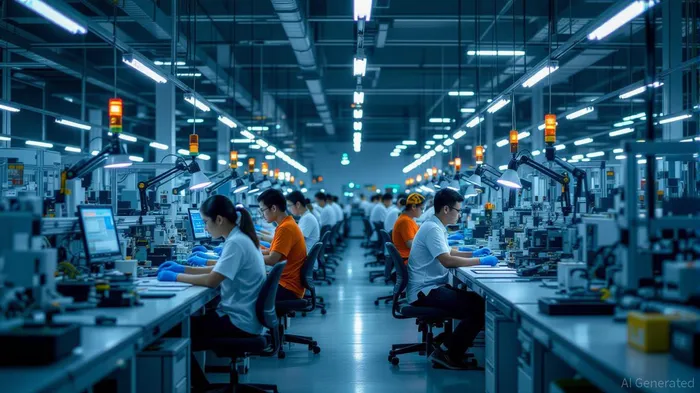
The U.S.-Philippines trade agreement of 2025, announced on July 22, marks a pivotal moment in global supply chain dynamics. By imposing a 19% tariff on Philippine exports while eliminating tariffs on U.S. goods entering the Philippines, the deal reflects a recalibration of economic and geopolitical priorities. For Southeast Asian exporters, this agreement underscores the urgency of diversifying supply chains beyond China, while for investors, it highlights a unique opportunity to capitalize on the Philippines' strategic position in the Indo-Pacific.
Strategic Diversification in a Fractured World
The 19% tariff structure, though asymmetrical, is not arbitrary. It aligns with the U.S. administration's broader “friendshoring” strategy, which prioritizes partnerships with countries aligned on security and economic values. The Philippines, with its English-speaking workforce, robust manufacturing infrastructure, and proximity to key markets, has emerged as a critical node in this network. For U.S. importers, the tariff may raise costs for Philippine electronics and agricultural products, but it also incentivizes the Philippines to open its market to zero-tariff U.S. goods, particularly in agriculture and machinery. This creates a dual dynamic: Philippine exporters face a modest barrier, while U.S. manufacturers gain access to a market that is increasingly attractive as a substitute for China.
Risks and Rewards for Stakeholders
For U.S. importers, the 19% tariff introduces immediate cost pressures, particularly in high-volume sectors like electronics and agriculture. Philippine downstream electronics, which account for 77% of its exports to the U.S., may see margin compression, especially for goods not protected under the WTO's Information Technology Agreement (ITA). However, the Philippines' CREATE MORE Act—offering up to 17 years of tax holidays for qualified exporters—partially offsets these risks. For Philippine exporters, the challenge lies in maintaining competitiveness against lower-tariff alternatives in Vietnam and Indonesia. Yet, the U.S. has signaled a preference for the Philippines over these rivals, citing its military alignment and stable governance.
Conversely, U.S. exporters stand to gain significantly. Zero-tariff access to the Philippines, a market with growing middle-class demand for American dairy, corn, and machinery, could drive short-term revenue growth. For Philippine importers, this means cheaper access to U.S. goods, which may spur domestic consumption and industrial production. The real winners, however, may be investors in Philippine infrastructure and logistics. The U.S. Chips and Science Act's International Technology, Security, and Innovation Fund has already allocated resources to projects like the Luzon Economic Corridor, a trilateral initiative with Japan. These investments are critical for building resilient supply chains and reducing bottlenecks in ports and transportation networks.
Investment Opportunities: Where to Focus
Downstream Electronics Manufacturing: The Philippines' electronics sector, already a major export driver, is poised for expansion. U.S. firms like IntelINTC-- and Texas InstrumentsTXN-- are nearshoring operations to leverage the CREATE MORE Act's incentives and the country's skilled labor force. Investors could target Philippine firms specializing in assembly and testing, which benefit from ITA protections and U.S. demand.
Renewable Energy and Logistics Infrastructure: The Philippines' energy and logistics sectors are attracting U.S. capital. BrightNight Power and NuScale PowerSMR-- are investing in solar and nuclear projects, ensuring stable energy for manufacturing hubs. Meanwhile, port expansions and logistics hubs—funded by the U.S. International Development Finance Corporation (DFC)—are reducing operational risks for global exporters.
Agricultural Exports and Processing: While U.S. tariffs on Philippine coconut oil and pineapplePAPL-- may dampen demand, the zero-tariff access for U.S. agricultural goods creates a niche for Philippine processors. Companies that integrate U.S. inputs into value-added products (e.g., dairy-based goods) could thrive.
Geopolitical Stability as an Asset
The agreement's military cooperation clause, though vague in detail, reinforces the Philippines' strategic value. As the U.S. seeks to counterbalance China's influence in the Indo-Pacific, the Philippines' ports and airbases could become critical logistics nodes. This alignment reduces geopolitical risk for investors, making the country a safer bet than other Southeast Asian markets. The Enhanced Defense Cooperation Agreement (EDCA) further cements this partnership, ensuring long-term stability for foreign capital.
Conclusion: A Calculated Bet for the Future
The U.S.-Philippines trade agreement is more than a tariff adjustment—it is a strategic recalibration of global supply chains. For Southeast Asian exporters, the deal highlights the need to diversify production to countries like the Philippines, where U.S. policy favors friendshoring. For investors, the key lies in identifying sectors poised to benefit from this shift: electronics manufacturing, logistics infrastructure, and renewable energy. While risks persist—particularly for Philippine exporters navigating higher tariffs—the long-term rewards for those who act decisively are substantial. In a world increasingly defined by fragmentation and uncertainty, the Philippines offers a rare combination of economic pragmatism and geopolitical alignment.

Stay ahead of the market.
Get curated U.S. market news, insights and key dates delivered to your inbox.


AInvest
PRO
AInvest
PRO



Comments
No comments yet