
The Philippines' Strategic Pivot: Geopolitical Shifts and Defense Investment Opportunities
The Philippines' geographic position at the nexus of the South China Sea and the Taiwan Strait has transformed it into a critical player in Indo-Pacific security dynamics. Its covert collaboration with Taiwan—facilitated by its U.S. treaty obligations—has created a strategic realignment that opens new investment opportunities in defense technology, maritime logistics, and regional infrastructure. This shift, while driven by geopolitical risk mitigation, also presents a compelling case for investors to capitalize on the growing demand for advanced military systems, resilient supply chains, and infrastructure modernization in Southeast Asia.
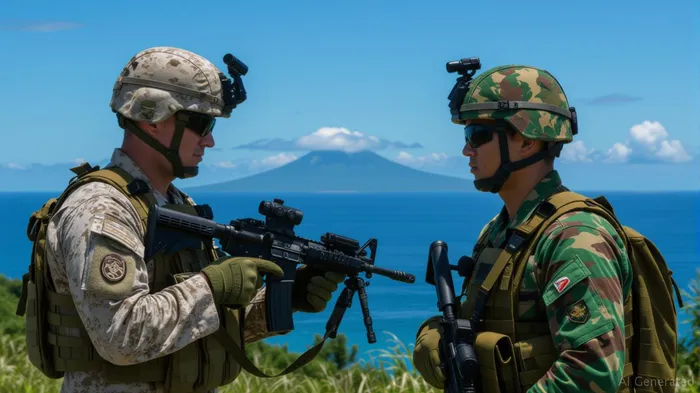
Geopolitical Realignment: Proximity and U.S. Ties
The Philippines' 1951 Mutual Defense Treaty with the U.S. has been reinterpreted in recent years to address cross-strait tensions. With China's assertive military posturing around Taiwan—including live-fire drills in the Taiwan Strait—the Philippines now faces dual imperatives: protecting its sovereignty in the South China Sea and mitigating risks of spillover from a potential Taiwan conflict.
Crucially, the Enhanced Defense Cooperation Agreement (EDCA) has enabled the U.S. military to establish a robust presence in northern Luzon, within striking distance of Taiwan. The deployment of advanced systems like the Typhon mid-range missile (capable of reaching Chinese coastal targets) and anti-ship missiles such as the NEMESIS underscores a strategic pivot toward deterrence.
Defense Sector Catalysts
1. Defense Technology: From Missiles to Drones
The Philippines' modernization drive is fueled by U.S. military financing. In 2024, $500 million in U.S. Foreign Military Financing supported acquisitions such as F-16 fighter jets, Black Hawk helicopters, and 3D-printed reconnaissance drones. These purchases not only bolster Philippine capabilities but also create recurring demand for maintenance, upgrades, and spare parts.
Investors should monitor:
- Lockheed Martin (producer of F-16s and advanced sensors).
- Raytheon Technologies (supplier of missiles like the Tomahawk and Standard Missile-6).
- General Dynamics (naval shipbuilder for coast guard modernization).
2. Maritime Logistics: Ports, Submarines, and Supply Chains
The Philippines' 7,000+ islands require robust naval and logistics infrastructure. Joint U.S.-Philippine exercises in 2025 highlighted the need to secure critical chokepoints like the Bashi Channel, which separates Taiwan from the Philippines.
Opportunities exist in:
- Port modernization: Companies like Huntington Ingalls Industries (U.S. naval shipbuilder) and regional contractors working on projects such as the Luzon Economic Corridor.
- Submarine collaboration: The Philippines plans to acquire submarines with U.S. support, benefiting firms like Boeing (subsystems) and ThyssenKrupp Marine Systems.
3. Regional Infrastructure: Hardening Against Geopolitical Risks
The Philippines' Comprehensive Archipelagic Defense Concept (CADC) prioritizes infrastructure resilience. Projects like the Itbayat Island facility—a joint U.S.-Philippine warehouse for emergency supplies—reflect a focus on dual-use infrastructure that supports both defense and disaster response.
Investors should consider:
- ASEAN-focused infrastructure funds: ETFs like the iShares MSCI Thailand ETF (THD) or regional construction firms involved in port and road projects.
- Cybersecurity providers: Companies like Palo Alto Networks or FireEye, critical for protecting defense networks from Chinese cyber threats.
Valuation Upside and Risks
Upside Drivers
- Regional spending trends: Southeast Asia's defense budget is projected to grow at 4–5% annually through 2027, outpacing global growth of ~2%.
- U.S. Indo-Pacific strategy: The Biden administration's $15 billion Indo-Pacific Partnership for Maritime Security could unlock funding for Philippine logistics hubs and maritime domain awareness systems.
Key Risks
- China-U.S. tensions: Escalation of cross-strait conflict could trigger economic sanctions or supply chain disruptions. Firms exposed to Chinese markets (e.g., Huawei or ZTE) face heightened volatility.
- Political shifts: A potential 2028 Philippine presidency by Sara Duterte—who has historically favored closer China ties—could slow the defense pivot.
Investment Strategy
- Defense Technology Leaders: Overweight exposure to firms like Lockheed Martin and Raytheon, which benefit from recurring contracts and regional modernization.
- Maritime Logistics: Invest in Huntington Ingalls and infrastructure ETFs linked to Southeast Asian projects.
- Risk Mitigation: Hedge against geopolitical volatility with gold ETFs (GLD) or U.S. Treasuries, given the dollar's safe-haven status in Asia.
Conclusion
The Philippines' strategic realignment is not just about military preparedness—it is a catalyst for long-term investment opportunities in defense technology, logistics, and infrastructure. While risks remain, the confluence of U.S. support, Taiwanese collaboration, and regional spending trends positions the Philippines as a cornerstone of Indo-Pacific security—and a fertile ground for investors willing to navigate geopolitical headwinds.

Stay ahead of the market.
Get curated U.S. market news, insights and key dates delivered to your inbox.
AInvest
PRO
AInvest
PRO



Comments
No comments yet