
Philippines SEC Introduces Comprehensive Crypto Regulations
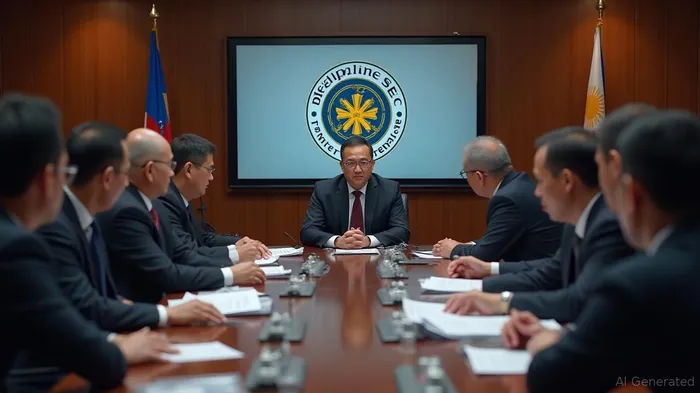
The Philippines Securities and Exchange Commission (SEC) has introduced a comprehensive regulatory framework for cryptocurrencies, marking a significant step towards formalizing the digital assetDAAQ-- landscape in the region. The new regulations, issued on May 30, mandate that all Crypto Asset Service Providers (CASPs) must register locally as legal entities, maintain a paid-up capital of at least 100 million pesos, and establish physical office locations within the country. Additionally, service providers are required to separate customer assets from company funds, submit periodic reports, and comply with Know Your Customer (KYC) and transaction monitoring obligations. Customer data must also be stored within the Philippines, ensuring that all operations are conducted in accordance with local laws and regulations.
The SEC's new rules, outlined in Memorandum Circular Nos. 4 and 5, Series of 2025, establish the SEC Rules on Crypto-Asset Service Providers. These regulations stipulate that all crypto assets being sold to the public must be registered and backed by detailed disclosures about risks, technology, and key individuals involved. This move aims to protect investors by ensuring transparency and accountability in the crypto market. The regulations also mandate that crypto-assets and crypto-asset securities cannot be sold or offered for sale or distribution in the country without a disclosure document or registration, further emphasizing the need for compliance and due diligence.
All crypto asset service providers in the Philippines are now required to obtain a CASP license and adhere to strict disclosure requirements. The disclosure includes information on asset ownership, risks, and operations; crypto companies are required to submit these documents at least 30 days before beginning marketing. The SEC is ensuring that only eligible firms enter the market, so it has set a minimum paid capital requirement of PHP 100 million. However, the SEC has also provided a mechanism for smaller companies to apply. Crypto companies seeking to provide services are required to have a physical office in the Philippines and pay an initial PHP 50,000 filing fee. An additional annual supervision fee on revenue will be levied by the officials.
The SEC and the Anti-Money Laundering (AML) council will monitor the CASP. They will ensure security, professionalism, KYC policy, and fair access for investors. The bill was initially issued on May 30th and later took effect on June 12. It states that if a token/ crypto behaves like a financial product or security under federal law of the country, it is subject to SEC regulation. Therefore, the SEC holds the authority to suspend or revoke the CASP license for noncompliance. Guilty CASP will face a fine of up to PHP 100 million and imprisonment for up to five years.
Luis Buenaventura, head of crypto finance at super-app GCash, said there will be substantial challenges implementing the new CASP rules. “Regulation is rarely perfect on day oneDAWN--, but as long as the regulatory authority takes a progressive approach and stays open to refining the framework over time, then I think this signals the Philippines,” said Nathan Marasign, Partner at MLaw Office.
The implementation of these regulations is part of a broader effort by the SEC to streamline and enhance the regulatory environment for capital markets. New Chairman and CEO Francis Lim has announced the formation of specialized working groups to advise on streamlining regulation to encourage more listings. This initiative is expected to foster a more robust and transparent financial ecosystem, attracting both local and international investors. The new regulatory framework is considered one of the most comprehensive in the region, setting a precedent for other jurisdictions looking to regulate the crypto industry. By mandating licensing and strict disclosure requirements, the Philippines aims to create a secure and reliable environment for crypto-assets, thereby promoting innovation while safeguarding investor interests. The SEC's proactive approach to regulation is likely to have a positive impact on the growth and development of the crypto industry in the Philippines, positioning the region as a leader in digital asset regulation.

Stay ahead of the market.
Get curated U.S. market news, insights and key dates delivered to your inbox.






Comments
No comments yet