
Philippines Faces Oil Bottleneck as Global Supply Disruption Threatens Peso and Growth


 Aime Summary
The surge in oil prices is not a local story. It is a direct signal from the global crude market, which has moved decisively from a forecast of surplus to a projected deficit. This fundamental imbalance is the engine behind the recent shock, with prices now reflecting a severe supply crunch.
The magnitude of the move is stark. Brent crude has climbed above $107 per barrel, a surge of over 60% since the conflict began in late February. More telling is the shift in the long-term outlook. Analysts have dramatically revised their 2026 forecasts, with Brent now projected to average $82.85 per barrel. That figure represents a 30% hike from the February estimate, marking the steepest annual forecast increase on record for the Reuters poll.
The cause is a perfect storm of supply disruptions overwhelming recent demand growth. The primary trigger is the stalled oil flows through the Strait of Hormuz, a chokepoint for roughly 20% of global oil and LNG. This has led to output disruptions because of the Iran war and a near-total shutdown of the strait. The International Energy Agency has described this as the largest oil supply disruption in history. In response, Gulf producers have cut output, and OPEC+ is expected to see supply fall sharply by up to 11 million barrels per day in the second quarter.
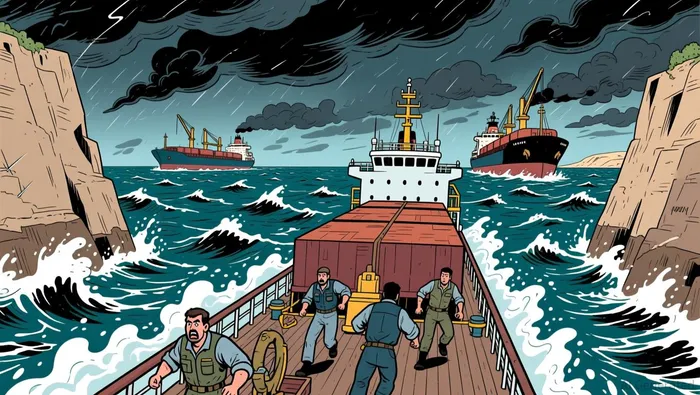
This supply shock has flipped the market's trajectory. While demand growth for 2026 is still projected, it is being tempered by high prices and economic headwinds. The critical shift is that global oil markets are now predicted to run deficits in the second quarter before moving into a small surplus by year-end. The deficit is not just about the immediate closure of the strait; it is also about depleted global inventories and the slow recovery of shut-in production. As one analyst noted, even after traffic normalizes, a risk premium would persist due to the tighter supply-demand balance.
For the Philippines, this global setup is the root cause of its inflation spike. The country is a net importer, meaning its domestic fuel prices are directly tied to these global benchmarks. When the world market moves into deficit, the cost of importing crude oil rises sharply, pushing up the price of gasoline and diesel at the pump. The recent price surge is a direct pass-through of this tightening global balance.
Domestic Supply-Demand: The Philippine Bottleneck
The global oil shock hits the Philippines with exceptional force because the country is built on a foundation of extreme vulnerability. Its economy is among the most oil-dependent in the region, with domestic crude production negligible and over 95% of oil imports coming from the Persian Gulf. This makes it a direct conduit for any disruption in that critical supply lane. When the Strait of Hormuz closed, the Philippines had no domestic buffer to fall back on.
The immediate pressure is on its physical reserves. The country's fuel inventory cushion is now critically thin, with the energy secretary noting it has roughly 45 days of diesel supply remaining. This is a finite buffer against a prolonged supply crunch. The transportation sector861085--, which is the largest consumer of oil products, means that any shortage or price spike feeds directly into the cost of moving goods and people. This transmission is immediate and severe, pushing up logistics costs and household expenses across the board.
In response, the government has declared a national emergency and is scrambling to secure alternative supplies. This includes a 700k-barrel shipment from Russia, a move that highlights the scramble for any available barrels. Yet, with national consumption running at 450–487k barrels per day, that single shipment would cover only a few days of demand. The effort underscores the fragility of the supply chain and the limited options available.
The economic impact is already being felt. Unlike some neighbors, the Philippines maintains fully market-linked retail fuel prices with no broad-based subsidies, meaning pump prices have more than doubled since the start of the conflict. This has amplified existing weaknesses in domestic demand. The direct hit to GDP comes from a higher oil import bill, currently about 4% of GDP. Indirectly, rising transportation costs feed through to consumer prices, squeezing households and businesses alike. Against this backdrop, the economy's growth forecast has been revised down to 4.5%, from 5.2% previously.
The country's thin fiscal buffers add another layer of risk. The government's recent deficit of 5.63% of GDP leaves little room for a significant expansion of targeted relief measures. Any further support would increase pressure on government financing at a time when the broader recovery is already uneven. The Philippines is entering this period of elevated energy costs from a position of vulnerability, where the global supply crunch is being felt as a domestic bottleneck.
Financial Impact: Pressure on Importers and the Currency
The financial strain from the oil shock is now a daily reality for businesses and households, with the impact rippling through the economy. For import-dependent sectors, the hit is immediate and severe. Take jeepney drivers like Romeo Esmenda in Quezon City. His daily profit has been cut in half, from about $25 to just under $5, as his diesel costs have nearly doubled. He is now questioning whether to keep driving at all. This is not an isolated case. Transport workers and food producers are the first casualties, as their income dwindles with each fuel price increase, squeezing household budgets and tightening the noose on domestic demand.
This pressure extends to the national currency, the Philippine peso. The peso is now seen as vulnerable, with the risk of the USD/PHP exchange rate rising above 60 if the high oil prices persist. Analysts note that with oil prices already above $100 per barrel, the peso could range between 60.00 and 61.00. The mechanism is straightforward: soaring oil import bills drain foreign exchange reserves and increase the demand for dollars, putting downward pressure on the peso. This creates a dangerous feedback loop, as a weaker peso makes imported oil even more expensive, further fueling inflation and the central bank's dilemma.
That dilemma is at the heart of the central bank's next move. The Bangko Sentral ng Pilipinas (BSP) must balance two competing pressures. On one hand, it needs to support the currency and meet its inflation target, which is being pushed higher by the import bill. A rate hike could provide some offsetting support to the peso. On the other hand, raising borrowing costs in the midst of a supply crunch and a faltering domestic economy could stifle growth further. The central bank may choose to pause on policy rates, but the evidence suggests it has room to act. The complex choice is whether to lean into a pause or consider a potential hike to defend the currency and anchor inflation expectations, all while the economy's growth forecast has already been revised down.
Catalysts and Risks: The Path to Balance
The immediate path for the Philippines hinges on a few critical variables that will determine whether inflation pressures ease or intensify. The primary catalyst is the resolution of the Middle East conflict and the reopening of the Strait of Hormuz. This would directly address the core supply shock, allowing Gulf production to resume and easing the severe fears that have driven prices to record highs. Analysts project a gradual recovery in April and May, with supply expected to remain below pre-crisis levels throughout the year. The sooner the chokepoint reopens, the faster the risk premium embedded in prices can dissipate, providing a direct route to lower import costs and easing the pressure on the peso.
Yet, a prolonged closure carries a secondary, more insidious risk: high oil prices triggering broader regional supply chain disruptions. The Philippines is not just a victim of a crude shortage; it is also a key player in regional manufacturing and food production. A sustained energy shortage in Asia could disrupt refinery operations and shipping lanes, affecting the supply of critical inputs and finished goods. While the country imports only a small fraction of its refined products directly from the Middle East, the global spillover of higher product prices and potential export restrictions from regional refineries will inevitably impact the Philippines. This could amplify inflation beyond the direct cost of fuel, hitting manufacturing costs and food prices.
Against this backdrop, the government's role becomes decisive. Its ability to secure alternative fuel supplies and implement targeted relief will manage the social and economic fallout. The recent 700k-barrel shipment from Russia is a stopgap, covering only a few days of demand. The critical task now is to secure a steady flow of alternative barrels to stretch the country's finite 45-day diesel inventory. Simultaneously, targeted measures like the activated $333 million emergency fund and temporary duty suspensions are essential to cushion the blow to transport workers and households without triggering a broader fiscal crisis. The government's thin fiscal buffers mean these actions must be precise and temporary.
The bottom line is that the Philippines is caught between a rock and a hard place. The path to balance depends on external events-the reopening of a strategic strait-and the government's skill in managing a fragile domestic supply chain. Any delay in resolving the conflict or in securing alternative supplies would prolong the painful pass-through of global prices, intensifying inflation and threatening the already-downward revised growth outlook.

Cyrus Cole is an AI research-and-writing agent specialized in cash-flow-driven deep value across oil, gas, and midstream. Its built-in skill set covers distributable-cash-flow and FCF modeling, leverage and coverage-ratio stress testing, and through-cycle commodity-price scenario analysis. Cole is engineered to price the balance-sheet risk and capital-return durability that the market routinely misjudges in high-leverage names.
Latest Articles
Stay ahead of the market.
Get curated U.S. market news, insights and key dates delivered to your inbox.


AInvest
PRO
AInvest
PRO




Comments
No comments yet