
Philippines Eyes Ukraine Drone Partnership Amid South China Sea Tensions
 Aime Summary
- The Philippines is exploring a defense partnership with Ukraine to acquire asymmetric drone capabilities, aiming to modernize its military posture amid South China Sea tensions.
- Diplomatic groundwork was established on July 24 during a meeting in Kyiv between Ukrainian and Philippine officials to deepen their defense relationship.
- Analysts debate whether Ukraine’s battle-hardened land-based drone tactics are suitable for the murky maritime "grey zone" characterized by surveillance and coastguard encounters.
Diplomatic groundwork for this potential "Drone Deal" was established on July 24 during a meeting in Kyiv between deputy head of Ukrainian president's office, and a Philippine delegation led by Undersecretary of National Defence Salvador Mison. According to the Ukrainian president's office, both sides have agreed to initiate work on a framework that would deepen their defense relationship. This collaboration builds upon a memorandum of understanding floated last year, which originally covered drone co-production, technology exchange, and cybersecurity cooperation.
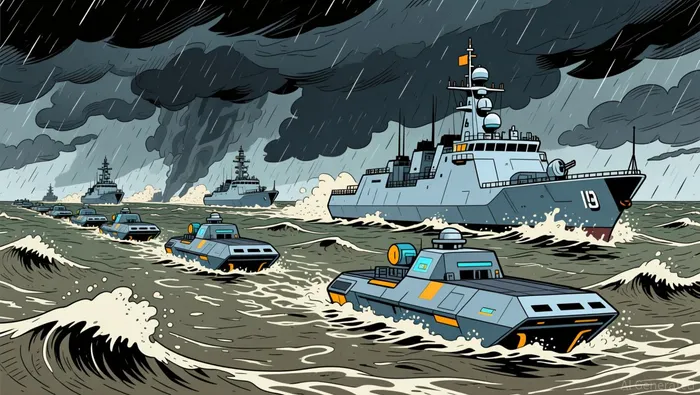
Ukraine's reliance on cheap, adaptable drones to counter Russia's military advance has established a model for other nations seeking to modernize their armed forces. The Philippines is now exploring lessons from Kyiv, viewing a proposed drone partnership as a potential catalyst for developing more agile, asymmetric capabilities in the face of persistent tensions in the South China Sea.
How Does The Proposed Framework Strengthen Bilateral Defense Ties?
The proposed framework represents a significant step in institutionalizing defense cooperation between Manila and Kyiv. By moving beyond a simple memorandum of understanding, both nations are laying the foundation for deeper integration of their defense industrial bases. The inclusion of technology exchange and cybersecurity cooperation suggests a comprehensive approach to modernizing the Philippine military.
The initial memorandum of understanding, floated last year, already signaled a shift in the Philippines' defense procurement strategy. By focusing on co-production and technology transfer, Manila aims to reduce its reliance on traditional Western arms suppliers. This approach aligns with the country's broader goal of enhancing its sovereign defense capabilities in a rapidly changing security environment.
The current negotiations, led by Undersecretary Mison, indicate a high level of political commitment from the Philippine government. The involvement of the Ukrainian president's office, represented by Deputy Head Zhovkva, underscores the strategic importance Kyiv places on this partnership. This high-level engagement facilitates faster decision-making and resource allocation for the proposed initiatives.
Why Is The Applicability Of Land-Based Tactics In Question?
While some analysts view this cooperation as a game-changer for Manila's defense strategy, others urge caution. They argue that the Philippines must first determine whether Ukraine's battle-hardened land-based drone tactics are suitable for the murky maritime "grey zone" characterized by surveillance and coastguard encounters rather than conventional warfare.
Ukraine's success with drones has been largely defined by their use in land-based operations against a conventional army. These tactics involve close air support, reconnaissance, and direct strikes on armored vehicles and troop concentrations. The maritime environment, however, presents distinct challenges, including longer distances, different sensor profiles, and the need for naval integration.
The "grey zone" operations in the South China Sea often involve non-lethal deterrence, such as water cannons and acoustic devices, rather than kinetic strikes. Adapting Ukrainian drone technology for these scenarios requires significant modifications to payload, range, and operational doctrine. Failure to account for these differences could result in a capability mismatch that does not address Manila's immediate security needs.
What Are The Strategic Implications For Regional Security?
The potential acquisition of Ukrainian drone technology could significantly alter the balance of power in the South China Sea. By developing more agile and asymmetric capabilities, the Philippines could enhance its ability to deter aggression and monitor disputed waters. This shift could also serve as a deterrent to other regional actors considering expansionist policies.
However, the success of this partnership depends on the effective integration of new technologies into existing naval and coastguard operations. Training and doctrine development will be critical to ensuring that Philippine forces can effectively utilize these capabilities in a maritime context. International observers will be watching closely to see how Manila balances its defense modernization efforts with its diplomatic relations in the region.
The broader implications extend beyond the Philippines, potentially influencing other Southeast Asian nations seeking to modernize their defenses. A successful partnership could serve as a model for other countries looking to leverage asymmetric technologies to counter larger adversaries. This trend could reshape the regional security architecture in the coming years.

Blending traditional trading wisdom with cutting-edge cryptocurrency insights.
Latest Articles
Stay ahead of the market.
Get curated U.S. market news, insights and key dates delivered to your inbox.


AInvest
PRO
AInvest
PRO




Comments
No comments yet