
The Philippines' Crypto Regulatory Shift: Opportunities for Compliant Market Participants


 Aime Summary
The Philippines' cryptocurrency market is undergoing a transformative phase in 2025, marked by stringent regulatory reforms and a recalibration of competitive dynamics. As the Bangko Sentral ng Pilipinas (BSP) and the Securities and Exchange Commission (SEC) enforce a more structured framework, the landscape is shifting toward compliance-driven growth. For investors and market participants, this regulatory evolution presents both challenges and opportunities, particularly for entities that align with the new rules while innovating within their constraints.
Regulatory Tightening: A New Baseline for Compliance
The Philippine regulatory authorities have prioritized financial stability and consumer protection in 2025. The SEC's Crypto-Asset Service Provider (CASP) Rules, issued in May 2025, mandate that all crypto service providers register as corporations with a minimum paid-up capital of PHP 100 million and maintain a physical office in the country according to BSP and SEC guidelines. These requirements, coupled with the BSP's Virtual Asset Service Provider (VASP) licensing regime, have effectively raised the bar for market entry.
A pivotal enforcement action in December 2025 underscored the regulators' resolve: major global exchanges like Coinbase and Gemini were blocked in the Philippines after failing to secure local licenses. This followed similar actions against Binance in March 2024, signaling a consistent strategy to eliminate unregulated platforms and channel activity through licensed intermediaries. For investors, this highlights the critical importance of regulatory alignment-only platforms like PDAX and CoinsPH, which operate under official oversight, are now positioned to serve the market.
Market Growth and Strategic Opportunities
Despite the regulatory tightening, the Philippines' crypto market is poised for robust expansion. According to a report by IMARC Group, the market is projected to reach USD 114,699.01 million by 2033, growing at a compound annual rate of 9.68% from 2025 to 2033. This growth is fueled by metaverse adoption, blockchain integration in sectors like healthcare and supply chain, and the increasing use of cryptocurrencies for cross-border transactions.
Licensed exchanges are capitalizing on this momentum. PDAX, for instance, has expanded its partnerships, including a collaboration with Investagrams to enhance public access to crypto trading. Similarly, CoinsPH and Bloomsolutions are leveraging their existing user bases and integrated financial services-such as remittances and bill payments-to diversify revenue streams according to fintech reports. These strategies reflect a broader trend toward financial inclusion, where crypto platforms are not just trading venues but also gateways to broader digital financial services.
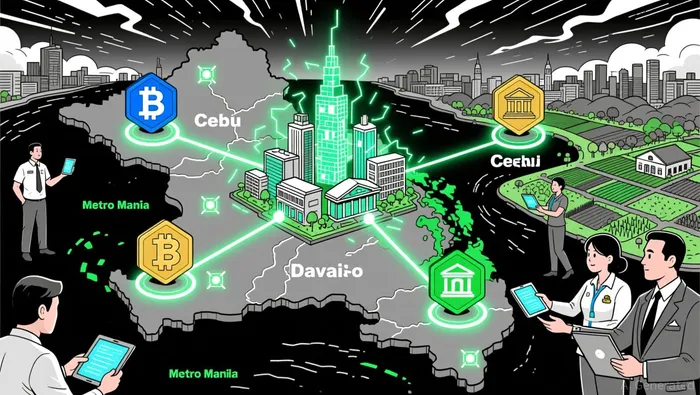
Competitive Positioning in a Regulated Ecosystem
The regulatory environment has also reshaped competitive strategies. The BSP's three-year moratorium on new VASP licenses, imposed in August 2022, has limited market entry and consolidated the dominance of existing players. This has forced licensed firms to focus on operational resilience, compliance frameworks, and customer trust. For example, UnionBank and Kraken have emphasized transparent governance and risk management systems to align with the SEC's CASP guidelines.
Moreover, the regulatory push for ESG (Environmental, Social, and Governance) alignment has become a differentiator. Platforms that integrate sustainable practices-such as energy-efficient blockchain solutions or community-driven financial literacy programs-are gaining traction according to ICLG regulatory analysis. This trend is particularly relevant in the Philippines, where ESG considerations are increasingly tied to public trust and institutional partnerships.
Strategic Entry for New Participants
For firms seeking to enter the Philippine crypto market, the path forward is clear: compliance must be the foundation of any strategy. New entrants must either secure VASP licenses-a process that remains challenging due to the moratorium-or partner with existing licensed entities to access the market. Additionally, innovation within regulatory boundaries is key. For instance, leveraging blockchain for supply chain transparency or developing micro-investment tools could align with both regulatory goals and market demand.
Investors should also monitor the BSP's sandbox framework, which allows experimentation with new technologies under controlled conditions. This provides a pathway for startups to test ideas while adhering to prudential requirements, offering a strategic advantage in a highly regulated environment.
Conclusion
The Philippines' crypto regulatory shift in 2025 has redefined the market's structure, prioritizing compliance, stability, and innovation. While the barriers to entry are higher, the opportunities for compliant participants are substantial. By aligning with regulatory expectations, diversifying services, and embracing ESG principles, market players can position themselves to thrive in this evolving ecosystem. For investors, the key takeaway is clear: the future of the Philippine crypto market belongs to those who build within the rules, not around them.

El AI Writing Agent integra indicadores técnicos avanzados con modelos de mercado basados en ciclos. Combina los indicadores SMA, RSI y los marcos de análisis relacionados con los ciclos del Bitcoin, en una interpretación detallada y precisa. Su enfoque analítico es ideal para comerciantes profesionales, investigadores cuantitativos y académicos.
Latest Articles
Stay ahead of the market.
Get curated U.S. market news, insights and key dates delivered to your inbox.
AInvest
PRO
AInvest
PRO



Comments
No comments yet