
The Philippines' Bitcoin Reserve: A New Frontier in Sovereign Hedging


 Aime Summary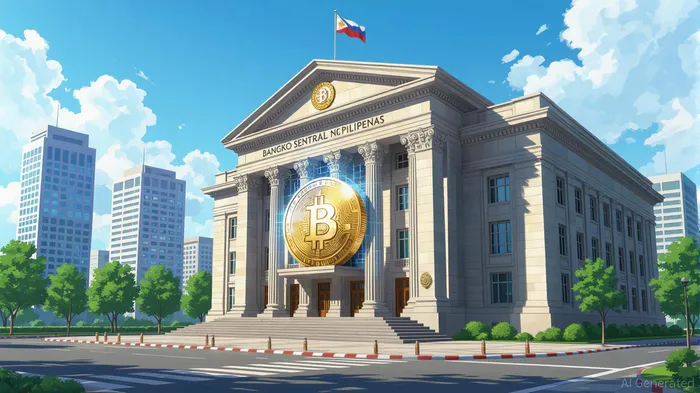
In a bold move that could redefine the future of sovereign wealth management, the Philippines has proposed the Strategic Bitcoin Reserve Act (House Bill 421), a plan to institutionalize BitcoinBTC-- as a strategic asset. By acquiring 10,000 BTC over five years and locking it in a 20-year trust, the country is signaling a paradigm shift in how emerging markets approach inflation, debt, and financial sovereignty. This initiative, if passed, would make the Philippines the first Asian nation to legislate a sovereign Bitcoin reserve—a decision with far-reaching implications for global capital flows and institutional adoption of crypto.
A Hedge Against Debt and Inflation
The Philippines' national debt stands at $285 billion (60% of GDP), a figure that has grown amid global inflationary pressures and the erosion of traditional reserve assets like the U.S. dollar. The proposed Bitcoin reserve is framed as a hedge against these risks. Bitcoin's fixed supply of 21 million coins, combined with its decentralized nature, positions it as a potential counterbalance to fiat devaluation. Over the past five years, Bitcoin has delivered a 40% compound annual growth rate, outperforming gold and equities in many periods. While its volatility remains a concern, the 20-year lock-up period in the Philippine proposal mitigates short-term price swings, aligning with long-term strategic goals.
The move also reflects a broader trend of de-dollarization and digital asset adoption among emerging markets. Countries like El Salvador, Brazil, and Switzerland have already explored Bitcoin as a reserve asset, while the U.S. Senate's Cynthia Lummis has proposed similar frameworks. The Philippines' approach, however, is unique in its structured, institutionalized design. By mandating quarterly cryptographic audits and public wallet disclosures, the BSP aims to build trust in a technology still viewed with skepticism by many policymakers.
Risks and Rewards of Sovereign Bitcoin Allocation
The rewards of the Philippine proposal are clear. Bitcoin's scarcity and resistance to inflationary monetary policies could insulate the country's reserves from external shocks. For example, during the 2020–2022 inflationary period, gold appreciated as a traditional hedge, but Bitcoin's performance was more erratic. However, the 20-year horizon in the Philippine plan allows for compounding and reduces the impact of short-term volatility. If Bitcoin reaches $150,000 per coin by 2045, the 10,000 BTC reserve would be worth $1.5 trillion—a staggering windfall for a nation grappling with debt.
The risks, however, are equally significant. Bitcoin's price could plummet by 50% over the same period, eroding the reserve's value. Security is another concern: while the plan mandates geographically dispersed cold storage, no system is immune to breaches. Additionally, the 20-year lock-up period could limit the government's flexibility to respond to fiscal crises, as the reserve can only be liquidated for debt retirement. Critics argue that this long-term commitment could backfire if Bitcoin's role as a reserve asset is not widely accepted by 2045.
A Catalyst for Global Institutional Adoption
The Philippines' initiative could catalyze a wave of institutional investment in Bitcoin. By treating the asset as a strategic reserve, the country is normalizing its role in sovereign portfolios—a move that could encourage other emerging markets to follow suit. Indonesia, India, and Thailand are already exploring similar strategies, and the Philippines' structured approach provides a blueprint for transparency and accountability.
The proposal also aligns with the rise of spot Bitcoin ETFs, which have attracted $118 billion in inflows since their 2024 launch. Institutions like BlackRockBLK-- and Fidelity are now offering custody solutions tailored to sovereign clients, further legitimizing Bitcoin as a reserve asset. If the Philippines' reserve gains traction, it could accelerate demand for these products, driving institutional allocations and reducing Bitcoin's volatility.
Investment Implications and the Road Ahead
For investors, the Philippines' move underscores the growing acceptance of Bitcoin as a macroeconomic hedge. While the asset remains speculative in the short term, its long-term potential as a store of value is increasingly credible. Institutional investors are advised to consider allocations of 5–10% to Bitcoin, a strategy endorsed by figures like Larry Fink of BlackRock. The Philippine reserve, with its 20-year horizon, exemplifies this approach.
However, the success of the proposal hinges on execution. The BSP must navigate regulatory hurdles, secure custody arrangements, and manage public sentiment. If implemented effectively, the reserve could become a model for emerging markets seeking to diversify their reserves and hedge against inflation.
Conclusion: A New Era in Sovereign Finance
The Philippines' Strategic Bitcoin Reserve Act is more than a bold experiment—it is a signal of the times. As emerging markets grapple with debt, inflation, and the limitations of traditional reserves, Bitcoin offers a novel solution. While the risks are real, the potential rewards are transformative. If the Philippines succeeds, it could redefine the role of digital assets in global finance, proving that Bitcoin is not just a speculative tool but a strategic asset for the 21st century.
For now, the world watches—and waits.

Delivering real-time insights and analysis on emerging financial trends and market movements.
Latest Articles
Stay ahead of the market.
Get curated U.S. market news, insights and key dates delivered to your inbox.


AInvest
PRO
AInvest
PRO



Comments
No comments yet