
The Philippines' Bitcoin Gambit: How a Sovereign BTC Reserve Could Reshape Financial Resilience in a Turbulent World


 Aime Summary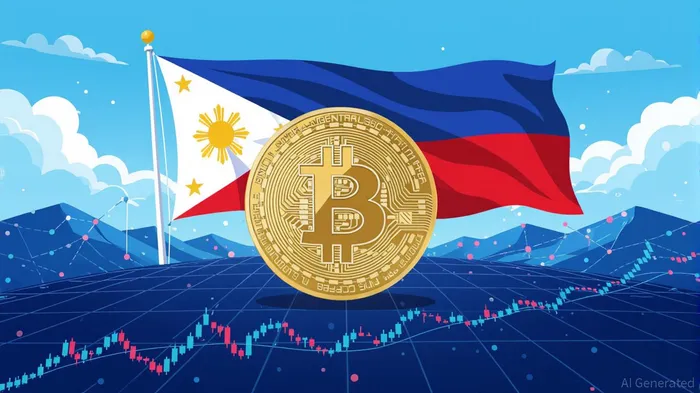
In a world where traditional fiat currencies face relentless inflationary pressures and geopolitical uncertainties, the Philippines has emerged as a bold innovator in the realm of sovereign BitcoinBTC-- adoption. By 2025, the country's proposed Strategic Bitcoin Reserve Act—a plan to accumulate 10,000 BTC over five years—has positioned it at the forefront of a global shift toward digital asset-backed financial resilience. This move, if executed effectively, could redefine how small to mid-sized economies hedge against volatility, diversify reserves, and assert financial sovereignty.
The Philippine Context: A Nation on the Brink of Transformation
The Philippines' 2025 economic policies emphasize private sector growth, infrastructure development, and fiscal consolidation. With a GDP growth target of 5.5–6.5% and a focus on empowering SMEs (which contribute 36% of the country's value-added output), the government is acutely aware of the need to insulate its economy from external shocks. However, the nation's $285 billion debt burden and exposure to U.S. dollar fluctuations have created a pressing need for alternative assets.
Enter Bitcoin. The proposed reserve, championed by Rep. Miguel Luis Villafuerte, is not a speculative bet but a calculated strategy. By purchasing 2,000 BTC annually and locking it for 20 years, the Philippines aims to:
1. Hedge against inflation: Bitcoin's fixed supply of 21 million units contrasts sharply with the infinite supply of fiat currencies, offering a long-term store of value.
2. Diversify reserves: The country's current reserves are heavily concentrated in U.S. dollars and gold. Bitcoin's uncorrelated nature could reduce systemic risk.
3. Attract institutional legitimacy: By joining the ranks of El Salvador, Bhutan, and the U.S. in sovereign Bitcoin adoption, the Philippines signals its commitment to financial innovation.
Global Precedents: Lessons from El Salvador and Bhutan
The Philippines' approach mirrors two distinct but instructive case studies:
- El Salvador: The first country to adopt Bitcoin as legal tender in 2021, El Salvador's experiment faced backlash from the IMF, which forced the government to scale back mandatory Bitcoin adoption. However, its 6,246 BTC reserve (worth $720 million as of 2025) remains a strategic asset. The lesson? Innovation must balance ambition with international compliance.
- Bhutan: With a Bitcoin reserve of $890 million (31% of GDP), Bhutan leverages its energy-efficient mining capabilities and clear legal framework to fund public projects. Its success underscores the importance of regulatory clarity and energy infrastructure.
The Philippines, with its growing crypto adoption (ranked 8th globally by Chainalysis) and robust remittance economy, is uniquely positioned to avoid El Salvador's pitfalls while emulating Bhutan's strategic foresight.
The Asymmetric Upside: Why This Matters for Investors
For investors, the Philippines' Bitcoin reserve represents an asymmetric opportunity:
- Upside potential: If Bitcoin's price appreciates significantly over the next two decades, the reserve could become a critical asset for debt reduction or public investment.
- Downside protection: The reserve is designed to be a long-term store of value, not a short-term trade. Even if Bitcoin's price stagnates, its role as a hedge against fiat devaluation remains intact.
Moreover, the reserve could catalyze broader adoption in Southeast Asia. The Philippines' regulatory framework—requiring crypto exchanges to register under the SEC and BSP—already fosters a compliant ecosystem. If the reserve gains traction, it could spur regional competition, driving innovation in blockchain infrastructure and financial services.
Risks and Realities: A Cautious Path Forward
Critics argue that Bitcoin's 11% monthly volatility poses a risk to fiscal stability. However, the Philippines' 20-year holding period and cold storage requirements mitigate short-term price swings. Additionally, the government's emphasis on transparency—quarterly public audits and geographically dispersed storage—addresses concerns about mismanagement.
The regulatory environment also remains a double-edged sword. While the SEC's crackdown on unregistered exchanges (e.g., banning OKX, Bybit) protects investors, it could stifle innovation. Investors should monitor how the government balances oversight with market dynamism.
Investment Implications: Where to Position?
For investors, the Philippines' Bitcoin reserve signals a broader trend: institutional acceptance of Bitcoin as a strategic asset. Here's how to position:
1. Direct exposure: Consider Bitcoin ETFs or institutional-grade custody solutions to mirror the Philippines' long-term strategy.
2. Indirect exposure: Invest in Philippine infrastructure projects (e.g., geothermal energy, education) that align with the government's growth agenda.
3. Regional diversification: Look to other Southeast Asian markets where Bitcoin adoption is rising, such as Indonesia and Vietnam.
Conclusion: A Nation's Leap into the Digital Future
The Philippines' Bitcoin reserve is more than a financial experiment—it's a statement of intent. By embracing Bitcoin as a sovereign asset, the country is positioning itself to navigate a volatile global economy with agility and foresight. For investors, this represents a rare opportunity to align with a nation redefining its economic destiny. As the world watches, the question isn't whether Bitcoin will matter—it's how quickly the Philippines will prove its value.

Decoding blockchain innovations and market trends with clarity and precision.
Latest Articles
Stay ahead of the market.
Get curated U.S. market news, insights and key dates delivered to your inbox.


AInvest
PRO
AInvest
PRO



Comments
No comments yet