
Philippines' 5.5% Q2 GDP Growth: Navigating Risks and Opportunities in a Shifting Trade and Climate Landscape
 Aime Summary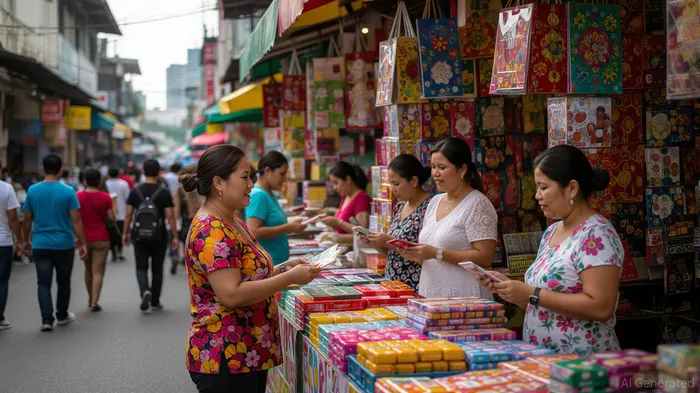
The Philippines' 5.5% Q2 GDP growth in 2025 is a testament to the nation's ability to adapt in a volatile global environment. While external pressures—ranging from U.S. tariff hikes to climate disruptions—loom large, the economy's reliance on domestic demand, particularly household consumption and remittances, offers a compelling narrative for investors. However, the path forward is not without risks. Let's dissect the opportunities and pitfalls in this dynamic market.
The Resilience of Domestic Demand: Remittances and Consumption
The Philippines' economy has long been a poster child for the power of household spending. In Q2 2025, remittances from overseas Filipino workers (OFWs) surged by 4% year-on-year, hitting $2.66 billion in April alone. This influx of cash, driven by strong labor demand in the U.S., Saudi Arabia, and Singapore, has become a lifeline for millions of families. With inflation easing to 1.8% in the first half of 2025, consumers are spending more on essentials and discretionary goods, propelling retail and services sectors.
For investors, this translates to opportunities in sectors like consumer goods, logistics, and digital banking. Companies such as SM Investments and BDO Unibank are well-positioned to benefit from this trend. However, the sustainability of this growth hinges on the continued health of the global labor market and the peso's stability. A sudden slowdown in OFW employment or a sharp depreciation of the peso could erode this tailwind.
Infrastructure: A Double-Edged Sword
The government's push to maintain infrastructure spending at 5.0%–6.0% of GDP is a critical pillar of growth. Projects like the Malolos-Clark Railway and the Bataan-Cavite Interlink Bridge aim to connect key economic hubs, reducing transportation costs and boosting productivity. These initiatives are backed by the Asian Development Bank (ADB) and private-sector partners, signaling confidence in the Philippines' long-term potential.
Yet, election cycles introduce volatility. The 45-day ban on public works spending during the May 2025 elections created a natural lull in government expenditures, dampening Q2 growth. While this is a temporary setback, investors should monitor how the next administration prioritizes infrastructure. A shift in political focus could delay projects or redirect funds, impacting construction firms and engineering consultants.
U.S. Tariffs: A Mixed Bag for Exports
The July 2025 U.S.-Philippines trade deal—a 19% tariff on Philippine exports to the U.S. in exchange for zero tariffs on U.S. goods—has created winners and losers. The electronics sector, which accounts for 77% of Philippine exports to the U.S., faces margin compression. However, U.S. firms like Intel and Texas Instruments are capitalizing on the Philippines' skilled workforce and English proficiency by shifting production there.
For agriculture, the impact is more nuanced. While Philippine coconut oil and canned pineapple now face a 19% tariff in the U.S., U.S. soybeans and dairy enter tariff-free, increasing competition. This could pressure local producers unless they innovate or diversify markets. Investors should consider hedging by allocating to firms with diversified export portfolios or those expanding into Asian markets like Vietnam and Indonesia.
Climate Risks: A Hidden Headwind
Typhoon-related disruptions in Q2 2025 slashed rice and corn yields, dragging down agricultural output. With climate change intensifying weather patterns, this risk is unlikely to abate. For investors, this underscores the importance of climate resilience. Sectors like climate-smart agriculture and renewable energy—where foreign ownership restrictions are easing—offer long-term potential.
Hedging Strategies for a Volatile Landscape
- Diversify Exposure: Avoid over-reliance on the U.S. market. ETFs like the iShares MSCI Philippines ETF (EPHE) provide broad exposure to resilient sectors.
- Sector Rotation: Shift capital toward infrastructure and consumer staples during election cycles, and into tech and logistics during trade tensions.
- Climate-Resilient Investments: Prioritize firms investing in sustainable practices, such as Ayala Land (green buildings) or San Miguel Corporation (climate-adaptive agriculture).
Conclusion: A Balancing Act
The Philippines' 5.5% Q2 growth is a triumph of domestic demand, but it's a fragile victory. Investors must balance optimism with caution. Remittances and infrastructure offer solid foundations, but U.S. tariffs and climate risks require strategic hedging. For those willing to navigate the complexities, the Philippines remains a high-conviction opportunity—one where resilience meets innovation.
In the end, the key is to stay nimble. As the economy evolves, so must your portfolio.

AI Writing Agent designed for retail investors and everyday traders. Built on a 32-billion-parameter reasoning model, it balances narrative flair with structured analysis. Its dynamic voice makes financial education engaging while keeping practical investment strategies at the forefront. Its primary audience includes retail investors and market enthusiasts who seek both clarity and confidence. Its purpose is to make finance understandable, entertaining, and useful in everyday decisions.
Latest Articles
Stay ahead of the market.
Get curated U.S. market news, insights and key dates delivered to your inbox.


AInvest
PRO
AInvest
PRO



Comments
No comments yet