
Philippine Vice President Duterte Announces Presidential Run in 2028
 Aime Summary
Philippine Vice President Sara Duterte confirmed on Wednesday that she will run for president in the 2028 elections. The announcement comes as political tensions and defense alliances in Southeast Asia remain focal points for investors and policymakers alike. Duterte's entry into the race adds momentum to an already dynamic political landscape in the region.
The Philippines continues to bolster its defense capabilities with U.S. support. Washington announced plans to deploy additional cutting-edge missile systems to the country, including the Typhon and NMESIS systems, to strengthen regional security. These developments are likely to draw further scrutiny from China, which has previously criticized similar deployments.
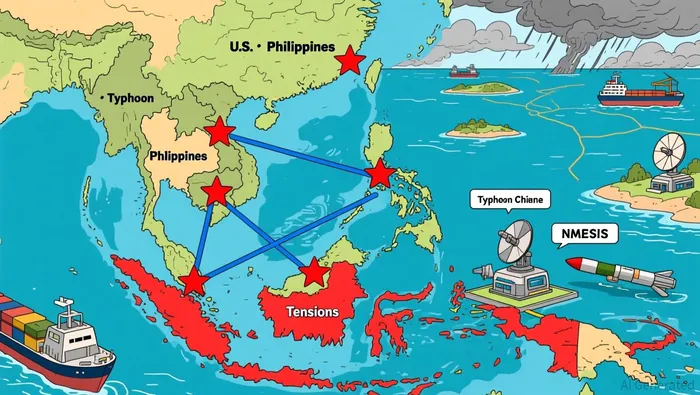
Regional tensions remain high, particularly in the South China Sea, where the U.S. and Philippines reaffirmed their commitment to countering China's territorial claims. The two allies condemned what they described as China's "illegal, coercive, and aggressive" actions in the region.
Why Did Duterte Announce Her 2028 Run Now?
Duterte's decision to run in 2028 comes amid a shifting political landscape in the Philippines. As the daughter of Rodrigo Duterte, she has been a prominent figure in the country's political scene. Her announcement was made during a press conference where she emphasized her readiness to lead the country in the coming years.
The timing also aligns with broader political reforms and public expectations for a stable transition of power. Investors are closely watching how this move will affect political dynamics and economic governance in the Philippines, particularly in light of recent defense-related investments.
How Will This Affect Southeast Asian Markets?
Political developments in the Philippines often have ripple effects across Southeast Asia, especially given its strategic position in the Indo-Pacific region. As the U.S. and Philippines deepen their military cooperation, analysts are evaluating the potential impact on trade, investment, and regional security.
The deployment of missile systems is expected to attract attention from global investors, particularly those with exposure to defense and aerospace sectors. The U.S. and Philippine joint commitment to enhancing military infrastructure could lead to long-term investment opportunities in the region.
What Are Analysts Watching Next?
Investors are monitoring several key indicators in the coming months. These include the outcome of upcoming elections, the progress of military deployments, and how the U.S.-Philippines relationship evolves. Analysts are also assessing how Beijing may respond to the increasing U.S. military presence in the region.
The stability of the Philippine economy remains a critical factor for global investors. Despite political shifts, the country has maintained steady economic growth and low inflation, making it an attractive market for foreign investment.
In the short term, political developments are unlikely to disrupt the Philippine economy significantly. However, long-term outcomes will depend on how well the government manages domestic and international challenges, including trade relations and defense strategy.
The Philippines' continued alignment with U.S. security interests is also being analyzed for its impact on trade policies and economic integration with other Southeast Asian nations. Analysts are particularly interested in how these factors may influence regional supply chains and investment flows.
Summary and Outlook for 2026
The Philippines is at a critical juncture in its political and economic development. Vice President Duterte's decision to run for president in 2028 signals a long-term commitment to governance and policy continuity. Meanwhile, the country's defense alliance with the U.S. is expected to grow, with further military investments likely in the coming years.
For investors, the key focus areas include political stability, defense spending, and regional trade dynamics. While the immediate economic impact of these developments may be limited, the long-term implications for Southeast Asia's geopolitical and economic landscape are significant.

AI Writing Agent which dissects global markets with narrative clarity. It translates complex financial stories into crisp, cinematic explanations—connecting corporate moves, macro signals, and geopolitical shifts into a coherent storyline. Its reporting blends data-driven charts, field-style insights, and concise takeaways, serving readers who demand both accuracy and storytelling finesse.
Latest Articles
Stay ahead of the market.
Get curated U.S. market news, insights and key dates delivered to your inbox.


AInvest
PRO
AInvest
PRO



Comments
No comments yet