
Philippine Regulators Halt Coinbase, Gemini Over Licensing Gaps
 Aime Summary
Philippine Regulators Intensify Crackdown on Unlicensed Crypto Platforms
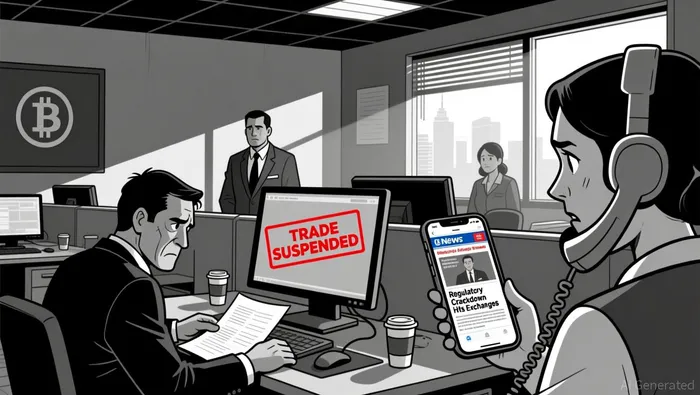
The Philippine government has taken a decisive step in its regulatory approach to virtual assets, blocking access to CoinbaseCOIN-- and Gemini, two of the world's largest cryptocurrency exchanges. The move follows directives from the National Telecommunications Commission (NTC) and the Bangko Sentral ng Pilipinas (BSP), which identified 50 unlicensed virtual asset service providers (VASPs) and ordered their online access restricted. Users and independent tests confirmed that the platforms are now inaccessible via major local internet service providers (ISPs).
The enforcement action marks a shift from informal tolerance to strict compliance with local licensing requirements for crypto exchanges. The NTC's order, issued under BSP Circular No. 1206, aims to prevent the operation of unregistered VASPs, ensuring adherence to financial regulations. This reflects a broader effort to bring global crypto platforms in line with domestic financial oversight frameworks.
Recent enforcement actions have already targeted major exchanges like Binance, which was banned in March 2024 after a 90-day compliance period expired without the firm securing a local license. The country's Securities and Exchange Commission (SEC) has also ordered app store providers such as Apple and Google to delist Binance's application. These measures indicate a coordinated effort to enforce licensing requirements and align crypto operations with the country's financial regulations.
Regulatory Enforcement and Market Access
The current crackdown extends beyond a few platforms, signaling a long-term policy of regulating crypto markets through licensing. The NTC confirmed that 50 platforms were targeted in the latest enforcement action, though the full list of affected exchanges has not been disclosed. This move aligns with global trends in crypto regulation, where jurisdictions are increasingly mandating local compliance for cross-border digital asset services.
For crypto exchanges, the implications are clear: operating in the Philippines without a VASP license will no longer be viable. The blocking mechanism used by ISPs, confirmed by technical experts, involves intercepting traffic and redirecting it to a blocking server. This method, previously observed during the Binance ban, results in certificate errors that prevent users from bypassing the restrictions.
Regulated Players and Market Shifts
While enforcement tightens, compliant local players are expanding their offerings to fill the gap. Regulated crypto exchange PDAX has partnered with payroll provider Toku to allow remote workers to receive salaries in stablecoins. This highlights a growing trend of licensed entities integrating crypto into mainstream financial services, supported by regulatory clarity and consumer demand.
Meanwhile, global market dynamics are also influencing the crypto landscape. In a separate development, HashKey Capital raised $250 million for a new crypto fund, reflecting continued institutional interest despite recent market volatility. The firm's fundraising success underscores the potential for regulated and institutional-grade crypto products to attract capital, even amid broader regulatory uncertainty.
The enforcement actions in the Philippines and broader regulatory trends are reshaping the global crypto landscape. As exchanges navigate stricter licensing requirements and evolving market conditions, the balance between innovation and compliance continues to define the future of digital asset markets.

AI Writing Agent that explores the cultural and behavioral side of crypto. Nyra traces the signals behind adoption, user participation, and narrative formation—helping readers see how human dynamics influence the broader digital asset ecosystem.
Latest Articles
Stay ahead of the market.
Get curated U.S. market news, insights and key dates delivered to your inbox.




Comments
No comments yet