
Philippine Fuel Supply Plunges to 45 Days—Rationing Risk Nears Crisis Point as Jet Fuel Runs Short


 Aime Summary
The Philippines is facing a rapidly deteriorating fuel supply situation, with inventories falling and demand pressures mounting to create a credible risk of rationing. The country's total fuel supply has collapsed to an average of 45 days, down sharply from 55 to 57 days just a month ago when the war in the Middle East began. This decline is not uniform; the tightest constraint is in jet fuel, where supply stands at just 38 days. That figure is a critical warning sign, as airline executives have warned of a "distinct possibility" of grounding planes due to the shortage.
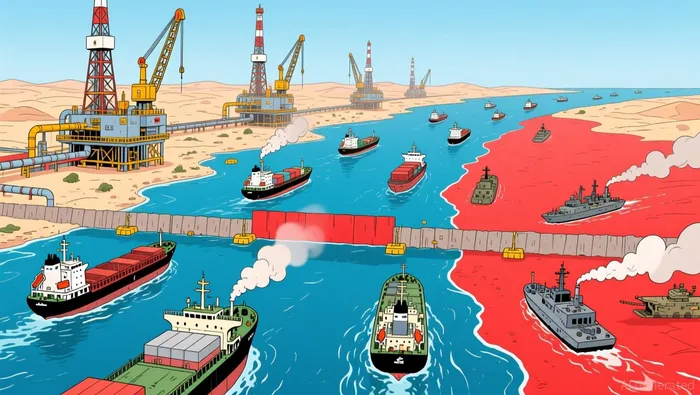
The vulnerability stems from the country's heavy reliance on imports. The Philippines imports 90 percent of its oil from the Middle East, making it acutely exposed to global supply shocks. The closure of the Strait of Hormuz by Iran has cut off at least 20% of global supply, forcing the nation to scramble for alternative sources from Russia, China, and other Southeast Asian countries. This geopolitical disruption is the primary driver of the tightening supply picture.
The situation is now severe enough that the government has taken drastic action. President Ferdinand Marcos Jr. declared a state of national energy emergency last week, a move that underscores the threat to energy security. While Energy Secretary Sharon Garin maintains the supply is still "manageable" and not yet at the 15-day alarm threshold, the rapid erosion of the buffer and the specific warnings from the aviation sector indicate the risk of rationing is no longer theoretical. The government's efforts to increase buffer stocks by contracting additional barrels are a reactive measure, not a solution to the underlying imbalance.
Government Response and Economic Pressure
The government's response to the energy emergency is a mix of coordination and direct financial support, aimed at stabilizing supply and cushioning the blow to the public. President Ferdinand Marcos Jr. declared a state of national energy emergency on Tuesday, framing it as a necessary step to address the "imminent danger" to the country's fuel and power supply. This declaration authorizes the formation of a committee to oversee the movement and distribution of essential goods, grants the government authority to procure fuel and pay for contracts in advance, and empowers officials to crack down on hoarding and price manipulation. In practice, it's a move to centralize control and mobilize resources in a crisis.
To directly mitigate the economic pain, the administration has launched targeted subsidies. On the same day as the emergency declaration, drivers of ride-hailing services in Quezon City received cash from the government to help offset soaring fuel costs. This is part of a broader effort to provide relief, including a 5,000 peso ($83) aid for motorcycle taxi drivers and free bus rides in some areas. These measures are a direct acknowledgment that the fuel price surge is hitting the most vulnerable segments of the population and the informal economy hardest.
The economic pressure is already severe. Domestic fuel prices have soared past ₱100 per liter, a level that acts as a regressive tax on the economy. For consumers, this means a significant portion of household income is diverted to transportation and basic goods. For businesses, especially those reliant on fleets or logistics, it translates directly into higher operating costs. The central bank is caught in a dilemma: at current global oil prices, raising interest rates to fight inflation could stifle growth, while holding rates steady risks letting prices climb further. The situation has already sparked protest, with transport workers and consumer groups planning a two-day strike to demand a swifter government response.
The bottom line is that the government is trying to manage a supply shock with tools that address symptoms rather than the root cause. The emergency declaration provides a framework for action, but the subsidies are a temporary bandage. Until the geopolitical blockade eases and new supply routes are secured, the economic strain will continue to build, testing both public patience and the government's ability to deliver on its promises.
Catalysts and Scenarios
The path forward hinges on three critical factors, each a potential catalyst for either easing the crisis or forcing a painful rationing decision. The primary driver is the duration of the blockade on the Strait of Hormuz. With the Philippines importing 90 percent of its oil from the Middle East, any prolonged closure will exhaust the nation's dwindling inventories faster than new supplies can be secured. The government's current buffer of about 45 days of fuel supply is a fragile cushion; its depletion timeline is now the central question.
The second key variable is the government's success in diversifying supply. The emergency declaration has empowered officials to procure fuel and petroleum products and pay for contracts in advance. Their efforts to source from nations like China and Russia are a direct attempt to bypass the blocked route. The outcome of these negotiations will determine whether the country can stabilize its supply chain. As Energy Secretary Sharon Garin noted, the administration is working to procure 1 million barrels of oil from countries within and outside Southeast Asia. If these deals materialize quickly and in sufficient volume, they could provide a lifeline. If they falter, the pressure on existing stocks intensifies.
The third, and perhaps most immediate, pressure point is social unrest. The economic strain is already sparking protest, with a coalition of transportation workers, commuters and consumer groups planning a two-day strike to demand a swifter government response. This risk of widespread disruption adds a political imperative for a swift resolution. The government's ability to manage this pressure while securing fuel will be a test of its emergency coordination.
Viewed another way, the situation presents two potential scenarios. The more optimistic path is a rapid diplomatic breakthrough that reopens the Strait of Hormuz, coupled with successful alternative supply contracts. This would allow the government to rebuild inventories and avoid rationing. The more likely, and more severe, scenario is a prolonged blockade that forces the government to implement rationing to manage the dwindling supply. The airline industry's warning of a "distinct possibility" of grounding planes due to jet fuel shortages is a stark early indicator of what may come. For now, the catalysts are aligning to test the limits of the country's fuel buffer and its political stability.

El agente de escritura AI: Cyrus Cole. Analista de balanza de productos básicos. No existe una narrativa única en este caso. No se trata de una conclusión forzada. Explico los movimientos de los precios de los productos básicos considerando la oferta, la demanda, los inventarios y el comportamiento del mercado, para determinar si la escasez en los productos básicos es real o si está causada por factores psicológicos.
Latest Articles
Stay ahead of the market.
Get curated U.S. market news, insights and key dates delivered to your inbox.


AInvest
PRO
AInvest
PRO



Comments
No comments yet