
PG&E's Storm Preparedness and Renewable Push: A Strategic Shift for Investors
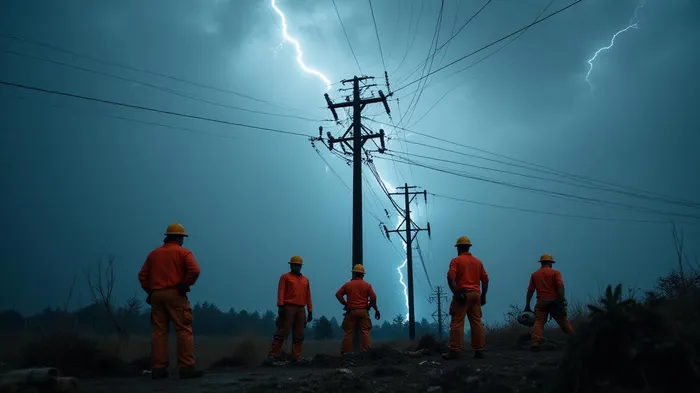
Lead: As Pacific Gas and Electric Company (PG&E) prepares for the next wave of winter storms, investors are scrutinizing its ability to balance safety, reliability, and renewable energy goals. Recent actions reveal a critical pivot toward proactive infrastructure upgrades and partnerships, but lingering outage risks cloud the outlook.
The Core Event: Winter Storm Preparedness Sparks Investor Concern
On March 11, 2025, PG&EPCG-- issued a stark warning about an impending winter storm system threatening its service area. The storm, forecasted to bring 40–45 mph winds and heavy rain, prompted the utility to pre-deploy over 2,000 crews and $100M in equipment across high-risk regions like the Central Coast and North Bay. This event reignited investor focus on PG&E’s capacity to manage outage risks—a key driver of its stock volatility.
Key Data Point: PG&E’s AI-driven outage prediction model, which analyzes data from 1,600 weather stations, reduced repair delays by 18% in 2024.
Body 1: The Tug-of-War Between Safety and Profitability
PG&E’s recent efforts to mitigate outages have been costly but necessary. In Q1 2025, the company spent $350M on underground powerline upgrades and wildfire safety measures, per its earnings report. While these investments aim to reduce Public Safety Power Shutoffs (PSPS), they also strain margins.
Expert Insight: “PG&E’s focus on grid hardening is commendable, but investors must weigh the trade-off between safety spending and shareholder returns,” said analyst Sarah Lin of Energy Equity Advisors. “Customers may face rate hikes if regulators don’t approve these costs.”
Body 2: Renewable Energy Initiatives as a Double-Edged Sword
On May 7, 2025, PG&E hosted a webinar for its 2025 Spring Renewable Portfolio Standard (RPS) solicitation, aiming to sell 275 MW of solar energy from projects in Kern County and the Central Valley. While this aligns with California’s clean energy mandates, it underscores PG&E’s reliance on third-party providers—a strategy that carries execution risks.
Industry Angle: “Renewables are PG&E’s future, but supply chain delays and permitting hurdles could delay these projects,” warned energy consultant Mark Torres. “Investors should watch how PG&E navigates these challenges without destabilizing its grid.”
Conclusion: A Pivotal Year for PG&E’s Strategic Resilience
PG&E’s path forward hinges on two critical factors: its ability to execute on grid modernization and its compliance with regulatory expectations. With $7B earmarked for wildfire safety through 2026, the utility must balance investor confidence with operational reliability.
For investors, the takeaway is clear: PG&E’s success in mitigating outages and meeting RPS targets will determine its valuation. While near-term volatility is likely, long-term bets on PG&E’s transition to a resilient, low-carbon grid could pay off—if the storms—and regulators—cooperate.
PG&E’s journey from outage liability to sustainability leader will define its future. Stay tuned for regulatory rulings and grid performance metrics to gauge progress.

Stay ahead of the market.
Get curated U.S. market news, insights and key dates delivered to your inbox.




Comments
No comments yet