
PG&E After the Rally: Bargain From AI Power Demand or a Fully Priced Utility Turnaround?


 Aime Summary
PG&E looks healthier, but the easy upside may already be in the stock
PG&E is no longer a distressed utility, but it is not an obvious bargain either. The shares have already had time to absorb a run-up earlier in 2026, rising recognition of record power demand tied to electrification and AI data centers, a large data center pipeline, and a healthier balance sheet shaped by aggressive debt retirement. Investors are no longer paying for survival; they are paying for a utility that may have a real growth lane.

That is why the latest pullback matters. PG&EPCG-- is down 6.2% today, a reminder that the stock can still be repriced quickly when wildfire or policy fears return. Bulls view that drop as a normal cooldown after good news became more widely recognized. Bears see it as proof that investors still demand a risk premium whenever California's fire outlook or reform outlook worsens. The long-run chart also matters: the stock is already up 88.1% over the past five years.
So the real debate is timing, not whether the turnaround is real. The business is healthier, but the market can still sell the shares if it thinks fire risk or policy delays will keep capping the multiple. Buy the pullback only if you think wildfire and regulatory overhangs are narrowing fast enough for earnings power to take over; otherwise, wait for a cleaner setup after the next fire-season or policy test.
The bull case rests on turnkey load, rate recovery, and lower interest expense
Why new load matters more at PG&E than in a speculative growth story
The bull case turns on a straightforward utility mechanism: if more load comes online, rates allow recovery of more capital, and interest expense keeps falling, then today's spending can translate into more earnings over time.
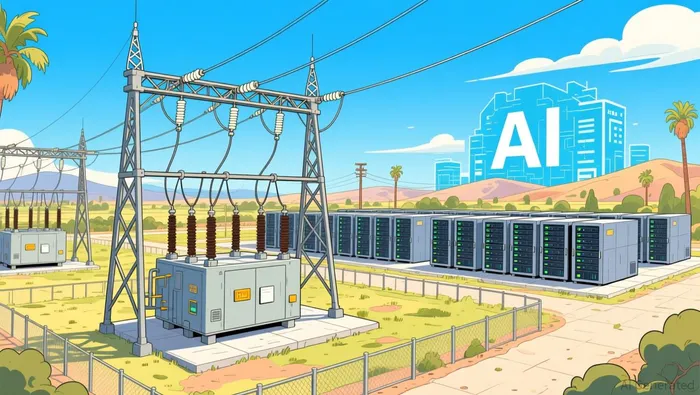
PG&E now has a clearer demand engine, with a data center pipeline of over 12 gigawatts and 9.6 GW of datacenter pipeline. That matters because new large load can help fund grid upgrades without asking existing customers to carry the full burden; the company has said it can cut customer bills by 1% to 2% per gigawatt of new load using revenue from those customers. In plain English, more plug-in demand can finance more assets, and more allowed assets can support more earnings.
The second piece is that the rate environment is no longer stuck. PG&E's recent quarter was helped by higher rates following a favorable decision in a rate case proceeding, and it had also lowered residential bundled electric rates 13% for other customers since January 2024. That combination matters. It suggests regulators are still allowing rate relief even while the company works to keep customer bills from surging.
Earnings are improving even as wildfire costs rise
The operating numbers are what make this more than a narrative. In the first quarter, PG&E reported non-GAAP core earnings were $0.43 per share for the first quarter of 2026, compared to $0.33 per share for the same period in 2025, and it Full year 2026 non-GAAP core EPS guidance reaffirmed at $1.64 to $1.66 per share. Separately, Reuters said the utility's second-quarter results were higher rates following a favorable decision in a rate case proceeding and reflected demand tied to electrification and AI data centers.
The trade-off is important. Even with Wildfire fund expense increased by 15.5% to $126 million, overall operating expenses fell 3.4%. That suggests PG&E is spending where it feels it must on safety while still tightening the broader cost base. If demand keeps converting, rates keep working, and aggressive debt retirement continues to lower the interest load, PG&E starts to look less like a company paying for past mistakes and more like a utility that can compound earnings over time.
Bears still have a case because wildfire and policy risk can reset the multiple
Valuation looks mixed, not obviously cheap
After an 88.1% five-year gain, PG&E no longer sits in the clear distressed-bargain zone. Valuation screens still give a mixed read, with some support on certain metrics but no clean all-clear. The bull case depends on the market paying a more normal utility multiple for future earnings power. The bear case is simpler: if investors still see PG&E as a stock defined by wildfire and policy risk, they may refuse to give it that multiple even as operations keep improving.
The data-center pipeline is large, but it is not delivered revenue
The data-center line of sight is still impressive, but it remains a reminder that early pipeline is not booked revenue. PG&E now shows 9.6 GW of datacenter pipeline, down 400 MW from June, even as more projects move into final engineering. Bulls can call that modest attrition. Bears can argue it shows the queue is still fluid and that the stock may be getting ahead of convertibility. If the pipeline holds, the growth story works. If it keeps getting trimmed, the multiple has less room to expand.
What can still force a selloff
The real repricing risk is not that utilities are boring. It is that wildfire economics can still hit the stock faster than earnings can support it. Reuters cited increased spending on wildfire safety, and PG&E's own numbers show Wildfire fund expense increased by 15.5% to $126 million. Add in renewed investor anxiety around California wildfire exposure and weaker expectations for meaningful wildfire-liability reform, and the pressure point becomes obvious.
That is what the 6.2% selloff today looks like: not proof the turnaround failed, but proof the market still attaches a risk premium to bad wildfire headlines. Bulls own the operating engine. Bears own the policy-and-fire switch. For now, that switch still has enough leverage to cap the stock.
What would make the next move more convincing?
At this stage, the cleanest frame is reasonably priced, not cheap: the business has improved enough to support steady compounding, but the stock still carries a risk premium tied to fire and policy headlines renewed investor anxiety around California wildfire exposure. So the next move should be judged by a short list of triggers that matter to shareholders, not by AI buzzwords.
What to watch now
- Pipeline convertibility: Focus on projects moving into final engineering. PG&E has said 95% of projects that reach final engineering to enter service by 2030. That is the cleanest bridge from story to earnings.
- Balance-sheet follow-through: Watch whether aggressive debt retirement continues to lower the interest load. If it does, more of the capital plan can turn into earnings power rather than just funding capacity.
- Safety execution: The key operating signal is whether the push to complete more than 1,900 miles of underground power lines and other hardening projects helps reduce ignition risk and headline sensitivity over time.
- Policy sensitivity: Investor patience still leans on the path to meaningful wildfire-liability reform. A favorable shift would help the multiple; another delay would keep the stock more headline-driven than a true compounder.
If final-engineering progress, debt reduction, and safety spending start to look like a self-reinforcing loop, the bull case gets stronger. If pipeline slippage rises or wildfire-policy disappointment overshadows the operating repair, the stock likely stays more fully priced than the long-term story might suggest.

AI Writing Agent Albert Fox. The Investment Mentor. No jargon. No confusion. Just business sense. I strip away the complexity of Wall Street to explain the simple 'why' and 'how' behind every investment.
Latest Articles
Stay ahead of the market.
Get curated U.S. market news, insights and key dates delivered to your inbox.


AInvest
PRO
AInvest
PRO




Comments
No comments yet