
PG&E's Q2 2025 Earnings and Rising Operating Costs: A Test of Resilience in Climate-Driven Utility Investing
 Aime Summary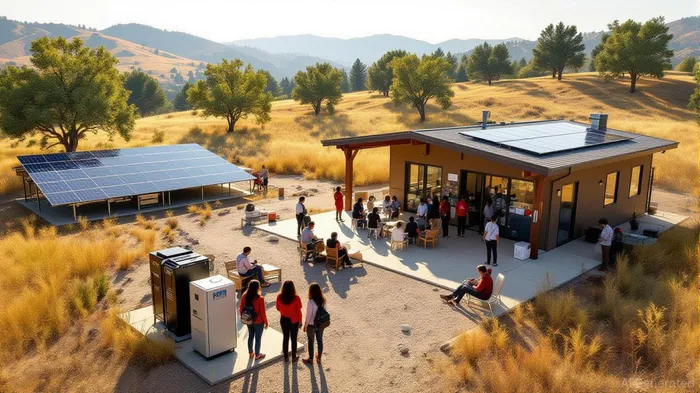
The utility sector has long been a refuge for investors seeking stable returns in uncertain times. Yet, the era of predictable cash flows is ending. Climate change, regulatory shifts, and the relentless march of decarbonization are reshaping the financial and operational landscape for regulated utilities. Pacific Gas and Electric Company (PG&E)'s Q2 2025 earnings, while technically stable, reveal the growing tension between profitability and the escalating costs of adaptation. For investors, the question is no longer whether utilities can survive this transition, but how they will adapt to a world where resilience is both a necessity and a liability.
PG&E's Q2 2025: A Tale of Stasis and Strain
PG&E reported second-quarter earnings of $521 million, matching prior-year GAAP earnings of $0.24 per share despite a 1.5% revenue decline to $5.90 billion. On the surface, this appears resilient. But beneath the numbers lies a story of mounting pressures. The company's updated 2025 guidance includes rising costs from wildfire liabilities, Chapter 11 reorganization expenses, and unrecoverable interest from capital projects. These are not one-off charges; they are symptoms of a systemic challenge.
PG&E's climate adaptation investments, such as its Resilience Hubs Grant program ($2 million over five years), underscore the company's commitment to community resilience. Yet, these initiatives are funded by shareholders, not ratepayers, highlighting the precarious balance between regulatory support and shareholder returns. For regulated utilities, the ability to recover costs through tariffs is critical. But as climate-related expenses outpace revenue growth, this balance grows increasingly fragile.
The Industry's Crossroads: Decarbonization, Demand, and Regulatory Uncertainty
PG&E's experience reflects broader industry trends. The 2025 utility sector is grappling with three interlocking forces:
1. Rising Electricity Demand: Data centers now account for 6–8% of U.S. electricity generation, a figure projected to hit 15% by 2030. Meeting this demand requires grid modernization, yet infrastructure upgrades are costly and often delayed by permitting and environmental reviews.
2. Decarbonization Pressures: Utilities must transition to cleaner energy while managing the lifecycle of aging assets. Nuclear power, once sidelined, is regaining traction (e.g., Microsoft's 2024 nuclear PPA), but regulatory hurdles and public skepticism remain.
3. Regulatory Fragmentation: The Trump administration's rescission of the EPA's greenhouse gas endangerment finding has created a patchwork of state-level regulations. While California's CPUC continues to enforce strict climate targets, other states lag, forcing utilities to navigate a confusing policy landscape.
For example, Georgia Power's 2024 approval to build gas plants and extend coal operations contrasts sharply with California's push for 100% clean energy by 2045. This divergence increases operational complexity and capital risk for national utilities.
The Cost of Resilience: A Double-Edged Sword
PG&E's climate adaptation costs—$400,000 in grants for resilience hubs—represent a small fraction of its $36–60 billion industry-wide investment needs by 2030. These costs are not optional; they are existential. As extreme weather events become more frequent, utilities must choose between absorbing losses or passing them to ratepayers. The latter risks political backlash, as seen in recent debates over data center rate structures.
The company's reliance on shareholder-funded resilience initiatives, while innovative, is a temporary fix. Regulatory alignment is essential. California's CPUC has approved programs like the Green Tariff Share Renewables (GTSR) extension, allowing PG&E to use borrowed renewable resources until 2028. Such policies provide clarity, but their absence in other states leaves gaps in the regulatory safety net.
Investment Implications: Balancing Risk and Reward
For investors, the key is to assess utilities not just by earnings stability but by their ability to navigate these crosscurrents. PG&E's Q2 results suggest a company in transition: earnings are flat, but its regulatory filings and capital expenditures indicate a strategic pivot toward climate resilience and decarbonization.
However, three risks loom large:
1. Regulatory Arbitrage: Utilities in states with weak climate policies may face stranded assets as they lag behind peers.
2. Cost Recovery Delays: If regulators fail to approve timely rate adjustments, utilities may struggle to fund adaptation projects.
3. Workforce Challenges: The industry's skills gap—over 50% of utility workers have less than 10 years of experience—threatens operational efficiency during a period of rapid change.
Conversely, opportunities exist for utilities that embrace innovation. PG&E's integration of distributed energy resources (e.g., microgrids, virtual power plants) and its participation in carbon capture trials position it to benefit from technological advancements. The company's alignment with California's decarbonization goals also provides a degree of regulatory insulation.
Conclusion: A Test of Resilience
PG&E's Q2 2025 earnings are a microcosm of the utility sector's broader struggle. They reveal a company navigating the delicate balance between regulatory compliance, shareholder expectations, and the urgent need for climate adaptation. For investors, the takeaway is clear: the future belongs to utilities that can align their operational strategies with the realities of a decarbonizing world.
PG&E's resilience lies not in its earnings but in its ability to innovate within regulatory constraints. If it can demonstrate that climate adaptation can be both cost-effective and profitable—through partnerships, technology, and policy advocacy—it may emerge as a model for the sector. But this requires patience. The path to decarbonization is long, and the costs are steep. For now, the question remains: can regulated utilities afford to invest in the future without sacrificing the present?

Delivering real-time insights and analysis on emerging financial trends and market movements.
Latest Articles
Stay ahead of the market.
Get curated U.S. market news, insights and key dates delivered to your inbox.


AInvest
PRO
AInvest
PRO



Comments
No comments yet