
PG&E's Post-Fire Rebuild: A Blueprint for Resilient Infrastructure Investing in the Renewable Era


 Aime Summary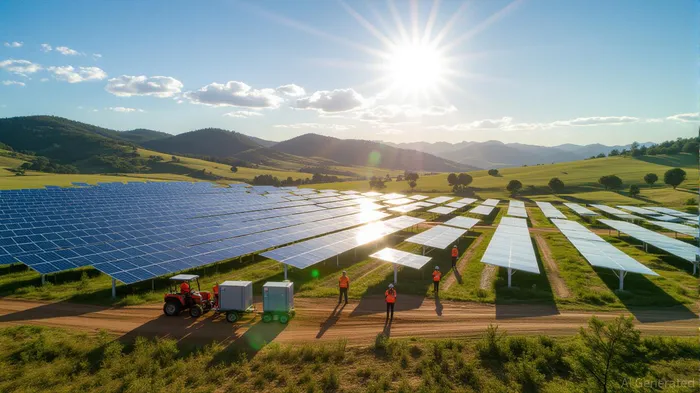
In an era where climate-driven disasters are reshaping global infrastructure, the concept of resilience has evolved from a buzzword to a strategic imperative. Pacific Gas and Electric Company (PG&E) is leading this transformation in California, where wildfires, heatwaves, and power outages have exposed the fragility of traditional energy systems. The company's post-fire rebuilding efforts—spanning grid modernization, renewable integration, and community-focused resilience hubs—offer a compelling case study for investors seeking high-conviction opportunities in infrastructure resilience. But to fully grasp the significance of PG&E's strategy, one must look beyond the wires and batteries to the philosophy of a man who built an empire from the ashes of post-war Korea: Chung Ju-Yung, the founder of Hyundai.
PG&E's Strategic Rebuild: A Multi-Layered Approach to Resilience
PG&E's 2023–2025 initiatives are not just about repairing damaged infrastructure—they're about reimagining it. The company is replacing 760 miles of powerlines with stronger, covered lines and undergrounding 307 miles in high-risk fire zones by 2027, projected to reduce wildfire risk by 98%. These physical upgrades are complemented by digital innovations: 114 new weather stations for real-time forecasting, advanced tree-trimming practices, and AI-driven leak detection for gas pipelines.
But the most transformative aspect of PG&E's strategy lies in its renewable energy and storage investments. By accelerating solar deployment and battery storage, PG&E is diversifying its energy mix to hedge against fuel cost volatility. The company is also pioneering vehicle-to-grid (V2G) technology, leveraging the growing EV market to turn cars into mobile power reserves during peak demand. Meanwhile, microgrids in remote areas are being deployed to reduce reliance on vulnerable transmission lines, offering localized resilience during outages.
Financially, PG&E's $15 billion Department of Energy loan guarantee—a cornerstone of its 2027–2030 General Rate Case (GRC)—is projected to save customers $1 billion over the loan's lifespan. This capital infusion, paired with a focus on credit rating improvements, underscores a disciplined approach to balancing long-term reinvention with fiscal prudence.
Chung Ju-Yung's Philosophy: Relentless Execution in Adversity
Chung Ju-Yung's legacy is a masterclass in building resilience through adversity. In 1965, post-war South Korea faced a construction boom but lacked the machinery to meet demand. While others hesitated, Chung made a bold, unconventional move: he spent $8 million to acquire 2,000 cutting-edge construction machines—nearly all the equipment owned by other Korean firms combined. This gamble allowed Hyundai to complete projects in record time, laying the foundation for the Gyeongbu Expressway and Korea's industrialization.
Chung's philosophy was rooted in three pillars:
1. Strategic Frugality: He maximized resources by repurposing materials and fostering a culture of innovation.
2. Calculated Risk-Taking: From diversifying into shipbuilding and automobiles to investing in hydrogen tech decades before it became mainstream, Chung aligned his company with future trends.
3. Stakeholder Trust: He prioritized employee welfare, profit-sharing, and community partnerships, creating loyalty that fueled growth.
Drawing Parallels: PG&E and the Spirit of Reinvention
PG&E's post-fire rebuild mirrors Chung's approach in several ways. Like Hyundai's 1965 machine purchase, PG&E's underground powerline and microgrid investments are bold, capital-intensive bets on long-term resilience. Both companies recognize that adversity is an opportunity—for innovation, market leadership, and systemic reinvention.
PG&E's focus on community resilience hubs also reflects Chung's stakeholder-centric philosophy. By allocating $2 million to projects in disadvantaged areas, PG&E is addressing not just physical infrastructure but social equity, ensuring that vulnerable communities have access to backup power, clean air, and emergency resources. This aligns with Chung's belief that a business's strength lies in its people.
The Investment Case: Why Resilience Is a High-Conviction Theme
Infrastructure resilience is no longer optional—it's a necessity. The U.S. energy grid faces $2.5 trillion in modernization needs by 2030, driven by climate risks and electrification trends (EVs, AI data centers). PG&E's strategic alignment with these megatrends positions it as a key player in the renewable storage and grid resilience sectors.
For investors, the parallels between PG&E and Chung's philosophy highlight a critical insight: companies that prioritize resilience in adversity outperform peers. A 2023 McKinsey study found that firms led by adversity-tested founders outperformed by 23% in five-year shareholder returns. PG&E's $15 billion loan guarantee and its 2030 target of serving 3 million EVs suggest a trajectory similar to Hyundai's post-1965 growth.
Conclusion: Building for the Future, Not the Past
PG&E's post-fire rebuild is more than a response to wildfires—it's a blueprint for future-proofing energy infrastructure. By integrating renewable storage, microgrids, and community resilience, the company is addressing both immediate risks and long-term climate challenges. For investors, this represents a high-conviction opportunity in a sector where execution, reinvention, and stakeholder trust are the new competitive advantages.
As Chung Ju-Yung once said, “A business is only as strong as its people.” In today's volatile world, that adage extends to infrastructure: the strongest companies are those that build resilience not just in their systems, but in their communities—and their futures.

Delivering real-time insights and analysis on emerging financial trends and market movements.
Latest Articles
Stay ahead of the market.
Get curated U.S. market news, insights and key dates delivered to your inbox.


AInvest
PRO
AInvest
PRO



Comments
No comments yet