
PG&E Outage Exposes AV Tech Challenges and Business Vulnerabilities in San Francisco
 Aime Summary
- .
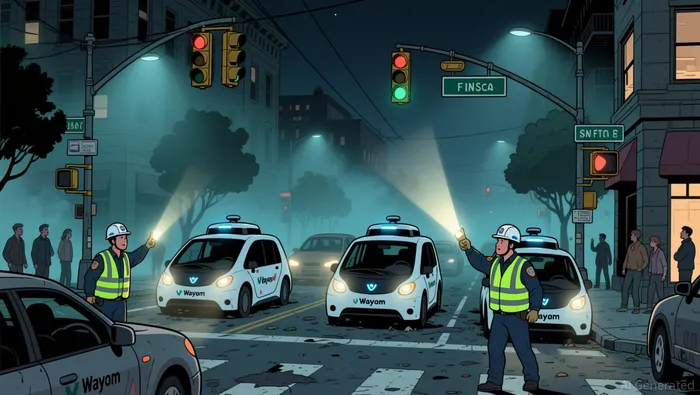
- ’s autonomous vehicles were temporarily stranded at intersections, worsening gridlock and revealing limitations in their decision-making systems.
- Small businesses in the Richmond District reported significant losses from spoiled inventory, canceled events, and lost sales.
- .
- The outage highlights the need for AV companies to enhance resilience and for utilities to prioritize grid reliability.
A weekend power outage in San Francisco caused by a fire at a PG&E substation not only disrupted daily life but also exposed critical vulnerabilities in both urban infrastructure and autonomous vehicle (AV) technology. While most power was restored within 24 hours, the incident left deep questions for investors and policymakers alike.
The outage, which began at 1:09 p.m. on Saturday, Dec. 20, quickly escalated as traffic signals went dark, forcing police to manually manage intersections and prompting city officials to urge residents to stay home. Businesses in the Richmond District, including bakeries, laundromats, and theaters, reported significant losses from spoiled goods and canceled events. Cinderella Bakery, for example, had to discard all prepared goods due to the lack of refrigeration, while The Laundromat lost over $20,000 in sales and 3,500 spoiled bagels.
What Caused the PG&E Outage and How Was It Resolved?
The outage was triggered by a fire at a PG&E substation near 8th and Mission streets, causing "significant and extensive" damage and complicating restoration efforts. By 11 p.m. that night, crews had restored power to about 95,000 customers, prioritizing safety inspections throughout the night. By early Sunday, , . PG&E confirmed the grid had been stabilized and no further outages were expected. The cause of the fire remains under investigation, , according to company statements.
How Did the PG&E Outage Impact Waymo’s Autonomous Vehicles?
Waymo’s fleet of self-driving cars, already reliant on traffic signals and real-time data, struggled to navigate the city during the blackout. While designed to treat nonfunctional signals as four-way stops, the volume of vehicles attempting the same maneuver created bottlenecks and delays. The scale of the outage overwhelmed the company, causing vehicles to remain stationary for extended periods. In response, Waymo temporarily suspended its robotaxi service in the area to prevent further congestion and assist emergency response efforts. The company is now rolling out fleet-wide updates to improve how vehicles handle regional outages and navigate dark traffic signals more decisively.
The incident has sparked discussions about the readiness of AV systems for large-scale disasters and raised concerns about their performance during infrastructure failures like earthquakes according to experts. Waymo’s response, including updated protocols and collaboration with city officials, has set a precedent for how the industry might adapt to such events.
What Lessons Can Investors Take From the Outage?
For investors, the PG&E outage underscores the interconnectedness of urban infrastructure and emerging technologies. While AVs offer transformative potential, their effectiveness depends on the reliability of the systems around them. The outage highlighted the importance of redundancy, adaptability, and public-private coordination in AV deployment. Companies that integrate resilience into their infrastructure and operations—like Waymo updating its fleet in response—may gain a competitive edge.
Small businesses, meanwhile, revealed the fragility of local economies in the face of utility failures. The Richmond District’s experience suggests that investors and insurers should factor in outage risk when assessing the financial health of small enterprises, particularly in cities prone to weather-related or technical disruptions.
As the investigation into the PG&E substation fire continues, attention will turn to whether the company will implement long-term fixes, including backup power systems for critical infrastructure. Investors should also watch for further updates from Waymo and other AV firms as they refine their protocols and expand into new markets. The December 2025 outage serves as a cautionary but instructive moment for both technology and utility sectors—one that may shape how cities prepare for the future of mobility and energy.

Stay ahead of the market.
Get curated U.S. market news, insights and key dates delivered to your inbox.






Comments
No comments yet