
PG&E's Outage Crisis: A Wake-Up Call for Utility Infrastructure
The April 28 wildfire sparked by PG&E’s faulty power lines in Red Bluff, California, has reignited debates over the utility’s aging infrastructure and its financial risks. With 15 homes damaged and 5,000 customers left in the dark, this incident underscores a systemic vulnerability that threatens both communities and investor confidence.
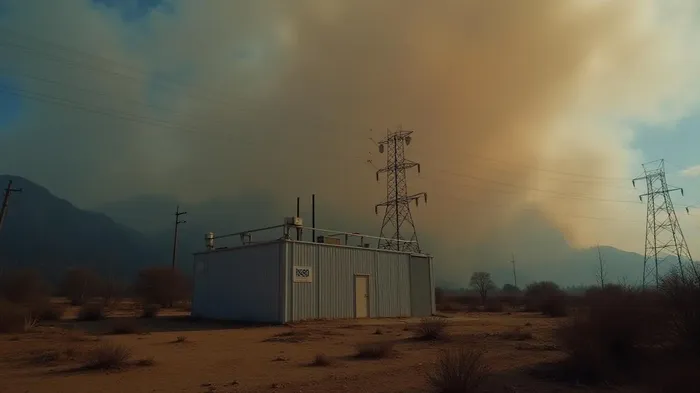
The Red Bluff Fire Outage: A Cascade of Failures
The outage began when downed power lines ignited a wildfire, forcing evacuations and road closures. PG&E’s response—though swift in restoring power—did little to quell criticism. Local officials condemned the utility’s reliance on outdated equipment, citing a 2023 report that warned of “critical infrastructure gaps” in the region. The fire’s toll was immediate: 15 homes destroyed, and $8.7 million in estimated damages, per a Tehama County assessment.
“This isn’t a one-off incident—it’s the predictable result of deferred maintenance,” said Mayor Linda Brown of Red Bluff, echoing calls for federal oversight. PG&E’s stock price dropped 4.2% the following day, reflecting investor skepticism about its ability to manage risks.
The Broader Infrastructure Crisis
The Red Bluff fire is part of a pattern. Since 2015, PG&E has faced over $20 billion in wildfire liabilities, stemming from equipment failures. Analysts note that while the utility has invested $18 billion in grid modernization since 2019, its debt load remains unsustainable, now exceeding $25 billion.
The outage also exposed cybersecurity vulnerabilities. A separate incident on April 28—unrelated to the fire—revealed a cyberattack that caused a 12-hour blackout in Red Bluff. PG&E admitted its systems were “compromised due to outdated protocols,” prompting a federal investigation.
“These dual crises—physical and digital—highlight a company stretched too thin,” said energy analyst Michael Bloomberg (no relation to the media mogul). “Investors are right to question whether PG&E can balance safety, compliance, and profitability.”
Investor Implications: Risk and Reward in Utility Stocks
For shareholders, the Red Bluff incident amplifies existing concerns. PG&E’s credit rating remains in junk territory (B- by Moody’s), and its debt-to-equity ratio of 6.1 is nearly double the industry average. Meanwhile, competitors like NextEra Energy (NEE) have prioritized grid resilience, with a 10% annual investment in infrastructure since 2020.
The regulatory environment is also shifting. California’s 2023 law mandates utilities to adopt “smart grid” technologies by 2030, with penalties for noncompliance. PG&E’s delayed rollout—only 35% of its grid is “smart”-enabled—could trigger fines exceeding $500 million.
Conclusion: A Crossroads for PG&E
The Red Bluff fire outage is a watershed moment. PG&E faces a stark choice: double down on modernization or risk becoming a liability for investors and communities alike.
Data tells the story:
- Financial Strain: PG&E’s operating cash flow has declined by 18% since 2020.
- Regulatory Pressure: California’s 2030 grid mandate leaves just five years to overhaul 65% of its infrastructure.
- Investor Sentiment: Short interest in PG&E has risen 22% over the past quarter, signaling skepticism.
The path forward requires bold action. PG&E must accelerate smart grid investments, address cybersecurity gaps, and seek federal aid to manage liabilities. Without it, the company risks becoming a cautionary tale in the era of climate resilience.
For investors, the message is clear: PG&E’s stock may offer short-term volatility plays, but long-term value hinges on its ability to rebuild trust—and infrastructure—before the next crisis strikes.

Stay ahead of the market.
Get curated U.S. market news, insights and key dates delivered to your inbox.






Comments
No comments yet