
PG&E's Financial Crossroads: Can the Utility Navigate Wildfire Liabilities and Infrastructure Woes?
PG&E (NYSE: PCG) stands at a precarious juncture. Recent power outages in San Luis Obispo (SLO) County, compounded by the catastrophic Esparto fireworks warehouse explosion, have reignited scrutiny over the utility's ability to manage legacy liabilities, maintain infrastructure resilience, and sustain its already strained balance sheet. For investors, the question is clear: Is PG&E's financial structure robust enough to weather these storms, or does its high debt and regulatory exposure warrant caution?
The Debt Burden: A Tightrope Walk
PG&E's financial health hinges on its ability to manage debt. As of Q2 2025, its debt-to-equity ratio stands at 190%, down from a staggering 439% five years ago but still among the highest in the utility sector. While this reflects progress, the interest coverage ratio of 2x underscores vulnerability. With earnings before interest and taxes (EBIT) at $5.1 billion, PG&E's earnings marginally cover interest expenses—leaving little room for error in an era of rising rates or declining revenues.
The company has attempted to bolster liquidity through capital raises, including a $1 billion equity offering in late 2024 and 6.00% convertible preferred stock issuance in January 2025. Yet these moves risk shareholder dilution, with dividends frozen at $0.025 per share since early 2025. The $2.02 billion in cash and short-term investments provide a modest buffer, but short-term liabilities ($17.8 billion) far exceed this amount.
Regulatory and Legal Pressures: A Growing Headwind
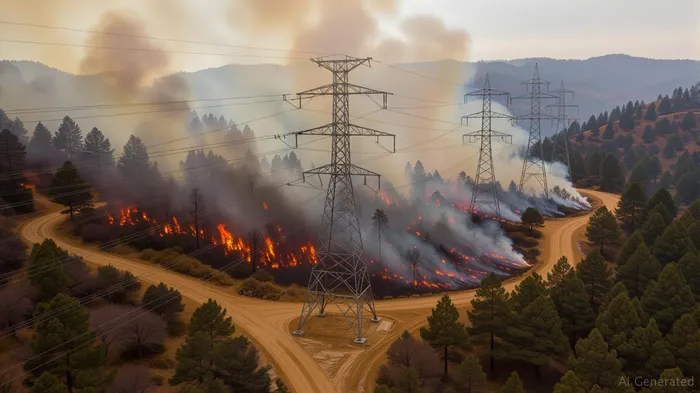
PG&E's liabilities extend far beyond balance sheet metrics. The Esparto fireworks explosion in July 2025, which killed seven workers and triggered a wildfire, has exposed systemic regulatory failures. While PG&E's direct liability remains unclear, the incident underscores broader risks tied to its operations.
The CPUC's penalties for PG&E's mismanagement of the Diablo Canyon Nuclear Plant—$46 million in imprudent costs—signal regulators' growing intolerance for operational lapses. Meanwhile, the Esparto case could lead to stricter zoning laws and inspections for high-risk facilities, raising compliance costs.
Wildfire liabilities remain a lurking threat. Though PG&E resolved its 2018 Camp Fire claims via bankruptcy, newer incidents like the 2025 SLO outages could reignite litigation. Analysts warn that unresolved wildfire risks and infrastructure failures could push the company toward another financial crisis.
Operational Vulnerabilities: Infrastructure and Trust
The SLO outages, which left thousands without power, highlight PG&E's aging grid. While the company plans a $63 billion investment through 2028 to modernize infrastructure, execution risks loom large. Delays or cost overruns could strain cash flows further.
Public trust is another hurdle. After the 2018 wildfires, PG&E's reputation as a “reckless utility” persists. The Esparto tragedy, which involved illegal fireworks storage near residential areas, may amplify this perception, complicating rate hikes or regulatory approvals.
Investment Implications: A High-Reward, High-Risk Gamble
PG&E's stock has underperformed the S&P 500 by 20.8% over the past year, trading at $13.63 as of July 2025. Analysts project a 51.8% upside to a $20.70 price target, assuming successful debt management and regulatory approvals. However, this optimism hinges on several variables:
- Debt Reduction Progress: Will PG&E's capital raises and asset sales meaningfully lower leverage, or will dilution and dividend cuts alienate shareholders?
- Litigation Outcomes: Can the company avoid costly settlements from the Esparto case and wildfire-related claims?
- Regulatory Compliance: Will the CPUC impose penalties that erode profitability, or will PG&E's infrastructure investments gain approval?
Actionable Insights for Investors
- Caution for Conservative Investors: PG&E's high debt, regulatory exposure, and litigation risks make it a speculative play. Avoid unless you can withstand significant volatility.
- Consider a Watch-and-Wait Approach: Monitor the July 31 earnings call for updates on debt management, liquidity, and regulatory progress. A stronger-than-expected EBIT or revised capital plan could shift sentiment.
- Look for Catalysts: Positive outcomes in the Esparto case, approval of rate hikes to fund grid upgrades, or a deleveraging milestone (e.g., debt-to-equity below 150%) could unlock value.
Conclusion
PG&E's path forward is fraught with financial and operational minefields. While its utility franchise remains valuable, the company's ability to navigate wildfire liabilities, aging infrastructure, and regulatory scrutiny will determine its survival. For investors, the stock offers a high-risk, high-reward bet—ideal only for those willing to bet on PG&E's turnaround. Until clear progress emerges, patience, not exposure, may be the wiser move.
Data as of July 2025. Past performance does not guarantee future results.

Delivering real-time insights and analysis on emerging financial trends and market movements.
Latest Articles
Stay ahead of the market.
Get curated U.S. market news, insights and key dates delivered to your inbox.




Comments
No comments yet