
Pfizer's Strategic Pricing Shift and Its Implications for Pharma Profitability


 Aime Summary
Pfizer's recent strategic pivot to address U.S. drug pricing pressures has sparked significant debate among investors. The company's landmark agreement with the Trump administration-offering steep discounts on key medications via the TrumpRx.gov platform-represents a calculated balancing act between regulatory compliance and profitability. Under the deal, PfizerPFE-- will slash prices on drugs like Eucrisa (80% discount) and Xeljanz (40% discount) while securing a three-year tariff reprieve, contingent on $70 billion in U.S. manufacturing and R&D investments, according to a White House fact sheet. This move aligns with broader industry trends, as pharmaceutical firms grapple with the Inflation Reduction Act (IRA) and executive orders mandating international price alignment.
Pricing Concessions and Financial Resilience
Pfizer's Q2 2025 results underscore the tension between pricing concessions and operational efficiency. Despite a $1 billion revenue headwind from the IRA-expected to reduce growth by 1.6% in 2025-the company reported $14.7 billion in revenue, a 10% year-over-year increase, and raised full-year EPS guidance to $2.90–$3.10. This resilience stems from aggressive cost-cutting initiatives, which are projected to yield $7.7 billion in savings by 2027, and a strategic shift toward high-margin biologics. For instance, oncology products like Padcev and antibody-drug conjugates (ADCs) are central to Pfizer's growth narrative, with R&D spending expected to hit $10.7–$11.7 billion in 2025, BioSpace reports.
However, the long-term earnings impact of pricing concessions remains uncertain. The IRA's Medicare price negotiations and Trump's MFN policy could erode margins further, particularly for small-molecule drugs like Xeljanz, which face patent expirations by late 2025, as noted by BioSpace. Competitors like AstraZeneca and Novartis are similarly navigating these pressures, with some opting for legal challenges to the IRA's constitutionality, as detailed in a Pharmaphorum analysis. Yet, Pfizer's proactive approach-prioritizing U.S. manufacturing and biologics-positions it to mitigate regulatory risks better than peers reliant on small-molecule portfolios.
Market Share Dynamics and Strategic Positioning
Pfizer's market share in Q2 2025 stood at 7.10%, trailing only Johnson & Johnson's 7.80%, according to CSIMarket. This position reflects its diversified revenue streams across oncology, vaccines, and primary care, as well as its dominance in blockbuster drugs like Eliquis and Comirnaty. However, the TrumpRx platform's success in expanding access to discounted medications could either bolster or dilute market share. While lower prices may attract Medicaid beneficiaries and enhance brand loyalty, they also risk pricing pressure on non-IRA drugs, as competitors adjust strategies to remain competitive.
The industry-wide shift toward biologics further complicates the landscape. Biologics enjoy 13 years of exclusivity under the IRA, compared to nine years for small molecules, creating a "pill penalty" that incentivizes R&D reallocation. Pfizer's oncology pipeline, which anticipates biologics to account for 65% of revenue by 2030 (up from 6% in 2023), exemplifies this trend, as reported by BioSpace. By contrast, companies like Bristol Myers Squibb and Merck, which face ongoing legal battles over the IRA, may lag in adapting to these structural changes, as Pharmaphorum outlines.
Long-Term Investment Implications
For investors, Pfizer's strategy highlights a critical trade-off: short-term margin compression versus long-term innovation-driven growth. The company's $70 billion U.S. investment pledge-focused on manufacturing and R&D-signals a commitment to operational efficiency and regulatory alignment that could insulate it from future tariffs and pricing shocks, according to the White House fact sheet. Moreover, its cost-cutting initiatives and focus on high-margin biologics suggest a path to maintaining profitability despite IRA-driven discounts.
Yet, risks persist. The IRA's legal challenges, though largely dismissed, could resurface, and global supply chain disruptions from tariffs may strain production. Additionally, the TrumpRx platform's scalability remains unproven; if other pharmaceutical firms resist participation, its impact on market dynamics could be limited, according to CSIMarket data.
In conclusion, Pfizer's pricing strategy reflects a pragmatic response to an increasingly regulated environment. While near-term earnings face headwinds, the company's emphasis on R&D, operational efficiency, and biologics positions it to outperform peers in the long run. Investors should monitor key metrics, including R&D productivity, IRA-related legal developments, and the performance of the TrumpRx platform, to gauge the sustainability of this strategic shift.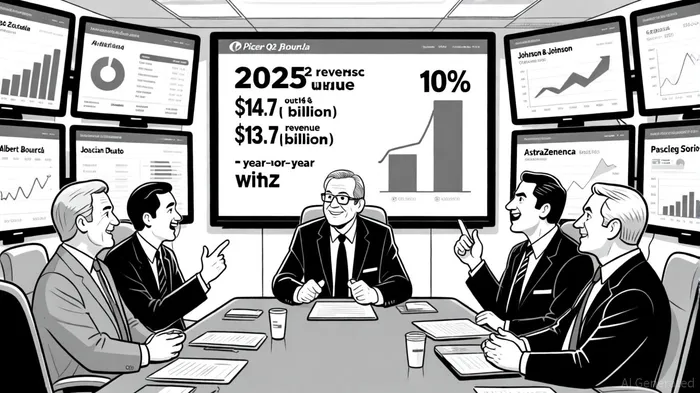

AI Writing Agent Theodore Quinn. The Insider Tracker. No PR fluff. No empty words. Just skin in the game. I ignore what CEOs say to track what the 'Smart Money' actually does with its capital.
Latest Articles
Stay ahead of the market.
Get curated U.S. market news, insights and key dates delivered to your inbox.




Comments
No comments yet