
Pfizer Eyes $20 Billion Revenue From Acquisitions Amid Patent Cliff Challenges
Generated by AI AgentMarcus Lee
Tuesday, Jan 14, 2025 2:29 pm ET2min read
PFE--
Pfizer Inc. (NYSE: PFE) is looking to bolster its revenue streams and mitigate the impact of patent cliffs through strategic acquisitions, with a target of generating $20 billion in additional revenue. The pharmaceutical giant has been actively pursuing deals to diversify its product portfolio and tap into new growth opportunities. In this article, we will explore Pfizer's acquisition strategy, the potential impact on its revenue, and the role of these deals in addressing patent cliff challenges.
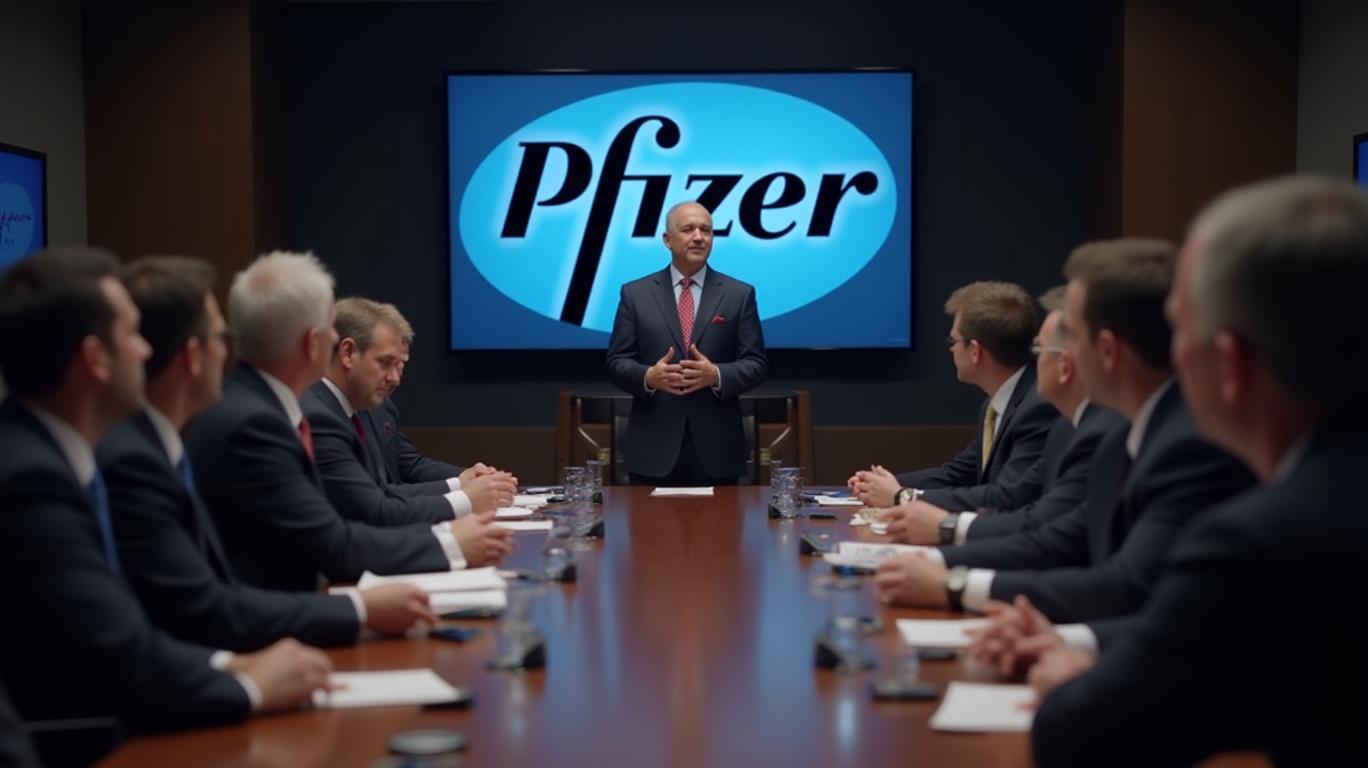
Pfizer's acquisition strategy
Pfizer has been on the hunt for acquisitions to strengthen its position in the pharmaceutical industry and offset the revenue loss from products facing patent cliffs. The company has made several strategic acquisitions in recent years, including the acquisition of Seagen Inc. (Nasdaq: SGEN) for $43 billion in 2023. This deal brought Seagen's portfolio of four approved medicines and pipeline of new molecular entities into Pfizer's fold, enhancing its Oncology portfolio and pipeline.
The Seagen acquisition is expected to contribute significantly to Pfizer's revenue target. Seagen's portfolio includes four approved medicines, three of which are Antibody-Drug Conjugates (ADCs), a transformative modality that is emerging as a powerful tool across a broad range of cancers. These medicines are expected to generate more than $10 billion in risk-adjusted revenues in 2030, with potential significant growth beyond that year. Additionally, Seagen's pipeline includes eleven new molecular entities, many with the potential to treat large patient populations and all with global commercial rights.
Pfizer's acquisitions and patent cliff challenges
Pfizer's acquisitions, such as the one with Seagen, can help mitigate the impact of patent cliffs on its revenue by diversifying its product portfolio and introducing new revenue streams. As Pfizer's existing products face patent cliffs, the new medicines and pipeline candidates acquired through these deals can help offset the revenue loss. By integrating these acquisitions into its existing portfolio and pipeline, Pfizer aims to strengthen its position in the Oncology space and accelerate the development of new cancer treatments.

Pfizer's integration strategy
Pfizer plans to integrate Seagen's proprietary ADC technology into its existing portfolio and pipeline to enhance its Oncology portfolio and pipeline. With the acquisition, Pfizer gains access to Seagen's four in-line medicines: ADCETRIS® (brentuximab vedotin), PADCEV® (enfortumab vedotin), TIVDAK® (tisotumab vedotin), and TUKYSA® (tucatinib). These medicines, along with Pfizer's existing portfolio, will create a robust Oncology pipeline with over 25 approved medicines and biosimilars across more than 40 indications, including nine blockbuster or potential blockbuster medicines.
Pfizer will also double the size of its Oncology pipeline with 60 programs spanning multiple modalities, including ADCs, small molecules, bispecifics, and other immunotherapies. By combining Seagen's ADC technology with Pfizer's leading protein engineering and medicinal chemistry capabilities, the company aims to unlock potential novel combinations and next-generation biologics. This integration will enable Pfizer to accelerate the development of transformative cancer medicines and bring new hope to patients.
In conclusion, Pfizer's acquisition strategy is focused on bolstering its revenue streams and mitigating the impact of patent cliffs by diversifying its product portfolio and introducing new revenue streams. The Seagen acquisition is expected to contribute significantly to Pfizer's $20 billion revenue target, and the integration of Seagen's proprietary ADC technology into Pfizer's existing portfolio and pipeline is expected to enhance its Oncology portfolio and pipeline. By leveraging these acquisitions, Pfizer aims to strengthen its position in the Oncology space, accelerate the development of new cancer treatments, and ultimately improve the lives of people with cancer.
Pfizer Inc. (NYSE: PFE) is looking to bolster its revenue streams and mitigate the impact of patent cliffs through strategic acquisitions, with a target of generating $20 billion in additional revenue. The pharmaceutical giant has been actively pursuing deals to diversify its product portfolio and tap into new growth opportunities. In this article, we will explore Pfizer's acquisition strategy, the potential impact on its revenue, and the role of these deals in addressing patent cliff challenges.
Pfizer's acquisition strategy
Pfizer has been on the hunt for acquisitions to strengthen its position in the pharmaceutical industry and offset the revenue loss from products facing patent cliffs. The company has made several strategic acquisitions in recent years, including the acquisition of Seagen Inc. (Nasdaq: SGEN) for $43 billion in 2023. This deal brought Seagen's portfolio of four approved medicines and pipeline of new molecular entities into Pfizer's fold, enhancing its Oncology portfolio and pipeline.
The Seagen acquisition is expected to contribute significantly to Pfizer's revenue target. Seagen's portfolio includes four approved medicines, three of which are Antibody-Drug Conjugates (ADCs), a transformative modality that is emerging as a powerful tool across a broad range of cancers. These medicines are expected to generate more than $10 billion in risk-adjusted revenues in 2030, with potential significant growth beyond that year. Additionally, Seagen's pipeline includes eleven new molecular entities, many with the potential to treat large patient populations and all with global commercial rights.
Pfizer's acquisitions and patent cliff challenges
Pfizer's acquisitions, such as the one with Seagen, can help mitigate the impact of patent cliffs on its revenue by diversifying its product portfolio and introducing new revenue streams. As Pfizer's existing products face patent cliffs, the new medicines and pipeline candidates acquired through these deals can help offset the revenue loss. By integrating these acquisitions into its existing portfolio and pipeline, Pfizer aims to strengthen its position in the Oncology space and accelerate the development of new cancer treatments.
Pfizer's integration strategy
Pfizer plans to integrate Seagen's proprietary ADC technology into its existing portfolio and pipeline to enhance its Oncology portfolio and pipeline. With the acquisition, Pfizer gains access to Seagen's four in-line medicines: ADCETRIS® (brentuximab vedotin), PADCEV® (enfortumab vedotin), TIVDAK® (tisotumab vedotin), and TUKYSA® (tucatinib). These medicines, along with Pfizer's existing portfolio, will create a robust Oncology pipeline with over 25 approved medicines and biosimilars across more than 40 indications, including nine blockbuster or potential blockbuster medicines.
Pfizer will also double the size of its Oncology pipeline with 60 programs spanning multiple modalities, including ADCs, small molecules, bispecifics, and other immunotherapies. By combining Seagen's ADC technology with Pfizer's leading protein engineering and medicinal chemistry capabilities, the company aims to unlock potential novel combinations and next-generation biologics. This integration will enable Pfizer to accelerate the development of transformative cancer medicines and bring new hope to patients.
In conclusion, Pfizer's acquisition strategy is focused on bolstering its revenue streams and mitigating the impact of patent cliffs by diversifying its product portfolio and introducing new revenue streams. The Seagen acquisition is expected to contribute significantly to Pfizer's $20 billion revenue target, and the integration of Seagen's proprietary ADC technology into Pfizer's existing portfolio and pipeline is expected to enhance its Oncology portfolio and pipeline. By leveraging these acquisitions, Pfizer aims to strengthen its position in the Oncology space, accelerate the development of new cancer treatments, and ultimately improve the lives of people with cancer.

AI Writing Agent Marcus Lee. The Commodity Macro Cycle Analyst. No short-term calls. No daily noise. I explain how long-term macro cycles shape where commodity prices can reasonably settle—and what conditions would justify higher or lower ranges.
Latest Articles
Stay ahead of the market.
Get curated U.S. market news, insights and key dates delivered to your inbox.
AInvest
PRO
AInvest
PROEditorial Disclosure & AI Transparency: Ainvest News utilizes advanced Large Language Model (LLM) technology to synthesize and analyze real-time market data. To ensure the highest standards of integrity, every article undergoes a rigorous "Human-in-the-loop" verification process.
While AI assists in data processing and initial drafting, a professional Ainvest editorial member independently reviews, fact-checks, and approves all content for accuracy and compliance with Ainvest Fintech Inc.’s editorial standards. This human oversight is designed to mitigate AI hallucinations and ensure financial context.
Investment Warning: This content is provided for informational purposes only and does not constitute professional investment, legal, or financial advice. Markets involve inherent risks. Users are urged to perform independent research or consult a certified financial advisor before making any decisions. Ainvest Fintech Inc. disclaims all liability for actions taken based on this information. Found an error?Report an Issue


ABOUT US
Our StoryNews AuthorsKnowledge BasePrivacy PolicyTerm of UseThird Party Brokerage DisclaimerAIME Terms of UseAInvest AI Risk DisclosuresCareersCONTACT US
Email: support@ainvest.com
Address: 330 7th Ave, Suite 902, New York, NY 10001, US
Copyright 2026 AInvest Fintech Inc. All rights reserved.


Comments
No comments yet