
PFAS Destruction Technology Discovered in Vancouver.
ByAinvest
Wednesday, Jul 23, 2025 7:18 am ET1min read
STN--
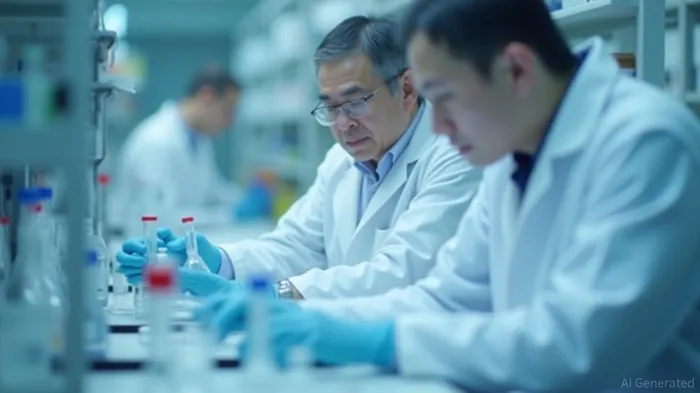
The technology, developed by researchers at UBC, employs advanced chemical processes to degrade PFAS, rendering them harmless. This breakthrough comes at a critical time as PFAS contamination has become a global concern, with numerous studies linking these chemicals to various health issues, including cancer, developmental problems, and immune system disorders.
The development of this technology is part of a broader trend in water treatment innovation. For instance, Stantec, a leading engineering and consulting firm, has been selected to design the largest PFAS treatment system in the Northwestern US, further underscoring the importance of addressing PFAS contamination [4].
The implications of this technology are far-reaching. PFAS are ubiquitous in the environment, found in a wide range of consumer products, and their persistence in the environment poses a significant challenge to water quality and public health. The UBC technology offers a potential solution to this problem, providing a pathway to cleaner, safer drinking water.
As the world continues to grapple with water scarcity and quality issues, innovative solutions like this one are crucial. The XPRIZE Water Scarcity competition, launched in 2024, aims to incentivize the development of technologies to solve water scarcity challenges, highlighting the global importance of this issue [5].
While the technology is still in the early stages of development, it represents a significant step forward in the fight against PFAS contamination. As more research and development are conducted, the potential for widespread adoption and implementation becomes increasingly apparent.
References:
[1] https://www.watercanada.net/category/international/
[2] https://www.watercanada.net/category/international/
[3] https://www.watercanada.net/category/international/
[4] https://www.watercanada.net/category/international/
[5] https://www.watercanada.net/category/international/
Scientists at Vancouver have developed a technology to destroy highly resistant PFAS, also known as 'forever chemicals,' from drinking water. The technology removes PFAS from water before they contaminate the environment and human bodies. This breakthrough could potentially alleviate the impact of PFAS on human health and the environment.
Scientists at the University of British Columbia (UBC) have developed a groundbreaking technology to eliminate highly resistant per- and polyfluoroalkyl substances (PFAS) from drinking water. This technology, which removes PFAS before they contaminate the environment and human bodies, holds significant promise in mitigating the impact of these "forever chemicals" on human health and the environment.The technology, developed by researchers at UBC, employs advanced chemical processes to degrade PFAS, rendering them harmless. This breakthrough comes at a critical time as PFAS contamination has become a global concern, with numerous studies linking these chemicals to various health issues, including cancer, developmental problems, and immune system disorders.
The development of this technology is part of a broader trend in water treatment innovation. For instance, Stantec, a leading engineering and consulting firm, has been selected to design the largest PFAS treatment system in the Northwestern US, further underscoring the importance of addressing PFAS contamination [4].
The implications of this technology are far-reaching. PFAS are ubiquitous in the environment, found in a wide range of consumer products, and their persistence in the environment poses a significant challenge to water quality and public health. The UBC technology offers a potential solution to this problem, providing a pathway to cleaner, safer drinking water.
As the world continues to grapple with water scarcity and quality issues, innovative solutions like this one are crucial. The XPRIZE Water Scarcity competition, launched in 2024, aims to incentivize the development of technologies to solve water scarcity challenges, highlighting the global importance of this issue [5].
While the technology is still in the early stages of development, it represents a significant step forward in the fight against PFAS contamination. As more research and development are conducted, the potential for widespread adoption and implementation becomes increasingly apparent.
References:
[1] https://www.watercanada.net/category/international/
[2] https://www.watercanada.net/category/international/
[3] https://www.watercanada.net/category/international/
[4] https://www.watercanada.net/category/international/
[5] https://www.watercanada.net/category/international/
Stay ahead of the market.
Get curated U.S. market news, insights and key dates delivered to your inbox.
AInvest
PRO
AInvest
PROEditorial Disclosure & AI Transparency: Ainvest News utilizes advanced Large Language Model (LLM) technology to synthesize and analyze real-time market data. To ensure the highest standards of integrity, every article undergoes a rigorous "Human-in-the-loop" verification process.
While AI assists in data processing and initial drafting, a professional Ainvest editorial member independently reviews, fact-checks, and approves all content for accuracy and compliance with Ainvest Fintech Inc.’s editorial standards. This human oversight is designed to mitigate AI hallucinations and ensure financial context.
Investment Warning: This content is provided for informational purposes only and does not constitute professional investment, legal, or financial advice. Markets involve inherent risks. Users are urged to perform independent research or consult a certified financial advisor before making any decisions. Ainvest Fintech Inc. disclaims all liability for actions taken based on this information. Found an error?Report an Issue




Comments
No comments yet