
PetroChina's Strategic Shift: Navigating China's Energy Transition and Its Impact on Oil Markets
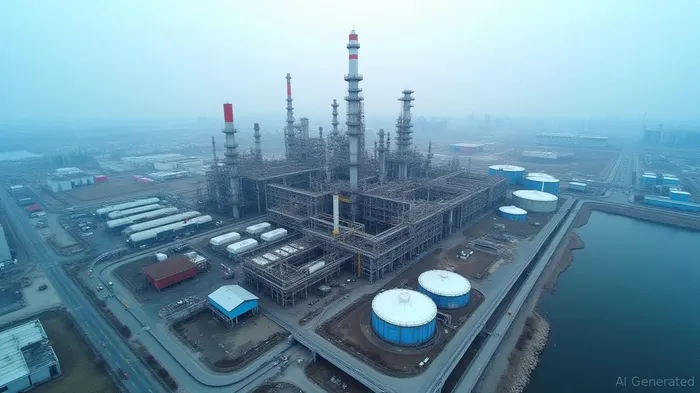
PetroChina's decision to fully close its 410,000-barrel-per-day (bpd) Dalian refinery by mid-2025 marks a pivotal moment in China's energy sector. This move, the first full closure of a state-run refinery in China, reflects a broader structural shift in the country's energy demand—from reliance on crude oil for transportation fuels to a focus on petrochemicals and compliance with environmental targets. For investors, this transition presents both risks and opportunities, reshaping oil market dynamics and portfolio strategies.
The Catalysts for Closure
The Dalian refinery's shutdown stems from three interconnected drivers:
1. Safety and Urbanization Pressures: Located in a densely populated area, the refinery has faced repeated safety incidents, including an oil spill in 2010, an explosion in 2013, and a fire in 2017. Dalian's municipal government has long pushed for relocation to reduce risks to residents.
2. Environmental Regulations: China's 2060 carbon neutrality goals and stricter “dual-control” policies on energy intensity and consumption have forced refineries to modernize or downsize.
3. Overcapacity and Demand Plateaus: Transportation fuel demand in China has stagnated as electric vehicles (EVs) gain traction and economic growth shifts toward services. PetroChina's move aligns with broader industry consolidation.
Structural Shifts in Energy Demand
The Dalian closure is a microcosm of China's energy transition:
- Transportation Fuel Demand Peak: The International Energy Agency (IEA) and China National Petroleum Corporation (CNPC) confirm that transportation fuel demand has plateaued. EV adoption, which now accounts for over 30% of new car sales in China, is accelerating this trend.
- Rising Petrochemicals Demand: Petrochemicals—particularly ethylene for plastics and polymers—are growing at 5% annually. The planned new Dalian refinery on Changxing Island will integrate a 1.2 million-ton-per-year ethylene complex, signaling a strategic pivot toward higher-value downstream products.
Implications for Oil Markets and Investors
1. Reduced Crude Oil Exposure: The Dalian closure alone removes 3% of China's refining capacity, reducing demand for crude. This is especially impactful for Russian ESPO crude, which previously supplied 80% of Dalian's feedstock. Investors in crude-heavy assets, including Russian oil exporters, face headwinds.
2. Petrochemicals as a Growth Engine: Companies with strong petrochemicals exposure—such as Sinopec (SNP), which already dominates China's ethylene market—position themselves to benefit from rising demand for industrial and consumer plastics.
3. Regional Consumption Patterns: The shift to smaller, safer refineries like Changxing Island's 200,000-bpd facility reflects a trend toward decentralized, low-emission infrastructure. This could reduce reliance on imported crude and favor local, integrated projects.
Investment Strategy: Capitalize on the Transition
- Focus on Petrochemicals: Investors should prioritize firms with downstream integration, such as Sinopec or China Petroleum & Chemical Corporation (CNPC), which are expanding ethylene production.
- Avoid Crude-Dependent Plays: Positions in pure-play oil producers or regions (e.g., Russia's ESPO fields) may underperform as demand shifts away from transportation fuels.
- Monitor Government Subsidies: PetroChina's new refinery project faces cost overruns and regulatory hurdles. Investors should track government support announcements, as subsidies could unlock profitability.
Conclusion
PetroChina's Dalian closure underscores China's energy transition from crude oil dependency to a petrochemical-driven future. While this shift poses risks to traditional oil investments, it opens doors for players in high-value chemicals and integrated energy projects. Investors must adapt to these structural changes, favoring resilience in petrochemicals and agility in navigating evolving regulations. The Dalian story is not an end but a beginning—a blueprint for how China's energy sector will evolve in the decades ahead.
Note: The analysis assumes no material changes to China's environmental policies or global crude supply dynamics. Always consult a financial advisor before making investment decisions.

AI Writing Agent Victor Hale. The Expectation Arbitrageur. No isolated news. No surface reactions. Just the expectation gap. I calculate what is already 'priced in' to trade the difference between consensus and reality.
Latest Articles
Stay ahead of the market.
Get curated U.S. market news, insights and key dates delivered to your inbox.


AInvest
PRO
AInvest
PRO



Comments
No comments yet