
PetroChina and the Rise of Stablecoins in Cross-Border Energy Trade


 Aime Summary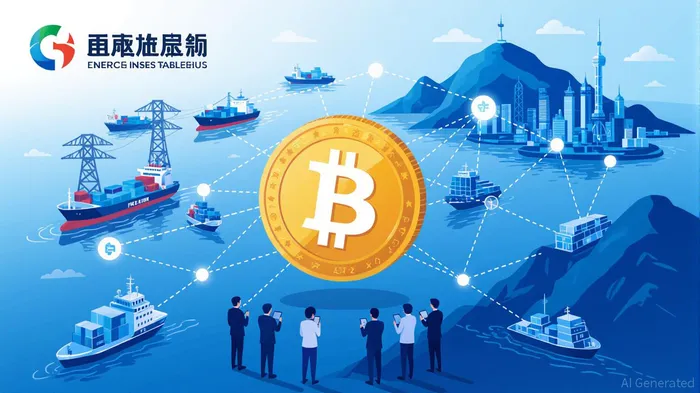
The global energy trade is undergoing a quiet revolution, driven by the convergence of blockchain technology and geopolitical strategy. At the forefront is PetroChina, one of China’s largest state-owned energy companies, which is exploring stablecoins to streamline cross-border transactions and reduce reliance on the U.S. dollar. This initiative, underpinned by Hong Kong’s newly enacted Stablecoin Ordinance (effective August 1, 2025), represents a pivotal shift in how energy trade is financed and executed [1]. For investors, the infrastructure and ecosystem supporting this transition present a compelling opportunity to capitalize on Asia’s stablecoin revolution.
PetroChina’s Strategic Move: From Fossil Fuels to Digital Fuels
PetroChina’s feasibility study on stablecoin adoption for cross-border energy trade is not merely a technological experiment—it is a calculated geopolitical maneuver. By leveraging yuan-backed stablecoins, the company aims to bypass traditional dollar-based systems, reducing exchange rate losses by up to 40% in pilot projects like those in Shenzhen [2]. This aligns with China’s broader goal of internationalizing the yuan, a strategy accelerated by Hong Kong’s regulatory clarity. The city’s Stablecoin Ordinance mandates 100% reserve backing and a minimum capital requirement of HK$25 million for issuers, creating a sandbox for innovation while mitigating systemic risks [3].
The implications are profound. If successful, PetroChina’s model could redefine energy trade settlements, offering faster, cheaper, and more transparent transactions. For instance, stablecoins could automate hedging mechanisms in volatile markets, a critical advantage for energy companies navigating geopolitical uncertainties [4].
The Infrastructure Ecosystem: From Regulatory Frameworks to Fintech Partnerships
Asia’s stablecoin infrastructure is being built on three pillars: regulatory innovation, institutional partnerships, and technological scalability. Hong Kong and Singapore have emerged as twin hubs, each offering distinct advantages. Hong Kong’s licensing framework attracts institutional investors, while Singapore’s Project Guardian—a collaboration between the Monetary Authority of Singapore (MAS) and private firms—is developing open-source protocols for tokenized securities, fostering interoperability [5].
Key players in this ecosystem include:
- Financial Institutions: Standard Chartered and ZA Bank are developing infrastructure to support HKD-backed stablecoins, enabling seamless cross-border settlements [6].
- Blockchain Platforms: Ripple’s RLUSD, with a market cap of $1.2 billion, is being used for real-time liquidity management, while Conflux’s high-throughput blockchain supports BRI-related energy trade [7].
- Fintech Innovators: Startups like ADDX and Meld Gold are building the foundational rails for tokenized assets, while Stripe’s integration of stablecoin payments into its global network has spurred adoption among 56% of Asian businesses [8].
Investment Opportunities: Where to Allocate Capital
The stablecoin revolution in Asia is not just about currency—it’s about infrastructure. Investors should focus on three areas:
1. Blockchain Infrastructure Providers: Companies enabling high-speed, low-cost transactions, such as Conflux and Ripple, are critical to scaling stablecoin adoption.
2. Regulatory Compliance Tech: As Hong Kong and Singapore enforce stringent AML/KYC standards, firms specializing in compliance solutions will see demand surge.
3. Energy Transition Fintech: Startups like Xiongdi Technology, which demonstrated 40% cost reductions in Shenzhen trials, are bridging the gapGAP-- between energy trade and digital finance [9].
However, risks remain. Regulatory shifts, particularly in the U.S., could disrupt yuan-backed stablecoins. Additionally, geopolitical tensions may slow the yuan’s internationalization. Investors must balance these risks with the long-term potential of a multipolar currency system.
Conclusion: A New Era for Energy Trade
PetroChina’s foray into stablecoins is a harbinger of a larger trend: the digitization of global trade. By investing in the infrastructure and ecosystem supporting this shift, investors can position themselves at the intersection of energy, finance, and technology. As Hong Kong’s regulatory framework matures and Shenzhen’s pilot projects scale, the stage is set for a new era of cross-border energy trade—one powered by stablecoins and driven by strategic innovation.
Source:
[1] Hong Kong Implements New Regulatory Framework for Stablecoins [https://www.sidley.com/en/insights/newsupdates/2025/08/hong-kong-implements-new-regulatory-framework-for-stablecoins]
[2] PetroChina Begins Study on Stablecoin Use for Cross-Border Payments [https://www.livebitcoinnews.com/petrochina-begins-study-on-stablecoin-use-for-cross-border-payments/]
[3] Hong Kong's Stablecoin Push Attracts PetroChina's Strategic Eye [https://www.ainvest.com/news/hong-kong-stablecoin-push-attracts-petrochina-strategic-eye-2508/]
[4] China's Energy Sector and the Rise of Stablecoin in Cross-Border Payments [https://www.ainvest.com/news/china-energy-sector-rise-stablecoin-cross-border-payments-strategic-convergence-fintech-sustainability-2508/]
[5] Strategic Partnerships as Catalysts for Blockchain-Driven Financial Infrastructure in Asia [https://www.ainvest.com/news/strategic-partnerships-catalysts-blockchain-driven-financial-infrastructure-asia-2508/]
[6] PetroChina and Hong Kong's Stablecoin Boom: A Strategic Entry Point for Investors in Digital Energy Finance [https://www.ainvest.com/news/petrochina-hong-kong-stablecoin-boom-strategic-entry-point-investors-digital-energy-finance-2508/]
[7] China's Strategic Move Toward Yuan-Backed Stablecoins [https://www.ainvest.com/news/china-strategic-move-yuan-backed-stablecoins-challenging-dollar-dominance-reshaping-global-forex-dynamics-2508/]
[8] Stablecoin payments gaining traction in Asia, reveals Stripe [https://www.crnasia.com/news/2025/business-and-finance/stablecoin-payments-gaining-traction-in-asia]
[9] China's Energy Sector and the Rise of Stablecoin in Cross-Border Payments [https://www.ainvest.com/news/china-energy-sector-rise-stablecoin-cross-border-payments-strategic-convergence-fintech-sustainability-2508/]

Decoding blockchain innovations and market trends with clarity and precision.
Latest Articles
Stay ahead of the market.
Get curated U.S. market news, insights and key dates delivered to your inbox.


AInvest
PRO
AInvest
PRO



Comments
No comments yet